
In the intricate landscape of personal finance, few opportunities offer as much direct, tangible benefit as an employer-matched 401(k). For many, this isn’t just a savings vehicle; it’s a cornerstone of their retirement strategy, a powerful engine for wealth accumulation that, when fully leveraged, can significantly accelerate your journey towards financial independence. As we look ahead to 2026, understanding the nuances of your 2026 401k Match and how to optimize it becomes not just an advantage, but a necessity for maximizing your retirement potential.
Imagine the impact of an extra 10% or more added to your retirement savings each year, simply by making informed decisions about your contributions. This isn’t a hypothetical scenario; it’s a very real possibility for those who strategically engage with their employer’s 401(k) matching program. This comprehensive guide will delve deep into the mechanics of employer-matched 401(k)s, specifically focusing on how to unlock and maximize your benefits for 2026. We’ll explore everything from understanding your company’s match formula to navigating contribution limits, and ultimately, how to ensure you’re leaving no free money on the table.
The journey to a comfortable retirement is paved with smart financial choices, and leveraging your 2026 401k Match is arguably one of the smartest you can make. It’s an immediate, guaranteed return on your investment that is hard to find elsewhere. Yet, a surprising number of individuals either don’t contribute enough to receive the full match or are unaware of the specific strategies that can supercharge their savings. Our goal is to demystify this process, providing you with actionable insights and a step-by-step roadmap to ensure you’re making the most of this invaluable employee benefit.
Understanding Your Employer’s 2026 401(k) Match: The Foundation of Your Future
Before you can maximize your 2026 401k Match, you need to understand how it works. Employer matching programs are essentially free money, a powerful incentive designed to encourage employees to save for retirement. However, these programs aren’t one-size-fits-all. They come in various forms, each with its own set of rules and conditions. Knowing your specific plan’s structure is the first critical step.
Common Employer Match Formulas
Most employer match formulas fall into a few common categories:
- Percentage of Contribution: This is perhaps the most common. Your employer might match 50 cents on the dollar for the first 6% of your salary you contribute. This means if you earn $60,000 and contribute 6% ($3,600), your employer will contribute an additional $1,800. If you contribute less than 6%, say 3%, your employer would only match 50% of that 3% ($900). The key takeaway here is to contribute at least enough to get the full match.
- Dollar-for-Dollar Match: Some employers offer a dollar-for-dollar match up to a certain percentage of your salary, for example, 100% match on the first 3% of your salary. This is an even more generous match, offering a higher immediate return on your contributions.
- Graduated Match: Less common but still present, a graduated match might offer a higher match percentage for lower contributions, then a lower percentage for higher contributions. For instance, 100% on the first 3%, then 50% on the next 2%.
- Discretionary Match: In some cases, the employer match is not guaranteed and is instead determined annually based on company performance. While less predictable, it still represents a valuable benefit when offered.
It’s crucial to consult your plan documents or human resources department to ascertain the precise details of your company’s 2026 401k Match formula. This information is usually readily available and will serve as your blueprint for maximizing your contributions.
Vesting Schedules: When the Match Becomes Yours
Another vital aspect of understanding your employer match is the vesting schedule. Vesting refers to the point in time when the employer contributions officially become yours to keep, even if you leave the company. There are two primary types of vesting schedules:
- Cliff Vesting: With cliff vesting, you become 100% vested after a specific period of employment (e.g., three years). If you leave before that period, you forfeit all employer contributions.
- Graded Vesting: Graded vesting allows you to become incrementally vested over time. For example, you might be 20% vested after one year, 40% after two, and so on, until you reach 100% after five or six years.
Understanding your vesting schedule is critical for long-term planning, especially if you anticipate changing jobs. While it shouldn’t deter you from contributing to receive the match, it’s an important factor to consider when evaluating your overall retirement strategy and potential job transitions.
The Power of Compounding: Why Every Dollar of Your 2026 401(k) Match Counts
The true magic of the 2026 401k Match lies in the power of compounding. Compounding is the process where your investments earn returns, and those returns then earn their own returns. The longer your money is invested, the more significant the impact of compounding becomes. When you combine this with your employer’s match, the effect is amplified.
Consider this: an employer match essentially provides an immediate, risk-free return on your money. If your employer matches 50% of your contributions up to 6% of your salary, that’s an instant 50% return on the matched portion of your contributions. This initial boost, coupled with decades of investment growth, can lead to substantial differences in your retirement nest egg. Even small, consistent contributions, especially those bolstered by an employer match, can grow into a significant sum over time.
For instance, if you contribute $3,000 annually and your employer matches $1,500, you’ve effectively invested $4,500. If this grows at an average annual rate of 7% for 30 years, that initial year’s contribution could be worth over $34,000. Without the employer match, that same $3,000 would only grow to approximately $22,800. The difference is stark and underscores why maximizing your 2026 401k Match is non-negotiable for serious retirement savers.
Maximizing Your 2026 401(k) Match: A Step-by-Step Guide
Now that we understand the fundamentals, let’s dive into the actionable steps you can take to ensure you’re maximizing your 2026 401k Match and potentially boosting your retirement savings by up to 10% or more.
Step 1: Know Your Employer’s Specific Matching Policy
As discussed, this is the absolute starting point. Obtain your company’s 401(k) plan summary, often available through your HR portal, benefits website, or directly from your plan administrator. Pay close attention to:
- The percentage of your salary the employer will match.
- The maximum percentage of your salary they will match.
- The vesting schedule.
- Any eligibility requirements (e.g., minimum service period).
Don’t make assumptions. Get the exact figures and rules for your 2026 401k Match.
Step 2: Contribute At Least Enough to Get the Full Match
This is the golden rule of 401(k) saving. If your employer matches 50% of your contributions up to 6% of your salary, then your primary goal should be to contribute at least 6% of your salary. This ensures you receive every dollar of free money your employer offers. Failing to do so is akin to turning down a raise.
Many financial advisors refer to this as the ‘free money threshold.’ If you can only afford to save a limited amount, ensure that amount is at least equal to what’s required to get the full employer match. This is the highest guaranteed return you’ll likely ever see on an investment.

Step 3: Understand 2026 Contribution Limits
While the exact 2026 401(k) contribution limits are typically announced in late 2025, we can project based on historical trends and inflation adjustments. For 2025, the elective deferral limit for employees was $23,000, with an additional catch-up contribution of $7,500 for those aged 50 and over. It’s highly likely that these limits will see a slight increase for 2026 due to inflation.
Knowing these limits is crucial for two reasons:
- To ensure you don’t over-contribute: While rare for most, high-income earners need to be mindful of hitting the IRS maximums.
- To plan beyond the match: Once you’ve secured your 2026 401k Match, your next goal should be to contribute as much as possible up to the annual IRS limit, if your financial situation allows. This further accelerates your savings and takes advantage of tax-advantaged growth.
Stay informed about the official 2026 limits once they are released by the IRS. Your plan administrator will also communicate these changes.
Step 4: Automate Your Contributions and Increase Them Annually
The easiest way to ensure consistent contributions is to automate them directly from your paycheck. Set it and forget it. Even better, commit to increasing your contribution rate by 1% or 2% each year, especially when you receive a raise. This strategy, known as ‘saving more tomorrow,’ leverages behavioral economics to painlessly boost your savings without feeling a significant pinch in your take-home pay.
A small increase in your contribution rate, say from 6% to 7%, might seem negligible in the short term, but over decades, with the benefit of compounding and your employer’s match, it can translate into tens of thousands of additional dollars for your retirement. Make it a habit to review your contributions each year and adjust them upwards.
Step 5: Consider a Roth 401(k) Option (If Available)
If your employer’s plan offers a Roth 401(k) option, it’s worth considering. While traditional 401(k) contributions are pre-tax and grow tax-deferred, Roth 401(k) contributions are made with after-tax dollars, and qualified withdrawals in retirement are entirely tax-free. Your employer match, however, will always go into a pre-tax account, regardless of whether you contribute to a traditional or Roth 401(k).
The choice between traditional and Roth depends on your current income, anticipated future income, and tax bracket. If you expect to be in a higher tax bracket in retirement than you are now, a Roth 401(k) can be highly advantageous. Discuss this with a financial advisor to determine the best approach for your individual circumstances, always keeping your 2026 401k Match as the priority.
Step 6: Review Your Investment Options
Maximizing your 2026 401k Match isn’t just about contributing; it’s also about how that money is invested. Most 401(k) plans offer a range of investment options, from target-date funds to various mutual funds covering different asset classes (stocks, bonds, etc.).
Ensure your investment allocation aligns with your risk tolerance and time horizon. Younger investors with a long time until retirement can generally afford to take on more risk (e.g., a higher allocation to stocks) for potentially higher returns. As you approach retirement, you might shift towards a more conservative allocation. If you’re unsure, target-date funds are a popular choice as they automatically adjust their asset allocation as you get closer to your target retirement year.
Regularly review your investment performance and rebalance your portfolio as needed. Don’t let your employer-matched funds sit in a sub-optimal investment.
The Impact: How an Extra 10% Can Transform Your Retirement
The title of this article promises a potential 10% (or more) boost to your retirement savings by maximizing your 2026 401k Match. Let’s break down how this is achievable and the profound impact it can have.
The Immediate 10% Boost
Consider an employee earning $70,000 annually. If their employer offers a 50% match on contributions up to 6% of salary, and the employee contributes that 6% ($4,200), the employer contributes an additional $2,100. This $2,100 represents 3% of the employee’s salary. If you factor in the growth potential of this ‘free money’ over a long period, it far exceeds a simple 3% addition.
However, the ‘10% boost’ often comes from a combination of factors:
- Securing the full match: This is the primary driver. If you were only contributing 3% and missing half of a 6% match, increasing your contribution to 6% immediately unlocks that additional employer contribution, which can easily represent a 3-5% increase in your total compensation (depending on your match percentage and salary).
- Compounding Growth: The matched funds, growing over decades, significantly amplify the initial percentage. That 3% of salary from the employer match, compounding for 20-30 years, can easily represent a 10% or greater increase in your total retirement portfolio value compared to not getting the match.
- Tax Advantages: The tax-deferred growth (or tax-free withdrawals with Roth) further enhances the effective return on your contributions, making each dollar, especially the matched ones, work harder.
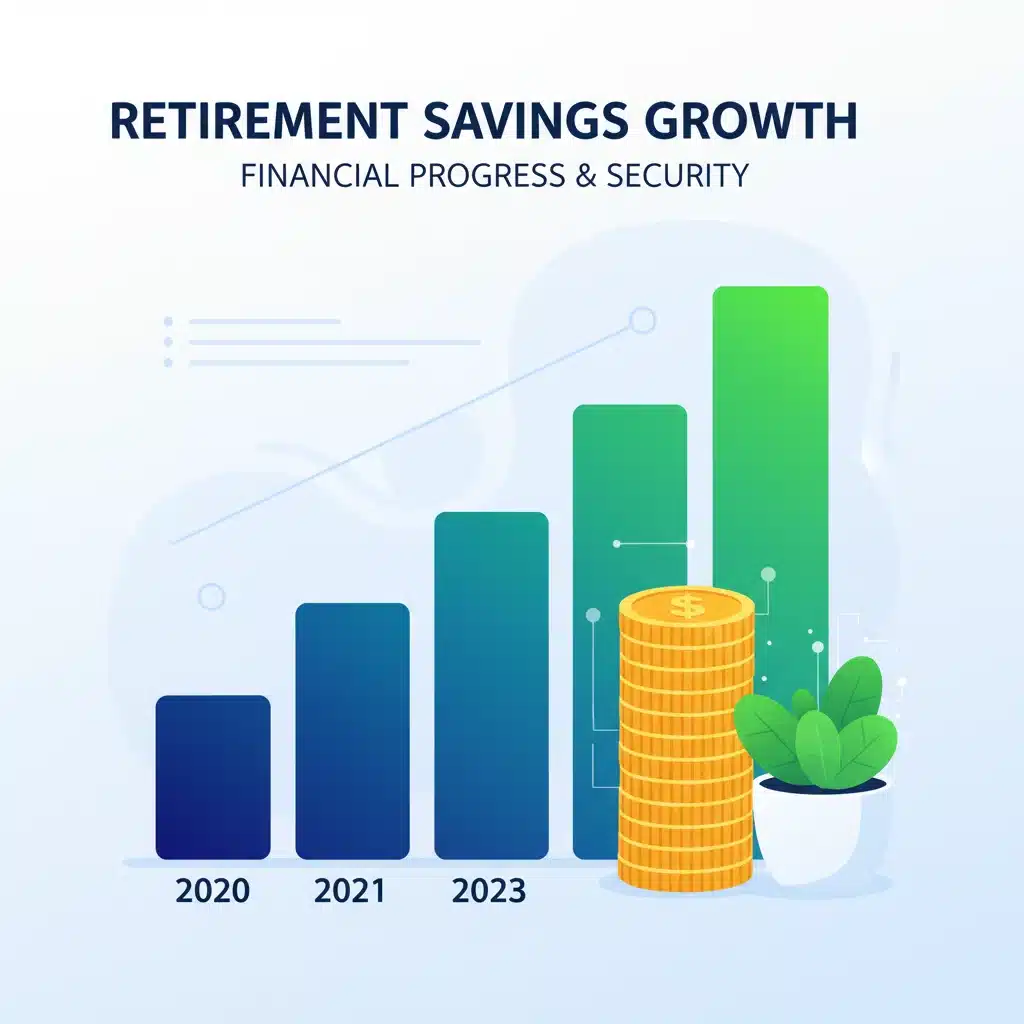
Let’s use a simplified example: An employee earning $70,000 contributes 6% ($4,200). Employer matches 50% of that, adding $2,100. Total annual contribution: $6,300. If this person had only contributed 3% ($2,100) and received a match of $1,050, their total would be $3,150. By maximizing the match, they’ve added $3,150 ($6,300 – $3,150) in one year. Over 30 years, assuming a 7% average annual return, that additional $3,150 per year (plus its own compounding) would contribute an extra $300,000+ to their retirement fund. This demonstrates the significant long-term impact of optimizing your 2026 401k Match.
Advanced Strategies for Your 2026 401(k) Match
Once you’ve mastered the basics, consider these advanced strategies to further optimize your 2026 401k Match and overall retirement savings.
The Mega Backdoor Roth (If Your Plan Allows)
For high-income earners who have already maxed out their traditional and Roth 401(k) contributions, the ‘mega backdoor Roth’ can be a powerful tool. This strategy involves contributing after-tax money to your 401(k) (beyond the pre-tax or Roth limits but within the overall IRS limit for all contributions, including employer match), and then converting it to a Roth IRA. This allows you to get more money into a tax-free growth vehicle. This is a complex strategy that requires your 401(k) plan to allow after-tax contributions and in-service distributions or Roth conversions. Consult a financial advisor to see if this is an option for you.
Front-Loading Your Contributions
Some individuals prefer to front-load their 401(k) contributions, meaning they contribute a higher percentage early in the year to reach the annual maximum faster. The advantage here is that your money is invested for a longer period, potentially benefiting from more compounding time. However, be cautious: some employer match programs are calculated on a per-pay-period basis. If you max out your contributions early, you might miss out on employer contributions later in the year if your plan doesn’t offer a ‘true-up’ provision. Always check your plan’s specific rules regarding how the match is calculated if you plan to front-load.
Catch-Up Contributions for Those 50 and Over
If you are aged 50 or older, the IRS allows you to make additional ‘catch-up’ contributions to your 401(k) plan. For 2025, this was an extra $7,500, bringing the total potential contribution to $30,500. This is an excellent opportunity to supercharge your savings in the years leading up to retirement, especially if you started saving later or want to make up for lost time. Your employer’s match will still apply to your regular contributions, but these catch-up contributions are an additional powerful tool.
Understanding Your Plan Fees
While often overlooked, the fees associated with your 401(k) plan can eat into your returns over time. These fees can include administrative fees, record-keeping fees, and investment management fees (expense ratios of the funds you choose). While you can’t always control the administrative fees, you can often choose lower-cost investment options within your plan. Even a difference of 0.5% in annual fees can translate to tens of thousands of dollars over a 30-year investment horizon. Review your plan’s fee disclosure statement and opt for low-cost index funds or ETFs if available and suitable for your goals.
Common Pitfalls to Avoid with Your 2026 401(k) Match
Even with the best intentions, some common mistakes can prevent you from fully leveraging your 2026 401k Match.
- Not Contributing Enough: The most significant mistake is not contributing at least the minimum required to get the full employer match. This is literally leaving free money on the table.
- Cashing Out Your 401(k) When Changing Jobs: While tempting, cashing out your 401(k) when you leave a job incurs significant taxes and penalties, and you lose all future tax-deferred growth. Instead, roll it over into your new employer’s 401(k) or an IRA.
- Taking a 401(k) Loan: While some plans allow loans, borrowing from your retirement account should be a last resort. You miss out on potential investment growth, and if you leave your job, the loan often becomes due immediately.
- Ignoring Your Investments: Setting up contributions is just the first step. Regularly reviewing and adjusting your investment allocation is crucial to ensure your money is working as hard as possible for you.
- Not Knowing Your Vesting Schedule: Leaving a job before you are fully vested in your employer’s contributions means you forfeit that money. Be aware of your vesting schedule, especially if a job change is on the horizon.
Financial Planning Beyond the 401(k) Match
While your 2026 401k Match is a powerful tool, it’s part of a broader financial strategy. Once you’ve maximized your 401(k) match, consider these additional steps:
- Build an Emergency Fund: Before aggressively saving for retirement beyond the match, ensure you have 3-6 months’ worth of living expenses saved in an easily accessible, liquid account.
- Pay Down High-Interest Debt: Credit card debt and high-interest personal loans can erode your financial progress. Prioritize paying these off before increasing retirement contributions significantly beyond the match.
- Contribute to an IRA or Roth IRA: If you’ve maxed out your 401(k) match, consider contributing to an Individual Retirement Account (IRA) or Roth IRA. These offer additional tax advantages and often a wider range of investment options.
- Consider Health Savings Accounts (HSAs): If you have a high-deductible health plan, an HSA offers a triple tax advantage: tax-deductible contributions, tax-free growth, and tax-free withdrawals for qualified medical expenses. It can also function as a supplemental retirement account after age 65.
- Invest in Taxable Brokerage Accounts: For those who have maxed out all tax-advantaged accounts, a taxable brokerage account allows you to invest further, offering liquidity and flexibility.
Conclusion: Secure Your Future with Your 2026 401(k) Match
The opportunity to receive an employer match on your 401(k) contributions is one of the most valuable benefits available to employees. As we look towards 2026, taking the time to understand, optimize, and consistently contribute to your 401(k) can have a profound impact on your retirement security. By following the steps outlined in this guide – knowing your plan, contributing enough to get the full 2026 401k Match, understanding contribution limits, automating your savings, and wisely investing your funds – you are not just saving; you are building a robust financial future.
Don’t leave free money on the table. Make it a priority to review your 401(k) contributions and strategy today. A little effort now can translate into significantly more financial freedom and peace of mind in your retirement years. Your future self will thank you for making the most of your 2026 401k Match.