
The year 2026 is poised to mark a significant turning point in the landscape of employer-provided childcare benefits. As businesses increasingly recognize the critical role that accessible, affordable childcare plays in employee retention, productivity, and overall well-being, we are witnessing a substantial shift towards more comprehensive and generous support programs. For working parents, this evolution represents a beacon of hope, promising to alleviate some of the immense financial and logistical burdens associated with raising a family while maintaining a career. This article delves deep into the anticipated changes, comparing new employer programs that are projected to offer up to 15% in subsidies, and exploring the broader implications for families and the economy. We will examine the driving forces behind these changes, the various forms these benefits might take, and what working parents can expect as the 2026 childcare benefits landscape unfolds.
Childcare costs have long been a significant drain on household budgets, often rivaling or even exceeding mortgage payments or college tuition in many regions. This financial strain, coupled with a lack of adequate childcare options, has led to countless parents, particularly mothers, leaving the workforce or scaling back their careers. The economic consequences of this trend are profound, impacting individual families, businesses struggling to fill positions, and national productivity. Recognizing this multifaceted challenge, forward-thinking employers are stepping up, not merely out of altruism, but out of a strategic understanding that investing in their employees’ family lives translates directly into a more stable, engaged, and productive workforce. The emergence of programs offering up to 15% subsidies is a testament to this evolving perspective, signaling a move beyond mere token gestures to substantial, impactful support.
The Evolving Landscape of 2026 Childcare Benefits: What’s Driving the Change?
Several converging factors are propelling the evolution of 2026 childcare benefits. Firstly, the ongoing talent war, exacerbated by demographic shifts and the ‘Great Resignation,’ has made employee retention a top priority for companies across all sectors. Employers are realizing that competitive salaries alone are often insufficient to attract and retain top talent, especially those with family responsibilities. Comprehensive benefits packages, with a strong emphasis on work-life balance and family support, are becoming a crucial differentiator.
Secondly, the COVID-19 pandemic shone a harsh spotlight on the fragility of the childcare system and the immense pressures faced by working parents. As schools and daycare centers closed, many parents were forced to juggle work and full-time caregiving, leading to widespread burnout and a re-evaluation of priorities. This collective experience has fostered a greater empathy among employers and a deeper understanding of the systemic issues at play. The demand for robust childcare support is no longer a niche request but a mainstream expectation.
Thirdly, legislative and policy discussions at both federal and state levels are increasingly focusing on childcare reform. While direct government subsidies has historically been a complex and often underfunded area, the increased public discourse is creating an environment where employers feel more incentivized to act, sometimes even anticipating future mandates or tax incentives. This proactive approach allows companies to position themselves as leaders in employee welfare.
Finally, there’s a growing body of research demonstrating the tangible return on investment (ROI) for employers who provide childcare benefits. Studies show improved employee morale, reduced absenteeism, higher productivity, and lower turnover rates. When employees feel supported in their personal lives, they are more likely to be loyal, committed, and effective in their professional roles. These compelling business cases are persuading even traditionally conservative organizations to invest in robust childcare solutions, making the expansion of 2026 childcare benefits a strategic imperative.
In the coming sections, we will explore the specific types of employer programs emerging, how these 15% subsidies are structured, and what working parents need to know to navigate this new era of support.
Understanding the 15% Subsidy: How New Employer Programs Work
The headline figure of ‘up to 15% in subsidies’ for 2026 childcare benefits is a significant development, representing a tangible and meaningful reduction in childcare costs for many families. But how exactly are these subsidies structured, and what forms do they take? It’s important to understand that ‘15%’ is an average or maximum, and the actual benefit will vary depending on the employer, the specific program, and the employee’s circumstances.
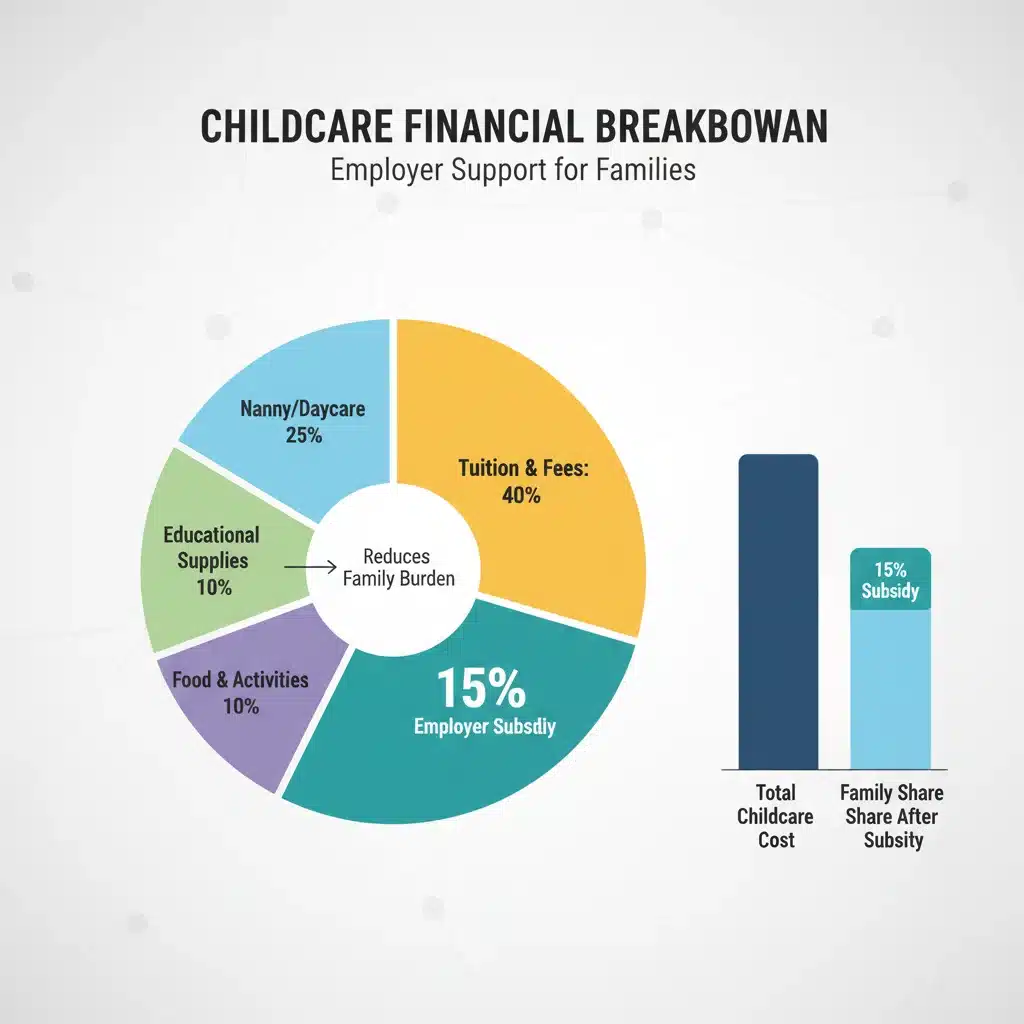
One common approach is direct financial assistance. This could involve employers directly contributing a percentage of childcare costs to an employee’s chosen provider. For example, if a family’s monthly childcare bill is $1,500, a 15% subsidy would mean the employer contributes $225, reducing the family’s out-of-pocket expense to $1,275. This direct support is often administered through a third-party benefits provider, simplifying the process for both employer and employee.
Another model involves Dependent Care Flexible Spending Accounts (DCFSAs) with enhanced employer contributions. While DCFSAs allow employees to set aside pre-tax money for childcare, some new programs are seeing employers contribute a matching amount or a fixed percentage to these accounts. This amplifies the tax savings for employees while providing additional financial aid. The 15% could represent the employer’s contribution as a percentage of the total childcare cost or a percentage of the employee’s DCFSA contribution.
On-site or near-site childcare facilities, while a larger investment for employers, also effectively function as a subsidy. By providing highly subsidized or even free childcare at the workplace, companies significantly reduce or eliminate one of the largest expenses for working parents. The ‘15% subsidy’ in this context might be calculated as the equivalent market value of the care provided, demonstrating the substantial financial relief offered. These facilities often come with the added benefit of convenience, reducing commute times and offering peace of mind.
Furthermore, some companies are exploring partnerships with childcare networks, negotiating discounted rates for their employees. The difference between the market rate and the discounted rate, potentially up to 15% or more, functions as an indirect subsidy. This approach leverages the employer’s purchasing power to secure better deals for their workforce, making quality childcare more accessible and affordable.
Eligibility for these programs typically depends on employment status (full-time, part-time), tenure with the company, and sometimes income levels, though many progressive programs are moving towards universal access for all employees with childcare needs. Understanding the specifics of each employer’s plan will be crucial for working parents looking to maximize their 2026 childcare benefits.
Comparing New Employer Programs: A Look at Innovative Approaches
As the demand for robust 2026 childcare benefits grows, employers are becoming increasingly innovative in their approaches. Beyond the direct subsidies, a range of programs is emerging, each designed to address different facets of the childcare challenge. Comparing these new initiatives reveals a growing trend towards holistic family support.
Flexible Work Arrangements and Hybrid Models
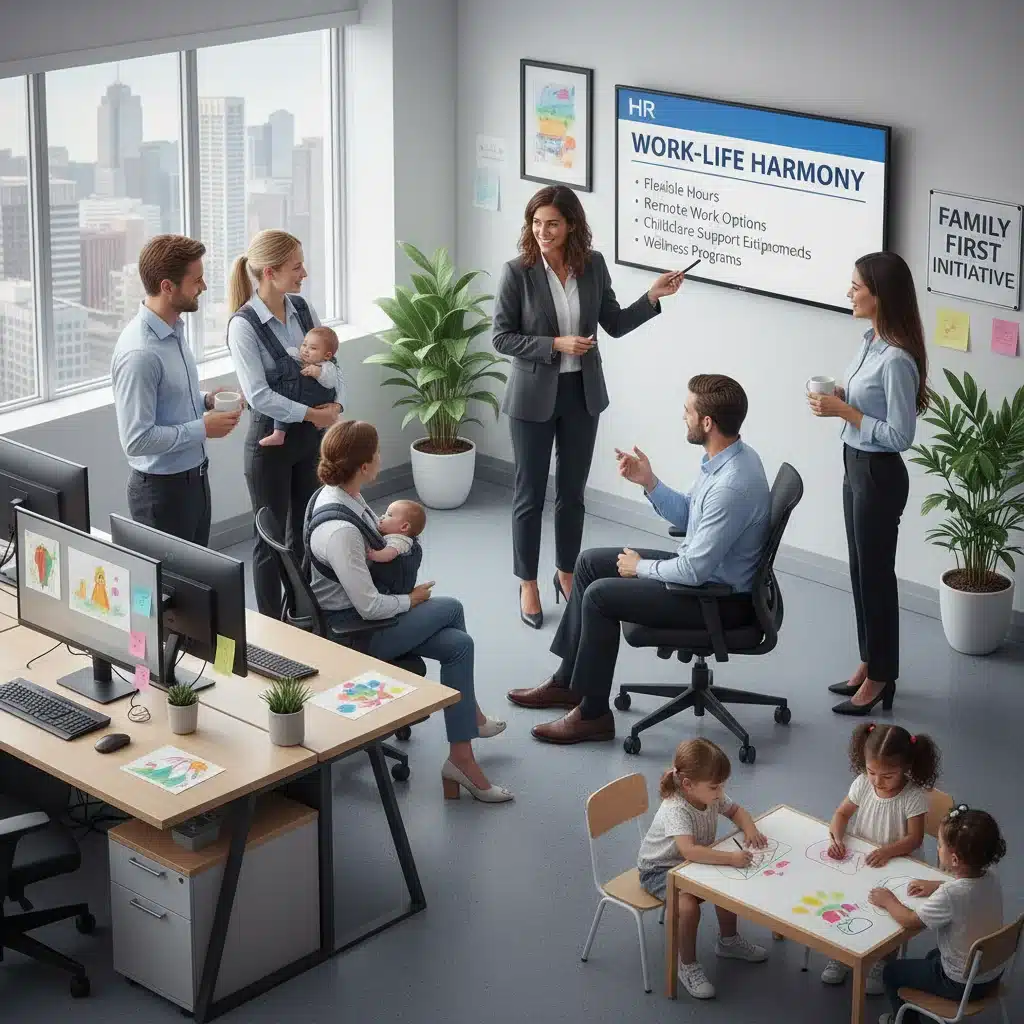
While not a direct financial subsidy, flexible work arrangements and hybrid models are increasingly seen as integral components of a comprehensive childcare benefit package. The ability to work remotely for a few days a week, adjust start and end times, or compress workweeks can significantly reduce the need for full-time childcare, thereby acting as an indirect financial benefit and a major stress reducer. Many companies are now embedding these flexible options as standard practice, recognizing their value in supporting working parents.
Emergency and Backup Childcare
Life with children is unpredictable, and regular childcare can fall through unexpectedly. New employer programs are addressing this by offering emergency or backup childcare solutions. This might include access to a network of vetted caregivers for last-minute needs, subsidized spots at emergency daycare centers, or even reimbursement for backup care. This benefit, though not directly a 15% subsidy, prevents parents from missing work or scrambling during critical moments, providing immense peace of mind and contributing to overall job stability.
Childcare Navigation and Concierge Services
Finding quality childcare can be a daunting and time-consuming task. Some progressive employers are now offering childcare navigation or concierge services as part of their 2026 childcare benefits. These services connect parents with experts who can help them research options, understand licensing requirements, compare costs, and even assist with enrollment. By alleviating the administrative burden, these programs empower parents to make informed decisions and find the best fit for their families, indirectly saving them time and effort that can be equated to financial value.
Parental Leave Enhancements
While distinct from ongoing childcare, enhanced parental leave policies are often part of the broader family support initiatives. Longer paid parental leave allows parents to bond with their newborns and navigate the initial months without immediate childcare pressures. Some companies are extending paid leave beyond statutory requirements, recognizing that a strong start at home contributes to a more stable return to work.
Dependent Care FSAs and HSAs with Employer Matching
As mentioned, employer contributions to Dependent Care Flexible Spending Accounts (DCFSAs) are becoming more common. Additionally, some employers are exploring ways to integrate childcare support with Health Savings Accounts (HSAs), allowing for greater financial flexibility. The 15% subsidy could manifest as an employer match to these accounts, significantly boosting the funds available for childcare expenses.
Tuition Assistance for Early Childhood Education
Beyond traditional daycare, some employers are extending their support to early childhood education, offering tuition assistance or scholarships for preschool and pre-kindergarten programs. This recognizes the importance of early learning and helps parents secure high-quality educational foundations for their children, often at a substantial discount, again potentially reaching or exceeding the 15% subsidy threshold when compared to full tuition costs.
The diversity of these new programs highlights a comprehensive approach to supporting working parents. While the 15% subsidy often refers to direct financial aid, it’s crucial to view it within the context of these broader, interconnected benefits that collectively aim to create a more family-friendly work environment. Employers are increasingly understanding that a multi-faceted strategy is required to truly address the complex needs of modern families, making the 2026 childcare benefits landscape more robust and supportive than ever before.
The Impact of 2026 Childcare Benefits on Working Parents and the Economy
The introduction and expansion of significant 2026 childcare benefits, particularly those offering up to 15% in subsidies, are poised to have a transformative impact on both working parents and the broader economy. The ripple effects of these changes are far-reaching, promising to foster greater equity, economic stability, and overall societal well-being.
For Working Parents: Alleviating Financial Strain and Boosting Career Progression
For working parents, the most immediate and tangible benefit is the alleviation of financial strain. Childcare costs are a major budgetary item for most families, and a 15% subsidy can translate into hundreds or even thousands of dollars in annual savings. This extra disposable income can be used for other essential needs, savings, or investments, significantly improving a family’s financial security. Reduced financial pressure also means reduced stress, leading to better mental health and overall well-being for parents.
Beyond finances, these benefits empower parents, especially mothers, to maintain and advance their careers. The prohibitive cost and logistical complexities of childcare often force parents to make difficult choices, including reducing work hours, taking lower-paying jobs with more flexibility, or exiting the workforce entirely. With substantial employer support, parents can pursue their career aspirations without sacrificing their family’s needs. This leads to increased job satisfaction, greater opportunities for promotion, and a more equitable distribution of career growth.
Moreover, access to reliable, high-quality childcare, facilitated by employer benefits, means parents can be more present and focused at work. The anxiety of securing care, dealing with last-minute cancellations, or worrying about their child’s well-being is significantly reduced. This enhanced peace of mind translates directly into improved productivity, engagement, and commitment to their employers. The 2026 childcare benefits are not just about money; they are about enabling parents to thrive in all aspects of their lives.
For Employers: Enhanced Retention, Productivity, and Reputation
For businesses, investing in robust 2026 childcare benefits is a strategic move with a clear return on investment. The most immediate benefit is improved employee retention. In a competitive labor market, companies that offer superior family support are more likely to attract and keep valuable employees. Reducing turnover saves companies significant costs associated with recruitment, hiring, and training new staff.
Furthermore, employees who feel supported are more engaged and productive. Reduced absenteeism due to childcare issues, lower stress levels, and increased focus contribute to a more efficient and effective workforce. Companies with strong childcare benefits often report higher employee morale and a more positive workplace culture, fostering loyalty and a sense of belonging.
Beyond internal benefits, offering generous childcare support enhances a company’s reputation as a family-friendly employer. This not only aids in talent acquisition but also strengthens brand image among consumers and stakeholders. In an era where corporate social responsibility is increasingly valued, a commitment to supporting working families can be a powerful differentiator, attracting both talent and customers who align with these values. The 2026 childcare benefits landscape will likely see these forward-thinking companies gain a significant competitive edge.
For the Economy: Boosting Labor Force Participation and Economic Growth
At a macroeconomic level, widespread adoption of substantial employer childcare benefits can have a profound impact. By removing barriers to employment, particularly for women, these programs can significantly boost labor force participation rates. When more parents, especially those who previously had to leave the workforce due to childcare constraints, can return to work, it expands the available talent pool and increases national productivity.
Increased labor force participation translates into higher overall economic output and growth. More working individuals mean more taxpayers, contributing to government revenues, which can then be reinvested in public services. Additionally, the childcare sector itself, often a significant employer, stands to benefit from increased demand and stability, leading to job creation within that industry.
Moreover, by reducing financial stress and enabling career progression for working parents, these benefits contribute to greater economic equity. They help close gender pay gaps and foster a more inclusive economy where family responsibilities are not a barrier to professional success. The 2026 childcare benefits, therefore, are not just a perk; they are an investment in a more robust, equitable, and prosperous society.
Challenges and Considerations for Implementing 2026 Childcare Benefits
While the prospect of enhanced 2026 childcare benefits is overwhelmingly positive, their implementation is not without challenges. Both employers and employees need to be aware of various considerations to ensure these programs are effective, equitable, and sustainable.
For Employers: Cost, Administration, and Equity
The primary challenge for employers is, of course, cost. Providing significant subsidies, such as 15% of childcare expenses, represents a substantial financial commitment. Companies need to carefully assess their budgets, conduct thorough cost-benefit analyses, and explore various funding models to ensure long-term sustainability. This might involve reallocating existing benefits budgets, seeking tax incentives, or gradually scaling up programs.
Administrative complexity is another hurdle. Managing direct subsidies, DCFSAs, or partnerships with childcare providers requires robust systems and dedicated personnel. Many companies opt to work with third-party benefits administrators to streamline these processes, but this also adds to the cost. Ensuring compliance with labor laws, tax regulations, and privacy requirements is paramount.
Equity is a critical consideration. Employers must design programs that are fair and accessible to all employees, regardless of their role, income level, or family structure. This means addressing the needs of single parents, parents with multiple children, and those with children requiring specialized care. A ‘one-size-fits-all’ approach may not be sufficient, and flexibility in benefit options will be key to ensuring widespread impact. For instance, offering a 15% subsidy might be more impactful for a lower-income employee than a high-income one, but the goal should be broad support.
For Working Parents: Awareness, Access, and Quality
For working parents, the main challenges revolve around awareness, access, and quality. Even the most generous 2026 childcare benefits are useless if employees are unaware of them or do not understand how to utilize them. Employers must invest in clear and consistent communication strategies to inform their workforce about available programs, eligibility criteria, and application processes. Regular workshops, clear policy documents, and accessible HR support will be crucial.
Access to quality childcare remains a significant issue in many areas. Even with a 15% subsidy, if there are no available spots in reputable childcare centers, or if the available options do not meet a family’s specific needs (e.g., non-traditional hours, special needs care), the benefit’s impact is limited. Employers may need to actively engage with local childcare providers, or even invest in expanding capacity, especially for on-site or near-site options. The geographic distribution of employees also plays a role; a benefit that works well in an urban area might be less effective in a rural one.
Furthermore, parents will need to carefully evaluate the quality of care options available, even when subsidized. A subsidy is valuable, but it should not come at the expense of a child’s safety, development, and well-being. Employers can help by vetting partner providers or offering resources that guide parents in assessing quality. The goal of 2026 childcare benefits should be to facilitate access to both affordable and high-quality care.
Future-Proofing Childcare Benefits
Looking ahead, both employers and policymakers will need to think about future-proofing these benefits. The childcare landscape is dynamic, with evolving needs and costs. Programs initiated in 2026 will need to be flexible enough to adapt to future changes, including potential legislative reforms, shifts in workforce demographics, and economic fluctuations. Regular reviews, employee feedback mechanisms, and a commitment to continuous improvement will be essential for ensuring that 2026 childcare benefits remain relevant and impactful for years to come.
Addressing these challenges proactively will be key to unlocking the full potential of enhanced employer childcare benefits, ultimately creating a more supportive environment for working parents and contributing to a healthier, more productive economy.
The Future Outlook: Beyond 2026 Childcare Benefits
The advancements in 2026 childcare benefits, particularly the widespread adoption of employer programs offering up to 15% in subsidies, are not merely a temporary trend but indicative of a long-term shift in how businesses view their role in supporting working families. As we look beyond 2026, several key trends and predictions emerge, suggesting an even more integrated and comprehensive approach to family support in the workplace.
Integrated Family Support Ecosystems
The future of employer benefits will likely move towards creating integrated family support ecosystems. This means moving beyond standalone childcare subsidies to a holistic suite of services that address various family needs. This could include eldercare support, pet care assistance, mental health services for families, financial planning for educational expenses, and even community resource navigation. The 15% childcare subsidy will become one crucial component within a broader framework designed to support employees through all stages of life and family development.
Personalized and Flexible Benefits
As workforces become more diverse, so do family structures and needs. The expectation is that 2026 childcare benefits and beyond will become increasingly personalized and flexible. Instead of a fixed set of benefits, employees might be offered a ‘benefits wallet’ or a points-based system, allowing them to allocate employer contributions to the family support services that are most relevant to their individual circumstances. For one parent, the 15% childcare subsidy might be paramount, while another might prioritize eldercare or mental health support.
Technology-Driven Solutions
Technology will play an even greater role in delivering and managing childcare benefits. AI-powered platforms could help parents find and vet childcare providers, manage subsidy applications, and even connect with other parents for support and advice. Virtual care options, such as online tutoring or tele-health for children, could become more integrated into employer benefit packages, offering convenience and accessibility, especially in areas with limited physical resources. The administration of the 2026 childcare benefits will become smoother and more efficient through technological advancements.
Greater Collaboration: Public-Private Partnerships
While employer-led initiatives are gaining momentum, the scale of the childcare crisis suggests that a truly sustainable solution will require greater collaboration between the public and private sectors. We might see an increase in public-private partnerships where government entities offer tax incentives, grants, or infrastructure support to companies that invest heavily in childcare benefits. This synergy could amplify the impact of employer subsidies, making quality childcare universally accessible and affordable.
Focus on Early Childhood Development
Beyond simply providing care, there will be an increased emphasis on early childhood development within employer-sponsored programs. This means a focus on high-quality, educational childcare that prepares children for school and life. Employers may invest in programs that not only cover costs but also ensure developmental milestones are met, recognizing that a strong start for children has long-term societal benefits. The 2026 childcare benefits are laying the groundwork for this deeper engagement with early learning.
Measuring Impact and Evolving Strategies
Finally, there will be a continuous evolution in how the impact of childcare benefits is measured. Beyond employee retention and productivity, companies will likely track broader metrics related to employee well-being, diversity and inclusion, and societal contribution. This data-driven approach will allow employers to refine their strategies, ensuring that their childcare benefits remain effective, relevant, and aligned with both business goals and employee needs. The lessons learned from the implementation of 2026 childcare benefits will inform future policies and programs, leading to continuous improvement.
In conclusion, the movement towards more generous and comprehensive employer-provided childcare benefits, exemplified by the 15% subsidy programs anticipated in 2026, represents a fundamental shift in how businesses view their role in supporting working families. This evolution is not just about financial aid; it’s about fostering a culture of care, promoting work-life integration, and recognizing the profound value of working parents. As these benefits continue to expand and innovate, they promise to create a more equitable, productive, and thriving society for generations to come.