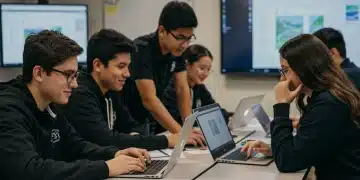
Empowering Educators: Professional Development Trends for U.S. Teachers to Master New Technologies by the End of 2026
In an increasingly digital world, the role of technology in education has transcended from being a mere supplement to an indispensable tool. For U.S. teachers, staying abreast of technological advancements is no longer an option but a necessity. The goal? To achieve widespread teacher tech mastery by the end of 2026. This ambitious target underscores a critical shift in educational paradigms, emphasizing the need for robust professional development that not only introduces new tools but also fosters a deep understanding of their pedagogical applications. This comprehensive article delves into the transformative trends driving professional development for U.S. teachers, aiming to equip them with the skills and confidence to integrate cutting-edge technologies effectively into their classrooms.
The pace of technological change is relentless, and education must evolve alongside it. From artificial intelligence (AI) and virtual reality (VR) to personalized learning platforms and advanced data analytics, the landscape of educational technology (EdTech) is constantly expanding. For teachers, this presents both exciting opportunities and significant challenges. Without adequate training and ongoing support, the potential of these technologies remains untapped, and the digital divide within education can widen. Therefore, focused and strategic professional development is paramount to ensuring that every U.S. teacher can achieve true teacher tech mastery, transforming classrooms into dynamic, engaging, and future-ready learning environments.
The Imperative for Teacher Tech Mastery
The demand for technologically proficient educators stems from several interconnected factors. Firstly, students today are digital natives, growing up surrounded by technology. To effectively engage and educate them, teachers must speak their language and utilize the tools they are familiar with. Secondly, the job market of the future will increasingly demand digital literacy and advanced technical skills. By integrating technology effectively, teachers can prepare students for these future challenges, equipping them with critical thinking, problem-solving, and computational skills. Finally, technology offers unprecedented opportunities to personalize learning, differentiate instruction, and make education more accessible and equitable for all students.
However, achieving widespread teacher tech mastery is not a simple task. It requires a multi-faceted approach that addresses not only the technical skills but also the pedagogical shifts necessary to leverage technology’s full potential. Traditional professional development models, often characterized by one-off workshops, are often insufficient. Instead, ongoing, sustained, and personalized learning experiences are needed to foster deep understanding and confident application. The focus must move beyond merely showing teachers how to use a device, to empowering them to creatively design learning experiences that are enhanced by technology.
Key Trends in Professional Development for 2026
1. Personalized and Adaptive Learning for Educators
Just as personalized learning is gaining traction for students, it is becoming increasingly vital for teachers’ professional development. Recognizing that educators come with varying levels of technological proficiency and pedagogical needs, professional development programs are moving away from a one-size-fits-all approach. Adaptive learning platforms are emerging, assessing a teacher’s current skills and knowledge, and then curating tailored learning pathways. This ensures that training is relevant, efficient, and addresses individual gaps, accelerating the journey to teacher tech mastery.
These platforms often incorporate micro-credentials and badging systems, allowing teachers to gain recognition for specific skills and knowledge acquired. This gamified approach motivates continuous learning and provides a clear roadmap for skill progression. For instance, a teacher might earn a ‘Digital Storytelling Specialist’ badge after completing modules on video editing, podcast creation, and interactive presentation tools, all tailored to their subject area and grade level. This trend is crucial for making professional development more engaging and effective, directly contributing to higher rates of technology adoption and integration.
2. AI-Powered Professional Learning Communities (PLCs)
Artificial intelligence is not just for students; it’s revolutionizing how teachers learn and collaborate. AI-powered PLCs leverage machine learning to connect teachers with relevant resources, expert mentors, and peers who share similar challenges or interests. These platforms can analyze discussions, identify common questions, and even suggest solutions or best practices based on data from thousands of educators. This fosters a dynamic and supportive environment where teachers can learn from each other and collectively advance their teacher tech mastery.
Furthermore, AI tools can help moderate discussions, summarize key takeaways, and even provide real-time feedback on lesson plans incorporating new technologies. Imagine an AI assistant that reviews a teacher’s proposed lesson plan for integrating a new VR simulation, offering suggestions for scaffolding student learning or troubleshooting common technical issues. This level of personalized and immediate support significantly enhances the professional learning experience, making it more responsive and impactful.
3. Immersive Learning Experiences: VR and AR for Skill Development
Virtual Reality (VR) and Augmented Reality (AR) are no longer just futuristic concepts; they are becoming powerful tools for both student learning and teacher professional development. Immersive learning experiences allow teachers to practice new technological skills in a risk-free, simulated environment. For example, a teacher can practice managing a classroom with interactive whiteboards, troubleshoot common hardware issues, or even experiment with different pedagogical approaches using VR simulations.
AR applications can provide on-demand support and guidance. Imagine a teacher struggling to set up a new coding robot; an AR app on their phone could overlay instructions directly onto the robot, guiding them step-by-step. These immersive technologies offer a hands-on, experiential learning approach that is far more effective than traditional lectures or static tutorials for developing practical teacher tech mastery. By experiencing these technologies firsthand in their own training, teachers gain confidence and a deeper understanding of how they can be applied in their own classrooms to create engaging learning experiences for students.
4. Integrating Digital Citizenship and Cybersecurity
As technology becomes more pervasive, so do the challenges related to digital citizenship and cybersecurity. Professional development programs are increasingly incorporating modules that equip teachers with the knowledge and skills to teach students about responsible online behavior, data privacy, and identifying misinformation. This goes beyond simply using technology; it’s about using it wisely and safely.
Teachers need to understand the nuances of online safety, not only for their own protection but also to guide their students through the complexities of the digital world. Training includes identifying phishing scams, understanding data protection regulations (like FERPA), promoting positive online interactions, and fostering critical media literacy. This ensures that as teachers achieve teacher tech mastery, they also become champions of digital well-being and responsible technology use, creating a safer and more ethical learning environment for everyone.
5. Project-Based Learning (PBL) with Technology
Project-Based Learning (PBL) has long been recognized for its effectiveness in fostering deep learning and critical thinking. When combined with technology, PBL becomes an even more powerful tool for both student engagement and teacher professional development. Instead of simply learning about a new tool, teachers engage in projects that require them to apply new technologies to solve real-world problems or create innovative learning experiences.
For example, a professional development program might challenge teachers to design a multimedia project for their students using a new video editing software, or to develop an interactive unit plan incorporating gamification elements. This hands-on, application-oriented approach ensures that teachers are not just passively consuming information but actively constructing knowledge and developing practical skills. This methodology is particularly effective in building sustainable teacher tech mastery, as it allows educators to immediately see the relevance and impact of their learning.
6. Micro-credentials and Stackable Learning Pathways
The traditional model of earning a master’s degree or attending lengthy certification programs can be time-consuming and expensive. In response, micro-credentials and stackable learning pathways are gaining popularity. These bite-sized, focused learning units allow teachers to acquire specific skills and receive formal recognition for them. For instance, a teacher might earn a micro-credential in ‘Blended Learning Design,’ ‘Educational Robotics Integration,’ or ‘Data-Driven Instruction.’ These credentials can then be stacked to demonstrate broader expertise or even count towards larger degrees.
This flexible approach caters to the busy schedules of educators and allows them to target their professional growth based on immediate needs and interests. It also provides a clear framework for career advancement and specialization. By focusing on specific, actionable skills, micro-credentials contribute directly to building targeted areas of teacher tech mastery, making the learning process more efficient and rewarding.
Overcoming Challenges in Technology Integration
Despite the exciting trends, several challenges persist in achieving widespread teacher tech mastery. These include:
- Time Constraints: Teachers often have limited time for professional development outside of their demanding teaching schedules. Innovative models that integrate learning into daily practice or offer flexible, on-demand options are crucial.
- Funding: Implementing high-quality, continuous professional development, especially involving new technologies, requires significant financial investment.
- Access and Equity: Not all schools or districts have equal access to the latest technologies or robust internet infrastructure, creating disparities in professional learning opportunities.
- Resistance to Change: Some educators may be hesitant to adopt new technologies due to comfort with existing methods, fear of failure, or perceived lack of relevance.
- Lack of Ongoing Support: Initial training is rarely enough. Teachers need continuous access to technical support, peer collaboration, and opportunities to refine their skills.
Addressing these challenges requires a concerted effort from policymakers, school administrators, and professional development providers. Investing in dedicated professional learning time, securing adequate funding, ensuring equitable access to resources, fostering a culture of innovation, and establishing strong support networks are all vital steps towards ensuring that every U.S. teacher can achieve teacher tech mastery.
The Role of Leadership in Fostering Tech Mastery
Effective school leadership is indispensable in fostering a culture of teacher tech mastery. School principals and district administrators play a pivotal role in setting the vision, allocating resources, and providing the necessary support for teachers to embrace new technologies. Leaders must champion technology integration, articulate its benefits for student learning, and create an environment where experimentation and continuous learning are encouraged.
This includes:
- Visionary Leadership: Articulating a clear vision for technology integration that aligns with instructional goals.
- Resource Allocation: Ensuring adequate funding for technology infrastructure, devices, and ongoing professional development.
- Time and Flexibility: Providing dedicated time for teachers to engage in professional learning and experiment with new tools.
- Building Capacity: Identifying and nurturing tech-savvy teachers to become mentors and coaches for their colleagues.
- Celebrating Success: Recognizing and celebrating teachers who effectively integrate technology, inspiring others to follow suit.
Without strong leadership, even the best professional development programs can falter. Leaders who actively participate in professional learning themselves, model effective technology use, and remove barriers for their staff create an empowering environment where teacher tech mastery can flourish.
Measuring the Impact of Professional Development
To ensure that professional development initiatives are effective, it is crucial to measure their impact. This goes beyond simply tracking attendance. Effective evaluation involves assessing changes in teacher attitudes, knowledge, skills, and, most importantly, instructional practices and student outcomes. Data collection can include teacher surveys, classroom observations, analysis of lesson plans, student engagement metrics, and academic performance data.
Tools for measuring impact are becoming more sophisticated, often leveraging data analytics to identify correlations between professional development activities and improvements in teaching and learning. Feedback loops are essential, allowing programs to be continuously refined and adapted based on real-world results. This commitment to evidence-based practice ensures that resources are invested in the most impactful professional development, accelerating the journey towards comprehensive teacher tech mastery across the nation.
The Future of Teacher Tech Mastery: Beyond 2026
While the goal of achieving widespread teacher tech mastery by the end of 2026 is ambitious, it represents a critical milestone. However, technology will continue to evolve, and so too must the professional development landscape. The trends highlighted in this article – personalization, AI integration, immersive learning, digital citizenship, project-based approaches, and micro-credentials – will likely become even more sophisticated and integrated.
The future will demand that teachers are not just users of technology, but also innovators and critical evaluators. They will need to understand the ethical implications of emerging technologies, adapt quickly to new tools, and continually refine their pedagogical strategies. Professional development will need to foster a mindset of lifelong learning and adaptability, preparing educators not just for the technologies of today, but for those yet to be imagined.
Ultimately, achieving teacher tech mastery is not an end point, but an ongoing journey. It is a journey that promises to transform education, making it more engaging, equitable, and relevant for all students, preparing them to thrive in a rapidly changing world.
Conclusion: A Vision for Technologically Empowered Educators
The push for U.S. teachers to achieve teacher tech mastery by the end of 2026 is a testament to the recognition that technology is fundamental to modern education. The professional development trends emerging to support this goal are innovative, personalized, and deeply integrated with pedagogical best practices. From AI-powered learning communities and immersive VR training to micro-credentials and project-based learning, the strategies are designed to empower educators with the skills, confidence, and ongoing support they need.
While challenges remain, the collective commitment from educators, administrators, and policymakers to invest in high-quality professional development signals a bright future for American education. By embracing these trends, we can ensure that our teachers are not just keeping pace with technological change but are leading the way, creating dynamic and future-ready classrooms where every student has the opportunity to succeed. The journey to teacher tech mastery is an investment in our educators, our students, and the future of our society.