Maximize Your Savings: Understanding 2026 Commuter Benefits

Understanding Your 2026 Commuter Benefits: Save Up to 40% on Transportation Costs This Year
In an era where every penny counts, maximizing your financial well-being is more crucial than ever. For many, daily commuting expenses represent a significant outflow of cash, often overlooked in personal budgeting. However, with the advent of 2026 commuter benefits, employees have a powerful tool at their disposal to significantly reduce these costs. These pre-tax programs are designed to help you save money on your daily travel to and from work, offering a substantial financial advantage that can add up to hundreds, if not thousands, of dollars annually. Understanding and utilizing your 2026 commuter benefits is not just about saving money; it’s about smart financial planning and taking advantage of every opportunity to optimize your income.
This comprehensive guide will delve into everything you need to know about 2026 commuter benefits. We’ll explore what these benefits entail, who is eligible, the types of expenses covered, and how you can enroll to start saving. Whether you rely on public transportation, carpooling, or even ride-sharing services, there’s a good chance these benefits can work for you. Our goal is to empower you with the knowledge to make informed decisions about your commute, turning what was once a mandatory expense into an opportunity for substantial savings. Prepare to unlock the full potential of your earnings by mastering the ins and outs of 2026 commuter benefits.
What Are 2026 Commuter Benefits and How Do They Work?
At its core, 2026 commuter benefits, often referred to as a Qualified Transportation Fringe Benefit, allow employees to set aside pre-tax dollars from their paychecks to pay for eligible commuting expenses. This means that the money you allocate to these benefits is deducted from your gross income before taxes are calculated. The direct result? A lower taxable income, which translates to a lower overall tax burden. This isn’t just a minor perk; it’s a significant tax advantage that can lead to savings of up to 40% on your transportation costs, depending on your tax bracket.
The concept is straightforward: instead of paying for your commute with after-tax dollars, you use money that hasn’t been subjected to federal income tax, state income tax (in most states), and FICA taxes (Social Security and Medicare). This immediate reduction in your taxable income means more money stays in your pocket. The IRS sets specific monthly limits for these benefits, which are typically adjusted annually for inflation. For 2026 commuter benefits, it’s crucial to stay updated on these limits to maximize your contributions.
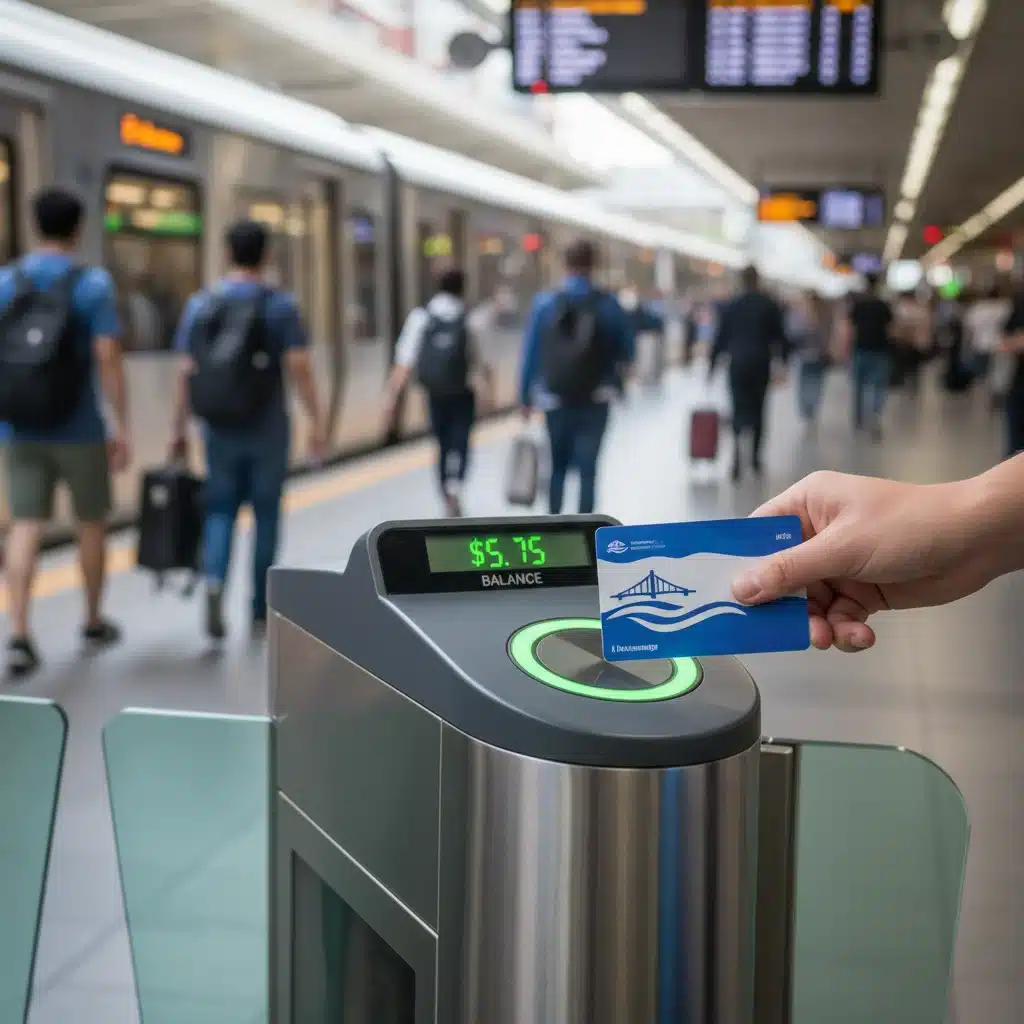
These benefits are usually administered by your employer through a third-party benefits provider. Once you enroll, you designate a certain amount of your paycheck to be deducted pre-tax each pay period. This money is then loaded onto a special debit card, or reimbursed to you, which you can use for eligible transportation expenses. It’s a seamless system designed to make saving on your commute as easy as possible.
Eligibility for 2026 Commuter Benefits: Who Can Participate?
One of the most common questions surrounding these programs is, “Am I eligible for 2026 commuter benefits?” The good news is that most employees whose employers offer these plans are eligible. Unlike some other employee benefits, commuter benefits are generally available to all employees, regardless of whether they participate in other health or retirement plans. This widespread eligibility makes 2026 commuter benefits an accessible savings opportunity for a vast majority of the workforce.
Typically, eligibility extends to full-time, part-time, and even seasonal employees. The key factor is that you must be an employee of a company that offers the benefit. Self-employed individuals, partners, and 2% S-Corp shareholders are generally not eligible to participate in pre-tax commuter benefits, as these benefits are specifically designed for W-2 employees. However, it’s always best to check with your human resources department or benefits administrator to confirm your specific eligibility based on your employment status and your company’s plan details.
It’s also important to note that you don’t need to be a daily commuter to benefit. Even if you only commute a few times a week, the savings can still be substantial. The primary requirement is that you incur eligible commuting expenses to travel to and from your place of employment. As long as you meet this basic criterion and your employer offers the program, you’re likely in a position to take advantage of 2026 commuter benefits.
What Expenses Are Covered by 2026 Commuter Benefits?
Understanding which expenses qualify for 2026 commuter benefits is crucial for maximizing your savings. The IRS defines specific categories of transportation expenses that can be paid for with pre-tax dollars. These categories are designed to cover the most common forms of commuting, ensuring broad applicability for employees.
Public Transportation
This is perhaps the most widely utilized aspect of 2026 commuter benefits. Eligible public transportation expenses include fares for:
- Buses
- Trains (commuter rail, subway, light rail)
- Ferries
- Vans and other public transit vehicles
This can include monthly passes, daily tickets, or stored value cards. If you use any form of public transit to get to work, you can likely use your 2026 commuter benefits to pay for it, leading to significant savings on what can often be a substantial monthly cost.
Qualified Parking
For those who drive to work, qualified parking expenses are a major component of 2026 commuter benefits. This includes:
- Parking at or near your employer’s business premises.
- Parking at or near a location from which you commute to work by public transit, carpool, or vanpool.
It’s important to differentiate that parking at your home is not eligible, nor is parking at a mall or other non-work-related destination. The parking must be directly associated with your commute to work. This benefit can be particularly valuable in urban areas where parking costs can be exorbitant.
Vanpooling and Carpooling
While individual car expenses like gas, tolls, and vehicle maintenance are generally not covered, expenses related to qualified vanpooling and carpooling are. A qualified vanpool is defined as a commuter highway vehicle with a seating capacity of at least six adults (not including the driver) and where at least 80% of the mileage is for transporting employees between their homes and workplaces. Additionally, at least half of the adult seating capacity must be occupied by employees. If you participate in such a setup, your share of the vanpool expenses can be paid for with your 2026 commuter benefits.
Ride-Sharing Services (Limited Scope)
Some ride-sharing services that operate as a form of vanpooling or provide shared-ride services that meet specific IRS criteria might be eligible. However, typical single-passenger ride-sharing services (like Uber or Lyft for solo rides) are generally not covered under the pre-tax benefit. Always check with your benefits administrator for clarification on specific ride-sharing services in your area. This is an evolving area, so staying informed about updates to 2026 commuter benefits guidelines is wise.
The Financial Impact: How Much Can You Really Save with 2026 Commuter Benefits?
The promise of saving up to 40% on transportation costs is not an exaggeration. The actual percentage will depend on your individual tax bracket and state income tax rates. Let’s break down the mechanics of the savings associated with 2026 commuter benefits.
Imagine your monthly commute costs $150. If you pay for this with after-tax dollars, and you’re in a combined federal and state tax bracket of 25% (plus FICA taxes of 7.65%), you’re effectively earning more to cover that $150. For example, to have $150 after taxes, you’d need to earn approximately $200 before taxes (assuming a 25% tax rate). With 2026 commuter benefits, that $150 is deducted from your gross pay, meaning you never pay taxes on it.
Consider the following simplified example:
- Gross Monthly Income: $4,000
- Monthly Commute Cost: $150
- Combined Tax Rate (Federal, State, FICA): 35% (for illustrative purposes)
Without 2026 Commuter Benefits:
Your $4,000 gross income is taxed. After taxes, you might have around $2,600. From this, you pay your $150 commute cost, leaving you with $2,450.
With 2026 Commuter Benefits:
Your $150 for commute is deducted pre-tax. Your taxable income becomes $3,850 ($4,000 – $150). Taxes are then calculated on $3,850. The savings come from not paying 35% on that $150, which is $52.50 per month. Over a year, this amounts to $630 in tax savings. This is a direct increase in your disposable income, demonstrating the tangible benefits of 2026 commuter benefits.
These savings can free up funds for other financial goals, whether it’s building your emergency fund, paying down debt, or saving for a major purchase. It’s a passive way to boost your savings simply by making a smart choice about how you pay for your commute.
How to Enroll in 2026 Commuter Benefits
Enrolling in 2026 commuter benefits is typically a straightforward process, but it requires proactive steps from your side. Here’s a general outline of how to get started:
1. Check with Your Employer
The first and most important step is to confirm that your employer offers 2026 commuter benefits. Reach out to your HR department, benefits administrator, or check your company’s internal benefits portal. They can provide you with details on the specific plan offered, the administrator, and the enrollment period. Not all employers are required to offer these benefits, though many do, especially in areas with high public transit usage.
2. Understand the Monthly Limits
The IRS sets monthly maximums for pre-tax contributions to transit and parking benefits. These limits are subject to change annually. For 2026 commuter benefits, ensure you know the current limits to avoid contributing more than allowed on a pre-tax basis. Any amount contributed above the IRS limit would be considered after-tax.
3. Choose Your Contribution Amount
Based on your typical monthly commuting expenses, decide how much you want to contribute. It’s wise to be realistic about your costs to avoid over-contributing, as some plans may have restrictions on rolling over unused funds (though many do allow rollover). If you’re unsure, estimate on the lower side and adjust later if needed. Remember, the goal is to cover your eligible expenses fully with pre-tax dollars.
4. Complete the Enrollment Process
Your employer or benefits administrator will guide you through the enrollment process. This usually involves filling out a form, either online or paper-based, where you specify your monthly contribution. You’ll typically need to select the type of benefit (transit, parking, or both) and the amount for each.
5. Receive Your Benefit Card or Reimbursement Information
Once enrolled, you’ll usually receive a special debit card, often branded by the benefits provider (e.g., WageWorks, Commuter Benefits Solutions). This card is pre-loaded with your pre-tax contributions and can be used directly at transit stations, parking garages, or for online purchases of passes. In some cases, you might pay out-of-pocket and then submit receipts for reimbursement, though the card system is more common for convenience.
6. Manage Your Benefits
Regularly review your contributions and usage. Most benefit providers offer online portals or mobile apps where you can check your balance, view transactions, and make changes to your contribution amount (usually during specific enrollment periods or with life events). Staying on top of your 2026 commuter benefits ensures you’re always maximizing your savings.
Common Misconceptions and FAQs About 2026 Commuter Benefits
Despite their clear advantages, there are often misunderstandings surrounding 2026 commuter benefits. Let’s address some common questions and clarify key points.
“Can I use commuter benefits for gas or car maintenance?”
No, individual car-related expenses such as gasoline, oil changes, tires, or vehicle repairs are not eligible for pre-tax commuter benefits. The benefit is specifically for public transportation, qualified parking, and qualified vanpooling/carpooling services. This distinction is crucial for understanding the scope of 2026 commuter benefits.
“What happens if I don’t use all my funds?”
Unlike Flexible Spending Accounts (FSAs) which often have a ‘use-it-or-lose-it’ rule, commuter benefits generally allow funds to roll over from month to month and year to year, as long as you remain employed with the company offering the benefit. However, if you leave your job, any unused funds typically cannot be reimbursed to you directly. They remain with the employer or plan administrator. Always confirm your specific plan’s rollover policy with your benefits provider for 2026 commuter benefits.
“Do I need to submit receipts?”
If you are using a benefits debit card, in most cases, you won’t need to submit receipts for every transaction, especially for common purchases like transit passes. The card system is designed for ease of use. However, it’s always a good practice to retain receipts, especially for larger or less common transactions, in case of an audit or if your plan administrator requests verification. For reimbursement claims, receipts are definitely required.
“Are these benefits taxable if I leave my job?”
No, the funds contributed to 2026 commuter benefits are always pre-tax. If you leave your job, any unused funds typically revert to the employer or are forfeited, but they are not considered taxable income to you at that point.
“Can my employer contribute to my commuter benefits?”
Yes, employers can choose to contribute to their employees’ commuter benefits in addition to or instead of allowing pre-tax deductions. These employer contributions are also tax-free to the employee, up to the IRS monthly limit. This is an added perk that some companies offer to further support their employees’ commuting needs, making 2026 commuter benefits even more attractive.
Maximizing Your 2026 Commuter Benefits: Tips and Strategies
To truly get the most out of your 2026 commuter benefits, consider these tips and strategies:
1. Accurately Estimate Your Monthly Costs
Take the time to track your actual commuting expenses for a month or two. This will give you a clear picture of how much you spend on public transit or parking. Overestimating means you might tie up more money than necessary; underestimating means you might miss out on pre-tax savings. Adjust your contribution to match your real costs as closely as possible.
2. Understand Your Plan’s Specifics
While general rules apply, each employer’s plan might have slight variations. Pay attention to details like enrollment deadlines, how funds are disbursed (card vs. reimbursement), and any specific vendor requirements. Your HR department is your best resource for these specifics related to your 2026 commuter benefits.
3. Combine Benefits if Possible
If you use public transit AND pay for parking (e.g., parking at a train station), you can typically allocate pre-tax funds to both categories, up to the individual monthly limits for each. This dual approach can significantly increase your overall savings.
4. Stay Informed About IRS Updates
The IRS limits for commuter benefits are adjusted annually. Keep an eye on these updates to ensure you’re contributing the maximum allowable pre-tax amount for 2026 commuter benefits. Your benefits administrator will usually communicate these changes.
5. Advocate for the Benefit
If your employer doesn’t currently offer 2026 commuter benefits, consider advocating for them. Presenting the financial advantages for both employees and the company (employers save on FICA taxes too!) can be a compelling argument. It’s a relatively low-cost benefit for employers to offer, yet it provides significant value to employees.

The Broader Impact of 2026 Commuter Benefits
Beyond individual financial savings, the widespread adoption and utilization of 2026 commuter benefits have broader positive impacts. These programs encourage the use of public transportation and reduce single-occupancy vehicle trips, which contributes to:
- Reduced Traffic Congestion: Fewer cars on the road mean smoother commutes for everyone.
- Lower Carbon Emissions: Public transit is generally more energy-efficient per passenger mile than individual cars, leading to a smaller environmental footprint.
- Improved Air Quality: Less vehicle exhaust contributes to cleaner air in urban and suburban areas.
- Enhanced Employee Well-being: Reduced financial stress and potentially less time stuck in traffic can lead to happier, more productive employees.
- Economic Support for Public Transit: Increased ridership helps support and sustain public transportation systems, which are vital for many communities.
Thus, by participating in 2026 commuter benefits, you’re not just helping your own wallet; you’re also contributing to a more sustainable and efficient community. It’s a win-win situation that benefits individuals, employers, and the environment.
Conclusion: Make 2026 Commuter Benefits Work for You
The opportunity to save up to 40% on your transportation costs through 2026 commuter benefits is a financial advantage that should not be overlooked. In a world where every dollar matters, leveraging pre-tax deductions for your commute is a smart, easy way to increase your take-home pay and improve your financial outlook. From public transit passes to qualified parking, these benefits cover a wide range of common commuting expenses, making them accessible to a broad spectrum of the workforce.
By understanding what 2026 commuter benefits are, who is eligible, what expenses are covered, and how to enroll, you are empowered to make informed decisions that can lead to significant annual savings. Don’t let this valuable employee benefit pass you by. Take the proactive steps to inquire with your employer, enroll in the program, and start putting more money back into your pocket. Your daily commute is an unavoidable part of your work life, but with 2026 commuter benefits, it doesn’t have to be a drain on your finances. Embrace these benefits and experience the tangible difference they can make in your financial well-being, while also contributing to a healthier community.