Future-Proofing High School Vocational Training for 2026 Careers
The landscape of the American workforce is in a constant state of flux, driven by rapid technological advancements, evolving economic demands, and shifting societal priorities. For high schools across the U.S., this dynamic environment presents both a challenge and an immense opportunity, particularly concerning vocational training. The question is no longer whether to offer vocational training, but how to ensure it remains relevant and effective in preparing students for the careers of tomorrow. As we look towards 2026 and beyond, understanding and adapting to emerging skill demands is paramount to future-proof future vocational training programs.
Historically, vocational education, often known as Career and Technical Education (CTE), has been a cornerstone of American education, providing practical skills for immediate entry into the workforce. However, the nature of these skills has fundamentally changed. Manual labor, while still important, is increasingly augmented by automation and digital tools. Traditional trades are now intertwined with advanced technology, data analytics, and complex problem-solving. This shift necessitates a complete reimagining of how high schools approach vocational training, moving beyond conventional paradigms to embrace innovation and foresight.
This comprehensive guide will explore the critical trends shaping the 2026 job market and outline actionable strategies for U.S. high schools to implement effective future vocational training programs. We will delve into the specific emerging skill demands, examine the role of technology, advocate for stronger industry partnerships, and discuss the importance of fostering ‘soft skills’ alongside technical competencies. Our goal is to equip educators, policymakers, and parents with the insights needed to prepare the next generation for successful and fulfilling careers.
The Shifting Sands: Understanding the 2026 Job Market
Before we can effectively design future vocational training, we must first understand the terrain students will navigate. The 2026 job market will be characterized by several key trends:
1. Technological Transformation
Artificial Intelligence (AI), machine learning, automation, and advanced robotics are not just buzzwords; they are fundamentally reshaping industries. Jobs that once required repetitive manual tasks are being automated, while new roles are emerging that demand interaction with these technologies. Consider manufacturing, where traditional assembly lines are giving way to smart factories managed by AI and robotics. Even in fields like healthcare, AI is assisting in diagnostics, and robotics in surgery. Vocational programs must integrate these technologies, teaching students not just how to operate them, but how to maintain, troubleshoot, and even program them.
2. The Green Economy
The global push towards sustainability and renewable energy is creating an entirely new sector of ‘green jobs.’ From solar panel installation and wind turbine maintenance to sustainable agriculture and energy efficiency auditing, these roles require specialized vocational skills. High schools have a unique opportunity to lead in this area, preparing students for careers that are not only economically viable but also environmentally conscious. This includes understanding renewable energy systems, sustainable construction practices, and waste management technologies.
3. Data-Driven Decisions
Data is the new oil, and virtually every industry, from retail to healthcare, relies on data analysis to make informed decisions. While complex data science might be university-level, vocational students will increasingly need foundational data literacy. This means understanding how to collect, interpret, and utilize data relevant to their specific trade. For example, a future automotive technician might use diagnostic data to predict equipment failures, or a culinary arts student might analyze consumer data to optimize menu offerings. Integrating basic data analytics into future vocational training is crucial.
4. The Gig Economy and Entrepreneurship
The rise of the gig economy means more individuals are working as freelancers or independent contractors. While this offers flexibility, it also demands a different skill set, including self-management, marketing, and financial literacy. Vocational programs should not only prepare students for traditional employment but also equip them with entrepreneurial skills, enabling them to start their own businesses or thrive in a freelance capacity. This includes business planning, client management, and understanding market trends.
5. Human-Centered Jobs
Despite technological advancements, jobs requiring uniquely human skills – empathy, creativity, critical thinking, and complex communication – will remain in high demand. Fields like healthcare, education, and personal services will continue to grow, requiring individuals with strong interpersonal skills. Vocational training must balance technical prowess with the development of these essential ‘soft skills’ to ensure graduates are well-rounded and adaptable.
Redefining Curriculum: Core Components of Future Vocational Training
To meet these emerging demands, U.S. high schools need to fundamentally redefine their curriculum. Here are the core components that should be integrated into future vocational training programs:
1. Advanced Digital and Technical Skills
This goes beyond basic computer literacy. It involves:
- Coding and Programming: Basic coding skills are becoming as fundamental as reading and writing. Students in trades like manufacturing, construction, or even agriculture can benefit from understanding how to program automated systems, sensors, or drones.
- Data Analytics and Visualization: Teaching students how to interpret data relevant to their field, use simple analytical tools, and present findings effectively.
- Cybersecurity Fundamentals: As more systems become interconnected, understanding basic cybersecurity principles is vital for protecting data and maintaining operational integrity in any vocational field.
- Additive Manufacturing (3D Printing): This technology is revolutionizing prototyping, repair, and even production in various industries. Students should have hands-on experience with 3D design and printing.
- Robotics and Automation: Practical experience with robotic arms, automated guided vehicles (AGVs), and programmable logic controllers (PLCs) will be indispensable in modern industrial settings.
- Immersive Technologies (AR/VR): Augmented Reality (AR) and Virtual Reality (VR) are increasingly used for training, design, and remote assistance in fields like healthcare, construction, and advanced manufacturing.
2. Green Skills and Sustainability Practices
Integrating environmental consciousness and sustainable practices into every vocational pathway:
- Renewable Energy Systems: Courses on solar, wind, geothermal, and hydroelectric power generation, installation, and maintenance.
- Sustainable Construction: Teaching about green building materials, energy-efficient designs, and sustainable construction techniques.
- Waste Management and Recycling Technologies: Understanding modern approaches to waste reduction, recycling, and resource recovery.
- Conservation and Land Management: For agricultural or horticultural programs, focusing on sustainable farming practices, water conservation, and soil health.
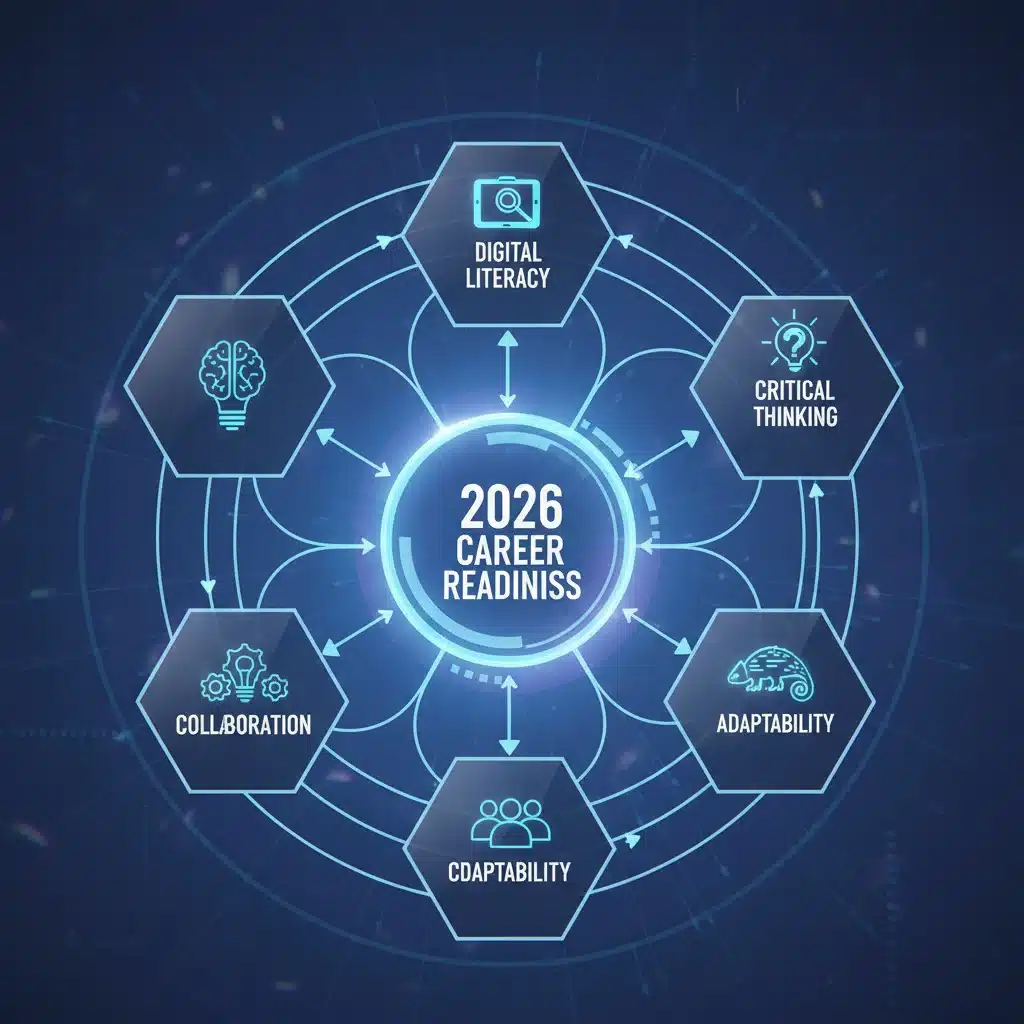
3. Essential Soft Skills (21st-Century Skills)
Often overlooked, these skills are crucial for success in any career:
- Critical Thinking and Problem-Solving: The ability to analyze complex situations, identify root causes, and devise effective solutions.
- Communication: Both written and verbal, including technical communication, presentation skills, and active listening.
- Collaboration and Teamwork: Working effectively in diverse teams, understanding different perspectives, and contributing to collective goals.
- Adaptability and Resilience: The capacity to learn new skills quickly, adjust to changing environments, and bounce back from setbacks.
- Creativity and Innovation: Thinking outside the box to develop new ideas, processes, or products.
- Emotional Intelligence: Understanding and managing one’s own emotions, and recognizing and influencing the emotions of others.
Strategies for Implementation: Bringing Future Vocational Training to Life
Curriculum redesign is only one piece of the puzzle. Effective implementation requires a multi-faceted approach involving partnerships, teacher development, and innovative learning environments.
1. Strengthening Industry Partnerships
The most effective future vocational training programs are those built hand-in-hand with industry. High schools should actively seek and cultivate partnerships with local businesses, corporations, and community organizations. These partnerships can provide:
- Curriculum Input: Industry experts can advise on the most current technologies, tools, and practices relevant to their fields, ensuring programs are aligned with real-world demands.
- Internships and Apprenticeships: Providing students with invaluable on-the-job experience, mentorship, and potential employment opportunities. This bridges the gap between classroom learning and practical application.
- Donated Equipment and Resources: Many businesses are willing to donate outdated (but still functional) equipment or provide access to their facilities for training purposes, alleviating financial burdens on schools.
- Guest Speakers and Mentors: Bringing industry professionals into the classroom to share their experiences and inspire students.
- Teacher Externships: Allowing vocational teachers to spend time working in industry settings to update their skills and knowledge.
2. Investing in Teacher Development
Teachers are at the forefront of delivering future vocational training. They need ongoing professional development to stay current with rapidly evolving technologies and industry trends. This includes:
- Regular Training Programs: Focused on new software, hardware, and methodologies relevant to their trade areas.
- Industry Certifications: Supporting teachers in obtaining relevant industry certifications, which not only boosts their credibility but also allows them to teach and certify students.
- Collaboration with Higher Education: Partnering with community colleges and universities to offer advanced training or co-taught courses.
3. Creating Modern Learning Environments
Outdated workshops and classrooms will not suffice for future vocational training. Schools need to invest in creating dynamic, hands-on learning spaces that mirror modern workplaces:
- Flexible Classrooms: Spaces that can be reconfigured for individual work, group projects, and practical demonstrations.
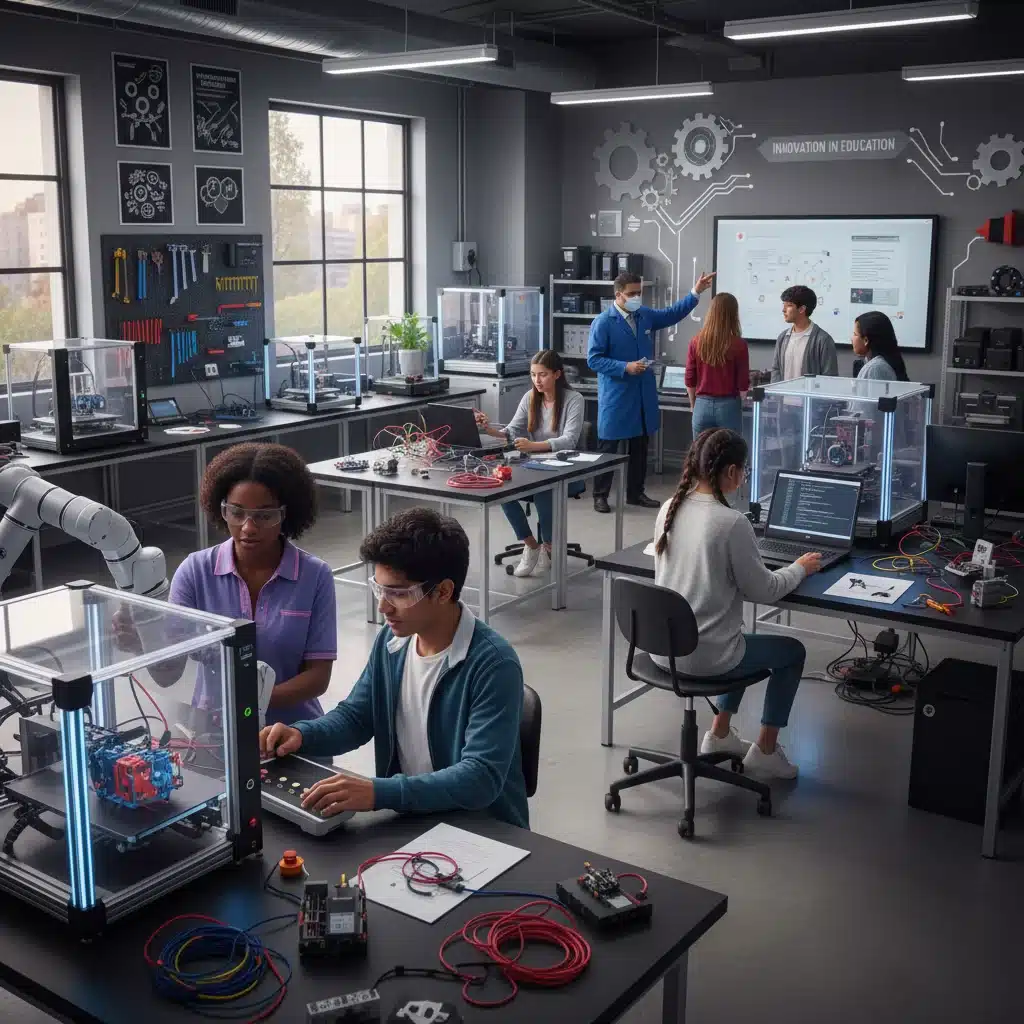
- Makerspaces and Innovation Labs: Equipped with 3D printers, laser cutters, robotics kits, and prototyping tools to foster creativity and hands-on problem-solving.
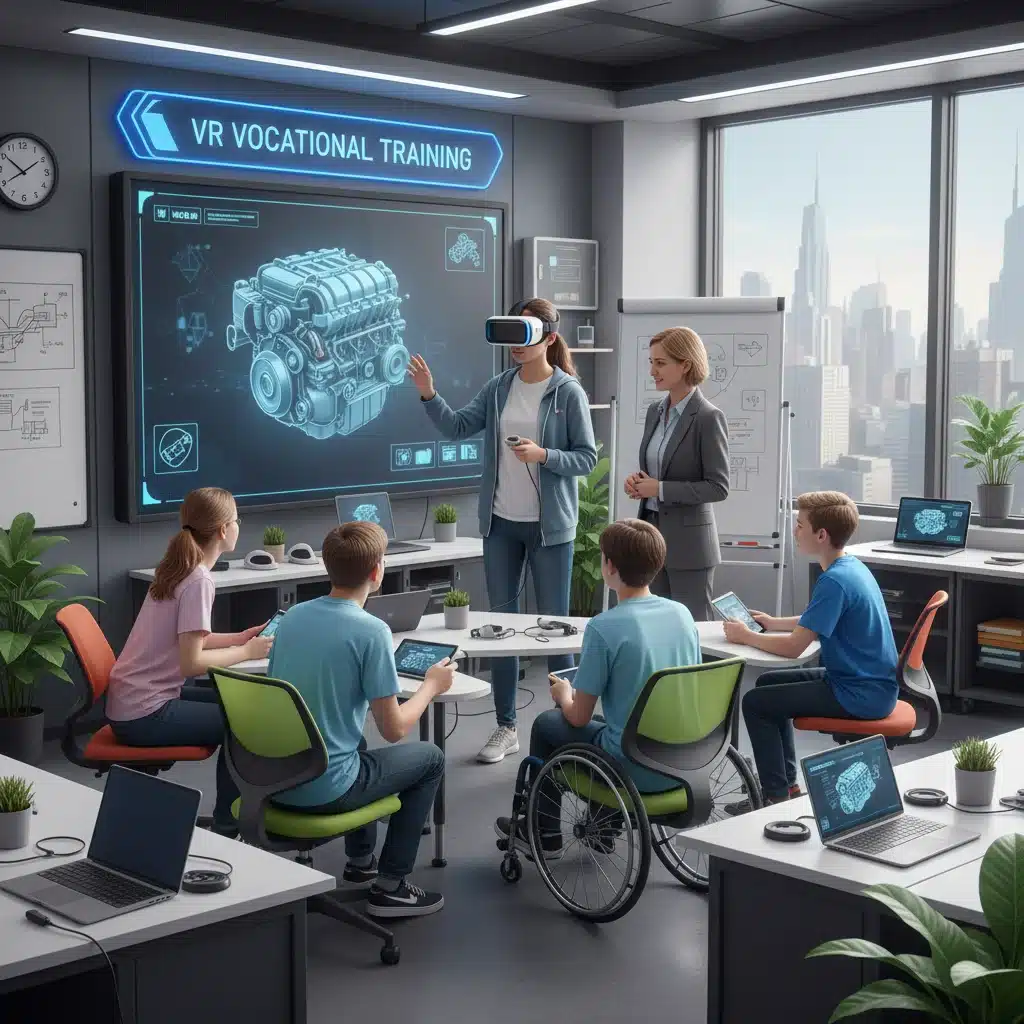
- Simulators and Virtual Reality (VR) Labs: Providing safe and cost-effective ways for students to gain experience with complex machinery or dangerous procedures, from operating heavy equipment to performing medical simulations.
- Industry-Standard Equipment: Ensuring that the tools and technology available to students are those they will encounter in actual workplaces.
4. Integrating Academic and Vocational Learning
The traditional divide between academic and vocational education is artificial and counterproductive. Future vocational training should be seamlessly integrated with core academic subjects:
- Project-Based Learning: Designing projects that require students to apply mathematical, scientific, and communication skills within a vocational context. For example, a construction project might involve calculating material costs (math), understanding structural integrity (science), and presenting blueprints (communication).
- Cross-Curricular Collaboration: Encouraging teachers from different departments to collaborate on interdisciplinary units.
- Dual Enrollment and Early College Programs: Allowing students to earn college credit while still in high school, providing a head start on their post-secondary education or career path.
Addressing Challenges and Ensuring Equity
Implementing these changes is not without its challenges. Funding, equitable access, and societal perceptions are significant hurdles that must be addressed to ensure successful future vocational training programs.
1. Funding and Resources
Modern vocational training requires substantial investment in equipment, technology, and teacher development. Schools and districts must actively seek state and federal grants, explore public-private partnerships, and advocate for increased funding for CTE programs. Creative solutions, such as shared regional vocational centers, can also help distribute costs and maximize resource utilization.
2. Equitable Access
All students, regardless of their socioeconomic background, race, or gender, should have equitable access to high-quality future vocational training. This means:
- Breaking Down Stereotypes: Actively encouraging girls to enter STEM and skilled trades, and promoting diversity in all vocational pathways.
- Transportation and Support Services: Ensuring that students from underserved communities can access specialized vocational centers or internship opportunities.
- Inclusive Curriculum: Designing programs that are culturally relevant and responsive to the needs of diverse learners, including students with disabilities.
3. Changing Perceptions
Despite the growing demand for skilled trades and technical professionals, vocational education still sometimes carries a stigma. It is crucial to rebrand future vocational training as a viable, respected, and intellectually stimulating pathway to a successful career. This involves:
- Highlighting Success Stories: Showcasing graduates who have achieved success in vocational fields.
- Engaging Parents and Counselors: Educating them about the high earning potential and career growth opportunities available through vocational pathways.
- Promoting Career Clusters: Presenting vocational education not as a single track, but as diverse career clusters that lead to a wide range of professions.
Case Studies and Success Stories
Across the U.S., some pioneering high schools and districts are already implementing innovative future vocational training models. These examples serve as powerful blueprints for others:
- P-TECH Schools (Pathways in Technology Early College High School): These schools, often developed in partnership with IBM and other tech companies, allow students to earn a high school diploma and a no-cost associate degree in a STEM field. They emphasize project-based learning, mentorship, and workplace experiences, directly preparing students for specific tech jobs.
- Advanced Manufacturing Academies: Some districts have established academies focused on advanced manufacturing, integrating robotics, CAD/CAM software, and precision machining. These programs often have strong ties to local manufacturing firms, providing clear pathways to employment.
- Green Technology Programs: High schools in environmentally conscious regions are developing programs in renewable energy installation, sustainable agriculture, and environmental engineering, addressing local industry needs and global challenges.
- Healthcare Pathways: Given the continuous growth in healthcare, many schools offer Certified Nursing Assistant (CNA) or Medical Assistant (MA) programs, allowing students to gain certifications and enter the workforce directly out of high school or pursue further education.
These success stories underscore the importance of vision, collaboration, and a willingness to adapt. They demonstrate that when high schools align their vocational training with future industry needs, they create powerful opportunities for their students.
The Role of Policy and Advocacy
Transforming future vocational training at a national scale requires supportive policies and strong advocacy. Policymakers at local, state, and federal levels have a crucial role to play in:
- Funding Mechanisms: Establishing stable and increased funding streams specifically for modern CTE infrastructure, equipment, and professional development.
- Curriculum Standards: Developing flexible but robust national and state standards for vocational programs that encourage innovation and alignment with industry best practices.
- Incentives for Industry Partnerships: Creating tax incentives or grants for businesses that partner with high schools on vocational training initiatives.
- Research and Data Collection: Investing in research to identify emerging skill gaps and track the success of vocational graduates, using data to inform policy decisions.
- Promoting Career Pathways: Advocating for a broader understanding of career success that includes skilled trades and technical professions, not just four-year university degrees.
Conclusion: A Call to Action for Future Vocational Training
The imperative to adapt future vocational training in U.S. high schools is clear and urgent. The 2026 job market will reward adaptability, technological fluency, and uniquely human skills. By embracing these changes, high schools can move beyond traditional vocational models to become dynamic hubs of innovation, preparing students not just for jobs, but for meaningful and thriving careers.
This transformation requires a collective effort: educators willing to innovate, policymakers committed to investment, industry leaders eager to partner, and communities ready to embrace a new vision for vocational education. The future success of our students and the strength of our workforce depend on our ability to act decisively and strategically today. Let us empower the next generation with the skills, knowledge, and mindset to navigate and shape the future of work, ensuring that future vocational training is synonymous with opportunity and success.