AI in US Education 2026: Future Skills & Learning Landscape
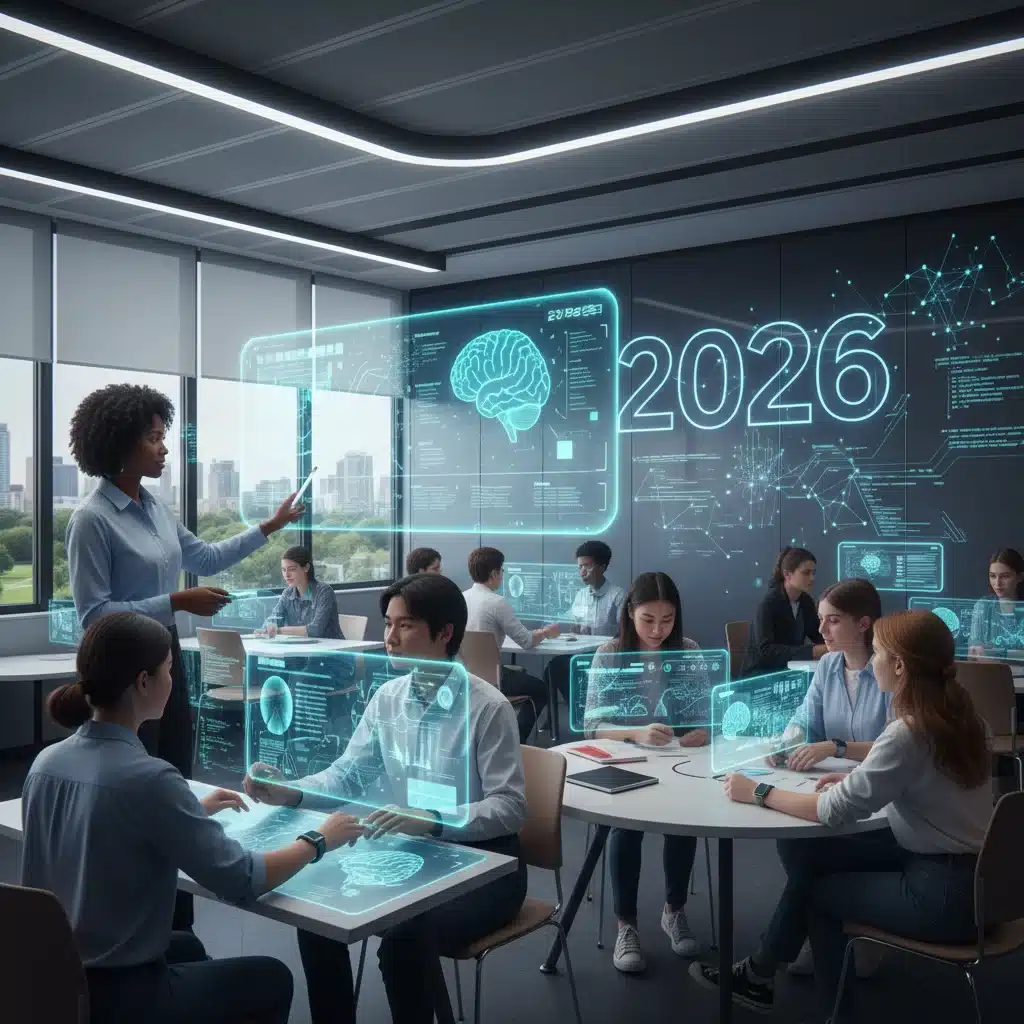
The landscape of education is on the cusp of an unprecedented transformation, largely driven by the rapid advancements in Artificial Intelligence (AI). As we look towards 2026, the impact of AI on U.S. education will be profound, reshaping not only how students learn but also what skills they will need to thrive in a world increasingly influenced by intelligent machines. This isn’t merely about integrating new tools; it’s about fundamentally rethinking pedagogical approaches, curriculum design, and the very purpose of schooling in the 21st century. The shift is already underway, with AI showing promise in personalizing learning, automating administrative tasks, and providing educators with deeper insights into student performance. However, this revolution also brings with it significant challenges, from ethical considerations and data privacy to ensuring equitable access and retraining the existing workforce of educators. The goal is not to replace human intelligence but to augment it, preparing a generation that can collaborate with AI, innovate alongside it, and critically navigate its complexities.
Understanding the trajectory of AI US Education 2026 requires a holistic view, encompassing technological capabilities, policy changes, and societal expectations. Educators, policymakers, parents, and students alike must engage in a proactive dialogue to shape an educational future that is both efficient and profoundly human. The emphasis will inevitably shift from rote memorization to higher-order thinking skills, creativity, and emotional intelligence – qualities that AI, despite its sophistication, cannot fully replicate. This article delves into the anticipated changes, highlights the critical skills for future success, and explores how the U.S. education system can adapt to this new paradigm, ensuring that every student is equipped for the challenges and opportunities that lie ahead.
The Dawn of a New Educational Era: AI Integration by 2026
By 2026, AI will no longer be a nascent technology in U.S. schools; it will be an embedded component of the educational infrastructure. Its integration will manifest in various forms, from sophisticated learning management systems that adapt to individual student paces to AI-powered tutors offering personalized feedback. The promise of AI in education is immense, offering solutions to long-standing challenges such as differentiated instruction, student engagement, and resource allocation. Imagine a classroom where every student receives lessons tailored precisely to their learning style, strengths, and weaknesses, all facilitated by intelligent algorithms. This level of personalization, once a distant dream, is rapidly becoming a reality, fundamentally altering the teacher’s role from a sole knowledge disseminator to a facilitator of learning, mentor, and guide.
The administrative burden on educators is another area where AI is poised to make a significant impact. Grading, scheduling, attendance tracking, and even drafting individualized education plans (IEPs) can be streamlined or partially automated by AI tools, freeing up teachers to focus more on direct student interaction and pedagogical innovation. This shift is crucial for teacher retention and job satisfaction, addressing the burnout many educators experience due to excessive non-teaching duties. Furthermore, AI can provide invaluable data analytics, offering administrators and teachers real-time insights into curriculum effectiveness, student progress, and areas needing intervention. This data-driven approach to education can lead to more informed decision-making, optimizing resource deployment and improving overall educational outcomes across districts. The overarching goal is not to diminish the human element but to enhance it, empowering educators with tools that amplify their effectiveness and allow them to dedicate more time to the nuanced art of teaching.
Personalized Learning Pathways: A Core Tenet of AI US Education 2026
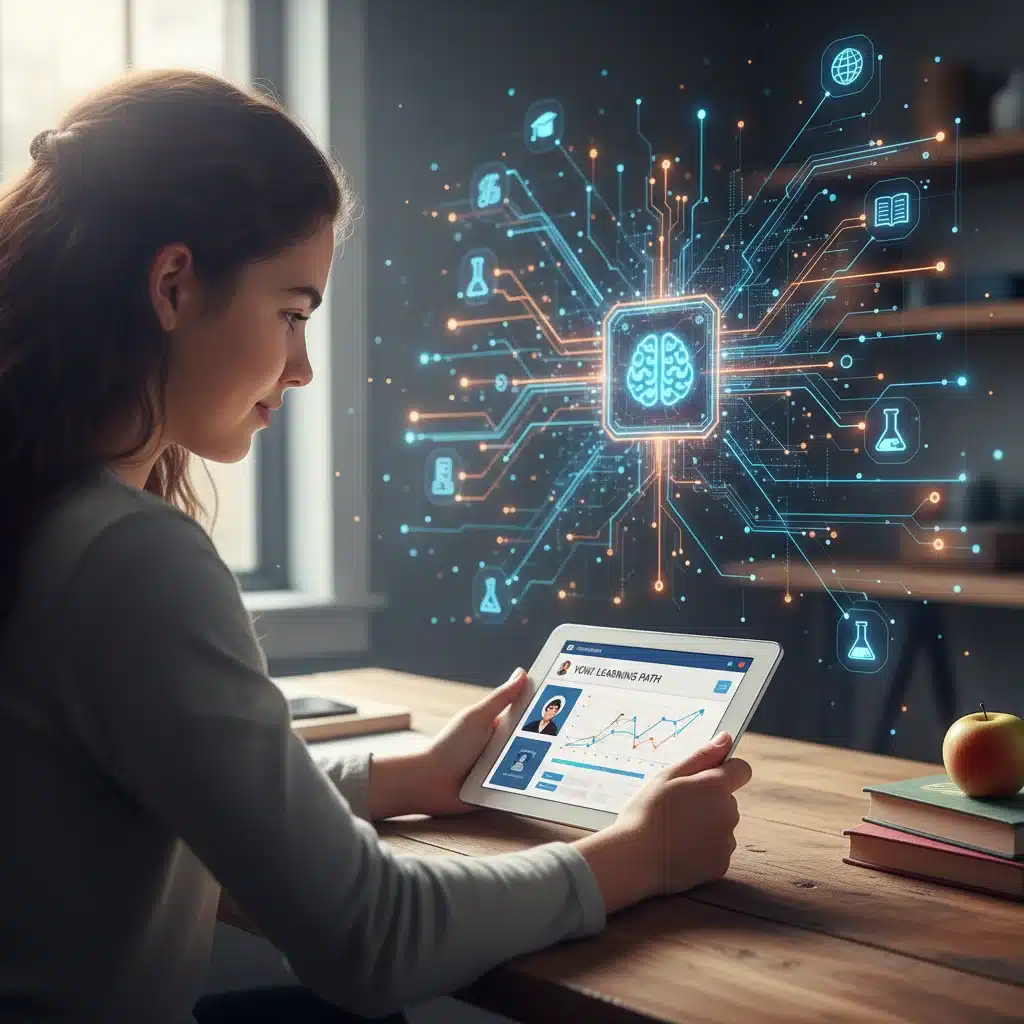
One of the most transformative aspects of AI in education is its capacity for personalization. Traditional classrooms, with their one-size-fits-all approach, often struggle to cater to the diverse needs of students. AI-powered adaptive learning platforms are changing this by creating unique learning pathways for each student. These platforms use algorithms to assess a student’s current knowledge, learning pace, and preferred modalities, then deliver content and exercises that are perfectly aligned with their individual requirements. For example, a student struggling with algebra might receive additional interactive tutorials and practice problems, while another excelling in the same subject might be presented with more advanced concepts or real-world applications. This dynamic adjustment ensures that no student is left behind or held back, fostering a more engaging and effective learning experience.
By 2026, we can expect these personalized learning systems to be more sophisticated, incorporating elements of gamification, virtual reality (VR), and augmented reality (AR) to create immersive and highly motivating educational environments. AI will analyze not just performance data but also engagement metrics, emotional responses (through facial recognition or voice analysis, with appropriate ethical safeguards), and even biometric data to fine-tune the learning experience. This level of personalization extends beyond academic content, potentially identifying cognitive biases or learning disabilities earlier, allowing for timely interventions. The promise of AI in this context is to unlock each student’s full potential, transforming education from a standardized process into a deeply individualized journey of discovery and growth. The focus on personalized learning will be a defining characteristic of AI US Education 2026, moving away from mass instruction towards tailored educational experiences.
Rethinking the Role of the Educator in an AI-Augmented Classroom
The advent of AI does not diminish the role of the teacher; rather, it elevates and reframes it. In an AI-augmented classroom, teachers will transition from being primary content deliverers to orchestrators of learning, mentors, and facilitators of critical thinking. With AI handling routine tasks like grading quizzes and providing basic explanations, educators can devote more time to complex problem-solving, fostering creativity, and nurturing socio-emotional skills – areas where human interaction is irreplaceable. They will become expert diagnosticians of learning challenges that AI identifies, designing targeted interventions and providing the human empathy and encouragement that machines cannot. This shift demands a new skill set for educators, emphasizing data literacy, technological fluency, and a deep understanding of how to integrate AI tools effectively into their pedagogical practices.
Professional development programs will be crucial in preparing the existing teaching workforce for this new reality. These programs must focus not only on technical proficiency with AI tools but also on developing innovative teaching strategies that leverage AI’s capabilities. Teachers will need to learn how to interpret AI-generated data, design project-based learning experiences that incorporate AI, and guide students in ethical discussions surrounding AI. The classroom of 2026 will be a collaborative space where both human and artificial intelligence work in concert, with the teacher at the helm, steering students towards deeper understanding and higher-level skills. The success of AI US Education 2026 will heavily depend on how effectively we empower and re-skill our educators for this evolving role.
Key Skills for 2026: Preparing Students for an AI-Driven World
As AI reshapes industries and job markets, the skills deemed essential for student success are also evolving. The traditional emphasis on factual recall is diminishing, replaced by a demand for competencies that complement, rather than compete with, AI’s capabilities. By 2026, U.S. education must prioritize the development of six crucial skills to prepare students for a future where collaboration with AI is commonplace and innovation is key. These skills are not new, but their importance is magnified in an AI-driven world:
1. Critical Thinking and Problem-Solving
AI can process vast amounts of information and identify patterns, but it often lacks the nuanced understanding and contextual judgment required for complex problem-solving. Students need to develop the ability to analyze information critically, evaluate AI-generated solutions, identify biases, and formulate original approaches to novel problems. This involves asking the right questions, deconstructing complex issues, and synthesizing diverse perspectives. Instead of merely accepting AI outputs, students must be equipped to challenge, refine, and improve upon them, fostering an inquisitive and analytical mindset.
2. Creativity and Innovation
While AI can generate creative outputs (e.g., music, art, text), true innovation often stems from uniquely human experiences, emotions, and the ability to connect seemingly disparate ideas in novel ways. Education must cultivate students’ capacity for imaginative thinking, divergent problem-solving, and artistic expression. Project-based learning, design thinking, and opportunities for open-ended exploration will be vital in nurturing creativity. The goal is to empower students to use AI as a tool to amplify their own creative impulses, rather than letting it dictate their creative process.
3. Digital Literacy and AI Fluency
Beyond basic computer skills, digital literacy in 2026 will encompass a deep understanding of how AI works, its capabilities, limitations, and ethical implications. Students need to be able to effectively interact with AI tools, understand data privacy concerns, identify misinformation generated by AI, and comprehend the societal impact of intelligent systems. This includes basic coding concepts, data interpretation, and an awareness of algorithmic bias. Developing AI fluency means not just using AI, but understanding its underlying principles, allowing students to be informed and responsible digital citizens.
4. Communication and Collaboration
Even in an AI-driven world, human interaction remains paramount. Students must develop strong communication skills – both written and verbal – to articulate their ideas clearly, persuade others, and work effectively in teams. Collaboration, especially with diverse groups and across different cultural contexts, will be essential for tackling global challenges. AI can facilitate collaboration by breaking down language barriers or organizing project workflows, but the human element of empathy, negotiation, and consensus-building remains irreplaceable. Learning to collaborate effectively with AI systems also becomes a key skill, understanding how to best leverage their strengths in team settings.
5. Adaptability and Resilience
The pace of technological change is accelerating, making adaptability a critical survival skill. Students must be prepared for a future where job roles evolve rapidly, and continuous learning is the norm. Fostering resilience – the ability to bounce back from setbacks, embrace challenges, and navigate uncertainty – is equally important. Education needs to instill a growth mindset, encouraging students to view failures as learning opportunities and to continuously seek new knowledge and skills. This prepares them for a dynamic career landscape where lifelong learning is not just an advantage, but a necessity.
6. Ethical Reasoning and Empathy
As AI becomes more powerful, ethical considerations become increasingly complex. Students need a strong foundation in ethical reasoning to grapple with issues such as AI bias, data privacy, algorithmic accountability, and the responsible use of autonomous systems. Developing empathy and a strong moral compass will guide them in making decisions that benefit society as a whole, ensuring that technology serves humanity rather than the other way around. Discussions on AI ethics should be integrated across the curriculum, fostering a generation that can design and implement AI responsibly and humanely. These six skills form the bedrock of student preparedness for AI US Education 2026 and beyond.
Challenges and Considerations for Implementing AI in U.S. Education
While the potential benefits of AI in U.S. education are immense, several significant challenges must be addressed for successful and equitable implementation by 2026. Ignoring these hurdles could exacerbate existing inequalities and undermine the transformative potential of AI.
Equity and Access
One of the foremost concerns is ensuring equitable access to AI technologies and the digital infrastructure required to support them. The digital divide, which disproportionately affects low-income and rural communities, could widen if not proactively addressed. Schools in underserved areas often lack high-speed internet, up-to-date hardware, and sufficient technical support. Implementing AI widely requires substantial investment in infrastructure, devices, and training across all districts, not just the affluent ones. Without a concerted effort to bridge this gap, AI could further entrench educational disparities, rather than alleviate them. Policies must be developed to ensure that every student, regardless of their socioeconomic background or geographical location, has the opportunity to engage with and benefit from AI-powered learning tools. This is a critical aspect of ensuring that AI US Education 2026 is truly inclusive.
Data Privacy and Security
AI systems rely heavily on data, much of which will be personal student information. This raises serious concerns about data privacy and security. Schools must implement robust policies and technologies to protect sensitive student data from breaches, misuse, and unauthorized access. Clear guidelines on data collection, storage, usage, and sharing are essential, along with transparent communication with parents and students about how their data is being utilized. Balancing the benefits of personalized learning with the imperative to safeguard privacy will be a delicate act. Trust in these systems is paramount, and any perception of data exploitation could lead to significant public backlash and hinder AI adoption.
Ethical AI Development and Use
The ethical implications of AI in education extend beyond data privacy. Algorithmic bias, for instance, is a significant concern. If AI models are trained on biased data, they can perpetuate and even amplify existing societal inequalities, potentially leading to unfair assessments or discriminatory learning pathways. Developers and educators must work together to ensure that AI tools are designed and implemented ethically, with a focus on fairness, transparency, and accountability. This includes regular audits of AI algorithms for bias, promoting diverse teams in AI development, and establishing ethical review boards for educational AI applications. Furthermore, the psychological impact of AI on student development, such as over-reliance on AI or potential effects on human connection, needs careful consideration.
Teacher Training and Professional Development
The success of AI integration hinges on the preparedness of educators. Many teachers currently lack the training and confidence to effectively use AI tools, let alone integrate them meaningfully into their pedagogy. Comprehensive and ongoing professional development programs are essential. These programs should not only cover the technical aspects of using AI platforms but also focus on pedagogical strategies for an AI-augmented classroom, ethical considerations, and the development of new teaching roles. Investing in teacher training is an investment in the future of education, ensuring that educators are empowered, not intimidated, by AI. This continuous learning for educators defines the success of AI US Education 2026.
Curriculum Redesign and Assessment Evolution
The shift in required skills necessitates a redesign of the curriculum. Traditional curricula, often focused on content delivery and standardized testing, may not adequately prepare students for an AI-driven world. Curricula need to evolve to emphasize critical thinking, creativity, problem-solving, and ethical reasoning, often through project-based and interdisciplinary approaches. Furthermore, assessment methods must also adapt. How do we accurately measure skills like creativity or ethical reasoning? How do we assess learning when AI tools are used to complete tasks? New forms of authentic assessment, perhaps incorporating AI itself to evaluate complex projects or portfolios, will be required to reflect the broader range of competencies students need. This foundational change in curriculum and assessment is crucial for the educational goals of AI US Education 2026.
Policy and Investment: Paving the Way for AI US Education 2026
For AI to truly revolutionize U.S. education by 2026, a concerted effort from policymakers and significant investment are paramount. This involves creating a supportive regulatory environment, allocating necessary funding, and fostering collaboration among various stakeholders.
Government Initiatives and Funding
Federal, state, and local governments must prioritize AI in education through targeted funding initiatives. This includes grants for schools to upgrade infrastructure, acquire AI-powered learning platforms, and provide robust professional development for educators. Policies that encourage public-private partnerships can also accelerate the development and deployment of innovative AI solutions. Additionally, funding research into the effectiveness and ethical implications of AI in educational settings is crucial for evidence-based decision-making. Without substantial and sustained financial commitment, the promise of AI in education risks remaining largely unfulfilled, particularly in under-resourced districts. Proactive government support is a cornerstone of successful AI US Education 2026 implementation.
Standardization and Interoperability
The proliferation of various AI tools and platforms can lead to fragmentation and incompatibility issues. Policymakers can play a role in promoting standardization and interoperability among educational AI technologies. This would allow for seamless integration, easier data exchange, and a more cohesive learning experience for students and teachers. Establishing common technical standards and data formats could prevent vendor lock-in and foster a more competitive and innovative market for educational AI solutions. This technical foresight will be key to scaling AI solutions effectively across the diverse U.S. education system.
Collaboration Among Stakeholders
Effective integration of AI requires collaboration among educators, technology developers, policymakers, researchers, and parents. Forums and initiatives that bring these groups together can facilitate shared understanding, address concerns, and co-create solutions. Educators can provide valuable insights into classroom realities and student needs, while developers can ensure AI tools are practical and user-friendly. Policymakers can create the frameworks for ethical use and equitable access, and researchers can provide the evidence base for what works. This multi-stakeholder approach ensures that AI solutions are not only technologically advanced but also pedagogically sound, ethically responsible, and socially beneficial. The collaborative spirit will define the success of AI US Education 2026.
The Future is Now: Embracing AI for a Better Educational Tomorrow
The journey towards AI US Education 2026 is not without its complexities, but the potential rewards are immense. By strategically integrating AI, the U.S. education system can move beyond traditional limitations, offering truly personalized learning experiences, empowering educators, and preparing students with the critical skills needed for a rapidly evolving world. This transformation requires a proactive and collaborative approach, addressing challenges such as equity, data privacy, and ethical considerations head-on. It demands a commitment to continuous learning – not just for students, but for educators, administrators, and policymakers alike.
The future of education is not about replacing human teachers with machines, but about harnessing the power of AI to augment human capabilities, foster deeper learning, and unlock the full potential of every student. As we approach 2026, the focus must remain on creating an educational ecosystem that is innovative, inclusive, and deeply human-centered. By prioritizing the development of critical thinking, creativity, digital literacy, communication, adaptability, and ethical reasoning, we can ensure that the next generation is not just prepared for an AI-driven world, but is equipped to shape it for the better. The time to act is now, to build an educational future that is resilient, equitable, and inspiring for all.