2026 Social Security COLA: Impact on U.S. Retirees

The financial landscape for millions of U.S. retirees is perennially shaped by the Social Security Cost-of-Living Adjustment (COLA). As we look ahead to 2026, understanding the potential impact of the Social Security COLA 2026 becomes paramount for effective retirement planning and financial stability. This adjustment, designed to help Social Security beneficiaries keep pace with inflation, directly influences the purchasing power and overall well-being of older Americans.
Social Security benefits are a lifeline for a significant portion of the elderly population in the United States. For many, these benefits represent their primary, if not sole, source of income. Consequently, even a small percentage change in the annual COLA can have profound implications, affecting everything from daily living expenses to healthcare costs and long-term financial security. The anticipation surrounding the 2026 COLA is thus not merely a matter of economic curiosity; it’s a critical component of millions of household budgets.
This comprehensive article aims to dissect the intricacies of the Social Security COLA 2026. We will explore the methodology behind its calculation, analyze the economic indicators that typically influence it, and discuss expert predictions for the upcoming adjustment. Furthermore, we will delve into the practical implications for U.S. retirees, offering insights into how potential changes might affect their monthly benefits, Medicare premiums, and overall financial strategies. Our goal is to equip retirees and those approaching retirement with the knowledge necessary to anticipate and adapt to the evolving economic environment.
Understanding the Social Security COLA 2026 is more than just knowing a number; it’s about comprehending its ripple effects across various aspects of retirement life. From budgeting for essentials to planning for unexpected expenses, the COLA plays a central role. We will also touch upon the broader economic context, including inflation trends and their direct link to COLA adjustments, providing a holistic view of this vital component of America’s social safety net.
The Mechanics of Social Security COLA: How It’s Calculated
To truly grasp the significance of the Social Security COLA 2026, one must first understand the mechanism by which it is determined. The Cost-of-Living Adjustment is not an arbitrary figure; it is mandated by law and calculated based on specific economic data, primarily inflation. The Social Security Administration (SSA) uses a particular index to make this crucial determination, ensuring that benefits retain their purchasing power over time.
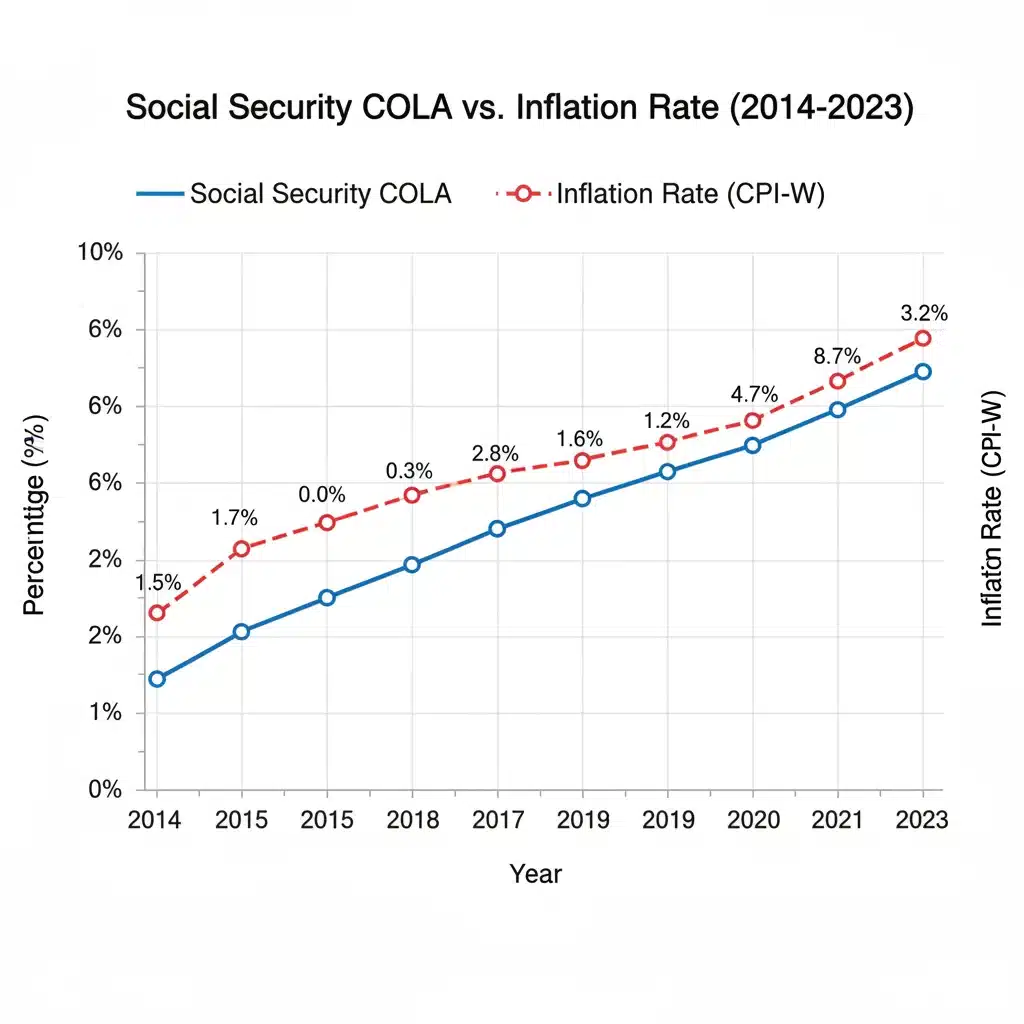
The key economic indicator used for COLA calculations is the Consumer Price Index for Urban Wage Earners and Clerical Workers (CPI-W). This index measures the average change over time in the prices paid by urban wage earners and clerical workers for a market basket of consumer goods and services. The CPI-W is a subset of the broader Consumer Price Index (CPI) and is specifically chosen because it is believed to better reflect the spending patterns of working-class individuals, who are often seen as representative of the broader population that contributes to and benefits from Social Security.
The COLA calculation process involves comparing the average CPI-W for the third quarter of the current year (July, August, and September) with the average CPI-W for the third quarter of the last year in which a COLA was payable. The percentage increase, if any, is then rounded to the nearest one-tenth of one percent. If there is no increase, or if the CPI-W has decreased, there is no COLA for that year. This ensures that beneficiaries do not see a reduction in their nominal benefits, even during periods of deflation.
For the Social Security COLA 2026, the SSA will compare the average CPI-W for the third quarter of 2025 with the average CPI-W for the third quarter of 2024 (assuming a COLA was payable in 2025). This look-back period is critical because it means the COLA announced in October 2025 for 2026 benefits is based on inflation data from the preceding year, not on real-time data for the year in which it takes effect. This lag can sometimes lead to discrepancies between the COLA and current inflation experiences, a point of frequent discussion among economists and beneficiaries alike.
It’s important to differentiate the CPI-W from other inflation measures, such as the Consumer Price Index for All Urban Consumers (CPI-U) or the Chained Consumer Price Index (C-CPI-U). While these indices also track inflation, their methodologies and target populations differ. The use of CPI-W for COLA calculations has been a subject of debate, with some arguing that it may not accurately reflect the spending patterns and healthcare costs faced by seniors, who often have different consumption baskets than urban wage earners. Proposals to switch to an experimental CPI for the Elderly (CPI-E) have been discussed, but as of now, the CPI-W remains the official index for determining the Social Security COLA 2026 and beyond.
Understanding this calculation method is fundamental to predicting and interpreting the annual COLA. It highlights the direct link between inflation and benefit adjustments, underscoring why economic forecasts regarding price changes are so closely watched by anyone concerned with Social Security’s future.
Economic Factors Influencing the 2026 COLA Projection
Predicting the Social Security COLA 2026 requires a keen understanding of various economic factors that drive inflation, particularly as measured by the CPI-W. While no one can definitively forecast future economic conditions, economists and analysts often look at several key indicators to project potential COLA figures. These factors provide a framework for anticipating the adjustments that will ultimately affect U.S. retirees.
Inflation is, without a doubt, the most significant driver. Sustained increases in the prices of goods and services lead to higher CPI-W readings, which in turn translate into a larger COLA. Conversely, periods of low inflation or deflation result in smaller or even zero COLA adjustments. For 2026, the trajectory of inflation in 2024 and 2025 will be critical. Factors such as energy prices, food costs, housing expenses, and healthcare expenditures all contribute to the overall inflation rate and thus to the CPI-W.
Global supply chain dynamics also play a considerable role. Disruptions, whether due to geopolitical events, natural disasters, or pandemics, can lead to shortages and increased production costs, driving up consumer prices. As the global economy continues to navigate various challenges, the stability of supply chains will be a key determinant of inflation levels leading up to the Social Security COLA 2026 announcement.
Monetary policy, particularly decisions made by the Federal Reserve, is another crucial factor. Interest rate adjustments by the Fed aim to influence economic activity and control inflation. Higher interest rates can cool down an overheating economy, potentially leading to lower inflation, while lower rates can stimulate demand and potentially fuel price increases. The Fed’s stance on inflation control in the coming years will indirectly but significantly impact the CPI-W and, consequently, the COLA.
Wage growth also has an indirect effect. Strong wage growth can lead to increased consumer spending, which can push up demand and prices. While the CPI-W specifically tracks prices, the underlying economic conditions that lead to wage growth often correlate with broader inflationary pressures. Therefore, labor market strength and wage trends will be important indicators to watch for the Social Security COLA 2026.
Finally, geopolitical stability and global economic growth can influence commodity prices and trade, which in turn affect domestic inflation. A stable global environment generally fosters predictable economic conditions, whereas volatility can introduce unexpected price shocks. All these interconnected factors contribute to the complex economic picture that will ultimately determine the 2026 COLA. Analysts will be closely monitoring these trends throughout 2024 and 2025 to provide the most accurate projections for U.S. retirees.
Projected 2026 COLA: Expert Opinions and Early Forecasts
While the official announcement for the Social Security COLA 2026 won’t come until October 2025, various organizations and experts begin to release early forecasts based on current economic trends and their projections for inflation. These early predictions, though subject to change, offer valuable insights for retirees attempting to plan their finances.
Typically, organizations such as the Committee for a Responsible Federal Budget (CRFB), the Congressional Budget Office (CBO), and independent economic forecasting firms provide their estimates well in advance. These projections are usually based on their own inflation models, taking into account the factors discussed in the previous section. It’s important to remember that these are forecasts and can differ significantly from the final COLA, especially if economic conditions shift unexpectedly.
For instance, if inflation remains elevated in 2024 and through the first half of 2025, experts might project a more substantial Social Security COLA 2026. Conversely, if inflationary pressures ease significantly, leading to lower CPI-W readings, the projected COLA could be more modest. The consensus among economists regarding the future path of inflation will heavily influence these early estimates.
It’s also worth noting that different forecasts may use slightly different assumptions or models, leading to a range of predictions. Retirees should not rely on a single forecast but rather consider the general trend and the range of possibilities presented by reputable sources. These projections serve as a guide, helping individuals understand the potential landscape of their future benefits.
The historical accuracy of these forecasts can vary. Events like the COVID-19 pandemic or sudden energy price shocks have demonstrated how quickly economic conditions can change, rendering even the most sophisticated models less accurate. Therefore, while early predictions for the Social Security COLA 2026 are helpful for preliminary planning, flexibility in financial strategies remains key.
Monitoring updates from the Social Security Administration itself, as well as reports from the Bureau of Labor Statistics (BLS) on CPI-W data, is crucial as the announcement date approaches. These official data releases will provide the most direct indicators for the eventual COLA. Ultimately, the actual 2026 COLA will be a direct reflection of the inflation experienced by urban wage earners and clerical workers during the critical third quarter of 2025.
Direct Impact of 2026 COLA on Retiree Benefits
The most direct and immediate impact of the Social Security COLA 2026 will be on the monthly benefit checks received by millions of U.S. retirees. A positive COLA means an increase in these benefits, providing a much-needed boost to their purchasing power. However, the exact amount of this increase will vary based on individual benefit levels.
For example, if the 2026 COLA is, say, 2.5%, a retiree currently receiving $1,800 per month would see their benefit increase by $45, bringing their new monthly payment to $1,845. While this might seem like a modest increase for some, for those living on fixed incomes, every dollar counts. Over the course of a year, this small monthly adjustment can add up to a significant sum, helping to offset the rising costs of living.
It’s also important to remember that the COLA applies to all types of Social Security benefits, including retirement, disability, and survivor benefits. This ensures that all beneficiaries, regardless of their specific program, receive an adjustment to help them keep pace with inflation. The universal application of the COLA underscores its importance as a broad mechanism for maintaining the financial integrity of Social Security benefits.
However, the impact isn’t always straightforward. While the COLA increases gross benefits, other factors can influence the net amount retirees receive. One significant consideration is Medicare Part B premiums. By law, if a retiree’s Social Security benefit increase due to COLA is entirely offset by an increase in Medicare Part B premiums, then the premium increase for that individual is limited to the amount of their COLA increase. This is known as the ‘hold harmless’ provision. However, this provision doesn’t apply to all beneficiaries, particularly those who are newly enrolled in Medicare, those whose premiums are paid by Medicaid, or those who pay higher premiums due to higher incomes (Income-Related Monthly Adjustment Amount, or IRMAA).
Therefore, for many retirees, a portion, or even all, of their Social Security COLA 2026 increase might be absorbed by higher Medicare premiums. This can lead to frustration, as the perceived benefit increase doesn’t always translate into more disposable income. Understanding this interplay between COLA and Medicare costs is crucial for retirees to accurately assess their financial outlook.
Beyond Medicare, other factors like income taxes can also affect the net impact of the COLA. A higher Social Security benefit might push some retirees into a higher tax bracket or increase the portion of their benefits that is subject to federal income tax. While this is less common for those with lower incomes, it’s a consideration for retirees with other sources of income. The cumulative effect of these factors means that while the COLA provides a necessary adjustment, retirees must look at their entire financial picture to understand the true impact on their wallets.
Indirect Repercussions: Medicare Premiums, Taxes, and Other Benefits
The ramifications of the Social Security COLA 2026 extend beyond just the direct increase in monthly Social Security checks. There are several indirect repercussions that retirees must consider, particularly concerning Medicare premiums, income taxes, and eligibility for other assistance programs. These interconnected financial aspects can significantly alter the net benefit received from the COLA.
As previously mentioned, Medicare Part B premiums are a critical component. While the ‘hold harmless’ provision protects many beneficiaries from having their entire COLA increase eaten up by Medicare premium hikes, it doesn’t protect everyone. Those not covered by this provision, such as new Medicare enrollees or higher-income individuals subject to IRMAA, could see their net gain from the Social Security COLA 2026 diminished or even negated by rising healthcare costs. Furthermore, Part D (prescription drug) and Part A (hospital insurance) deductibles and co-pays can also increase, adding to the overall healthcare burden for seniors.
Income taxes are another important consideration. Social Security benefits can be taxable, depending on a retiree’s ‘provisional income.’ Provisional income includes adjusted gross income (AGI), tax-exempt interest, and half of Social Security benefits. If a retiree’s provisional income exceeds certain thresholds, up to 50% or even 85% of their Social Security benefits may be subject to federal income tax. A significant Social Security COLA 2026 could potentially push some retirees over these thresholds, leading to a higher tax liability. This ‘tax torpedo’ effect can reduce the real value of the COLA increase.
Additionally, an increase in Social Security benefits due to the COLA might affect eligibility for certain means-tested assistance programs. Programs like Medicaid, Supplemental Security Income (SSI), food stamps (SNAP), and housing assistance often have income limits. A higher Social Security benefit, even if it’s meant to offset inflation, could inadvertently push some low-income retirees above these thresholds, potentially reducing or eliminating their eligibility for these crucial support services. This creates a challenging paradox for beneficiaries who rely on a combination of Social Security and other aid.
State income taxes are another layer of complexity. While some states do not tax Social Security benefits, others do, and the rules vary widely. A COLA increase could impact state tax liabilities for retirees in those states. Therefore, understanding the specific tax laws in one’s state of residence is essential for a complete picture of the Social Security COLA 2026‘s financial impact.
In essence, while the COLA aims to preserve purchasing power, its interaction with other parts of the financial system—particularly healthcare costs, taxes, and eligibility for other benefits—can create a complex web of effects that retirees must carefully navigate. It underscores the importance of holistic financial planning in retirement.
Strategies for U.S. Retirees to Adapt to COLA Changes
Given the potential fluctuations and indirect impacts of the Social Security COLA 2026, U.S. retirees must adopt proactive strategies to ensure their financial security. Adapting to COLA changes involves a combination of prudent budgeting, strategic financial planning, and staying informed.
1. Re-evaluate Your Budget Annually: The most fundamental step is to review and adjust your budget each year, especially after the COLA announcement. Factor in the new Social Security benefit amount, projected Medicare premiums, and any other anticipated changes in expenses. This allows retirees to see where their money is truly going and identify areas for potential adjustments. If the Social Security COLA 2026 is lower than anticipated, or if other costs rise significantly, a budget review becomes even more critical.
2. Monitor Inflation and Economic Trends: While you can’t control inflation, staying informed about economic trends can help you anticipate potential COLA outcomes. Keep an eye on reports from the Bureau of Labor Statistics regarding the CPI-W and general inflation rates. This knowledge can help in making more informed decisions about spending and saving in the months leading up to the official COLA announcement.
3. Plan for Healthcare Costs: Healthcare is often the largest unpredictable expense for retirees. Assume that Medicare premiums and out-of-pocket costs will likely increase. Factor these potential increases into your long-term financial plan. Consider supplemental insurance options, such as Medigap or Medicare Advantage plans, to help manage these costs and protect against unexpected medical bills. A lower-than-expected Social Security COLA 2026 could make this planning even more vital.
4. Diversify Income Streams: Relying solely on Social Security benefits can be risky, especially if COLA adjustments are modest. Retirees who have diversified income streams – from pensions, investments, part-time work, or annuities – are better positioned to weather smaller COLA increases or rising costs. If possible, consider options to supplement income, even with a few hours of work a week, to create a financial buffer.
5. Consult a Financial Advisor: A qualified financial advisor specializing in retirement planning can provide personalized guidance. They can help retirees understand the interplay of Social Security benefits, taxes, investments, and healthcare costs, developing a comprehensive strategy tailored to individual circumstances. They can also assist in optimizing investment portfolios to generate additional income while managing risk.

6. Understand Tax Implications: Be aware of how increased Social Security benefits might affect your federal and state income tax liabilities. If you anticipate being close to the provisional income thresholds, consider strategies to manage your taxable income, such as Roth conversions or tax-loss harvesting, in consultation with a tax professional.
7. Explore State and Local Assistance Programs: If a modest Social Security COLA 2026 combined with rising costs creates financial strain, investigate state and local programs designed to assist seniors with housing, utilities, food, and healthcare. Even small amounts of assistance can make a significant difference.
By proactively implementing these strategies, U.S. retirees can better prepare for and adapt to the annual Social Security COLA adjustments, ensuring greater financial resilience and peace of mind throughout their retirement years.
Long-Term Outlook and Future of Social Security COLA
Beyond the immediate impact of the Social Security COLA 2026, it’s essential to consider the long-term outlook for these adjustments and the broader financial health of the Social Security program. The sustainability of Social Security and the effectiveness of its COLA mechanism are subjects of ongoing debate and legislative discussion.
One of the primary concerns is the long-term solvency of the Social Security trust funds. Projections from the Social Security Trustees’ Report often indicate that without legislative changes, the trust funds could be depleted in the coming decades, potentially leading to a reduction in benefits if no action is taken. While this doesn’t directly impact the COLA calculation method, it underscores the need for comprehensive reforms that could, in turn, influence how benefits are adjusted in the future.
The debate over the CPI-W versus other inflation indices, particularly the CPI-E (Consumer Price Index for the Elderly), is another long-standing issue. Advocates for switching to CPI-E argue that it more accurately reflects the spending patterns of seniors, who typically spend a larger proportion of their income on healthcare. A shift to CPI-E could potentially result in higher COLA adjustments in some years, offering greater protection against inflation for retirees. However, such a change would also have fiscal implications for the Social Security system.
Demographic shifts, such as increasing life expectancy and lower birth rates, also play a role. As the ratio of retirees to workers changes, the financial strain on the Social Security system increases. This demographic reality could lead to future policy discussions about how COLA is calculated or funded, though no immediate changes to the Social Security COLA 2026 calculation method are anticipated.
Furthermore, the broader economic environment, including persistent inflation or periods of economic stagnation, will always influence the effectiveness of the COLA. If inflation remains high, even a substantial COLA might not fully keep pace with the real cost of living for all seniors, especially those with significant healthcare expenditures. Conversely, in low-inflation environments, the COLA might be minimal, requiring retirees to rely more heavily on other savings.
Legislative proposals to strengthen Social Security often include provisions that could affect COLA, such as modifying the calculation formula, adjusting the retirement age, or increasing the Social Security tax base. While these are complex political issues with no easy solutions, they highlight the ongoing efforts to ensure the program’s long-term viability and its ability to provide adequate benefits, including inflation adjustments.
For U.S. retirees, understanding these long-term trends and potential future changes is crucial for robust retirement planning. While the Social Security COLA 2026 provides a near-term adjustment, maintaining an awareness of the broader context of Social Security’s financial health and ongoing policy debates can help individuals make more informed decisions about their financial future.
Conclusion: Navigating the 2026 Social Security COLA
The Social Security COLA 2026 stands as a pivotal annual event for millions of U.S. retirees, directly influencing their financial stability and purchasing power. This adjustment, meticulously calculated based on the CPI-W, is designed to help benefits keep pace with the rising cost of living, a fundamental principle of the Social Security program. However, as we’ve explored, its impact is multifaceted, extending beyond a simple increase in monthly checks to affect Medicare premiums, tax liabilities, and eligibility for other vital assistance programs.
Understanding the mechanics of COLA calculation, the economic factors that drive it, and the expert projections for 2026 is crucial for effective retirement planning. While early forecasts provide valuable insights, the ultimate figure will depend on the inflation data observed in the preceding year, making ongoing vigilance essential. Retirees must recognize that the net benefit of a COLA increase can be influenced by a complex interplay of these various financial elements.
To navigate the financial landscape shaped by the Social Security COLA 2026, proactive strategies are indispensable. Annual budget reviews, diligent monitoring of economic trends, comprehensive planning for healthcare costs, diversification of income sources, and seeking professional financial advice are all critical steps. These measures empower retirees to adapt to changes, mitigate potential financial challenges, and maintain their desired quality of life.
Looking further ahead, the long-term outlook for Social Security and its COLA mechanism remains a subject of national importance. Debates surrounding the program’s solvency, the appropriateness of the CPI-W index, and demographic shifts underscore the need for ongoing policy discussions and potential reforms. While these broader issues may not directly alter the 2026 COLA calculation, they form the context within which future adjustments will be made.
In conclusion, the Social Security COLA 2026 is more than just a percentage; it’s a reflection of economic realities and a cornerstone of retirement security for countless Americans. By staying informed, planning strategically, and being adaptable, U.S. retirees can confidently face the financial adjustments ahead, ensuring their golden years remain secure and fulfilling.