Inflation Forecast: Protecting Purchasing Power Against 3.5% Rise

The inflation forecast for the next 6 months suggests a 3.5% increase, necessitating immediate and strategic financial planning to protect individual purchasing power.
Are you concerned about the rising cost of living? The inflation forecast for the next 6 months projects a notable 3.5% increase, a figure that demands our attention. This anticipated rise could significantly erode your purchasing power if you don’t take proactive steps. Let’s explore what this means for your finances and how you can prepare.
Understanding the 3.5% Inflation Projection
The projected 3.5% inflation rate over the next six months is a critical economic indicator that impacts every household in the United States. This figure isn’t just a number; it represents a tangible reduction in what your money can buy, meaning goods and services will likely become more expensive. Understanding the underlying causes of this projection is the first step toward preparing for its effects.
Several factors contribute to inflationary pressures. Supply chain disruptions, which have been a persistent issue since the pandemic, continue to play a role. When the availability of goods is limited, prices tend to rise. Additionally, robust consumer demand, fueled by a strong job market and accumulated savings, can also push prices upward. Energy costs, often volatile, can significantly influence inflation, as higher fuel prices translate into increased production and transportation costs for nearly all industries.
Key drivers of current inflation
- Supply Chain Bottlenecks: Continued delays and shortages in global supply chains.
- Strong Consumer Demand: High spending driven by employment and savings.
- Energy Price Volatility: Fluctuations in oil and gas prices impacting production costs.
- Wage Growth: Increased labor costs passed on to consumers.
Moreover, geopolitical events can introduce uncertainty and affect commodity prices, further contributing to inflationary trends. Central bank policies, such as interest rate adjustments, are also crucial in managing inflation. While higher interest rates can curb inflation by slowing down economic activity, their effects are not always immediate and can have broader economic implications. A 3.5% projection suggests that while some inflationary pressures might be easing, others remain persistent, requiring careful monitoring and strategic financial adjustments.
Impact on everyday expenses and savings
A 3.5% inflation rate isn’t merely an abstract economic concept; it directly translates into higher costs for everyday essentials. From groceries and gasoline to utility bills and housing, nearly every aspect of your daily spending will feel the pinch. This means that the same amount of money you spend today will buy less in six months, effectively eroding your purchasing power. For families operating on tight budgets, this can necessitate difficult choices and adjustments to their spending habits.
Consider the cumulative effect on your household budget. If your income doesn’t keep pace with inflation, your real earnings decrease. For example, if you earn a fixed salary, a 3.5% inflation rate means your salary’s buying power has effectively been reduced by that percentage. This makes it challenging to maintain your current standard of living without tapping into savings or accumulating debt. Understanding this direct link is crucial for personal financial planning.
Managing rising costs
- Budget Re-evaluation: Regularly review and adjust your budget to account for increased costs.
- Seeking Discounts: Actively look for sales, coupons, and loyalty programs.
- Energy Conservation: Implement measures to reduce utility consumption.
- Bulk Buying: Purchase non-perishable items in larger quantities when prices are favorable.
Furthermore, inflation significantly impacts your savings. Money held in traditional savings accounts, which often offer low-interest rates, will lose value over time. If your savings account yields 1% interest and inflation is 3.5%, your real return is actually negative 2.5%. This highlights the importance of not just saving, but saving smartly, by exploring options that can at least keep pace with or ideally outpace inflation to preserve your wealth. Protecting your savings from inflationary erosion is just as important as managing your daily expenses.
Investment strategies to counter inflation
In an environment of rising inflation, traditional savings methods often fall short in preserving wealth. To effectively counter the erosion of purchasing power, a strategic approach to investments becomes paramount. The goal is to identify assets that historically perform well during inflationary periods or offer a hedge against rising prices. Diversification across various asset classes is key to mitigating risk and maximizing potential returns.
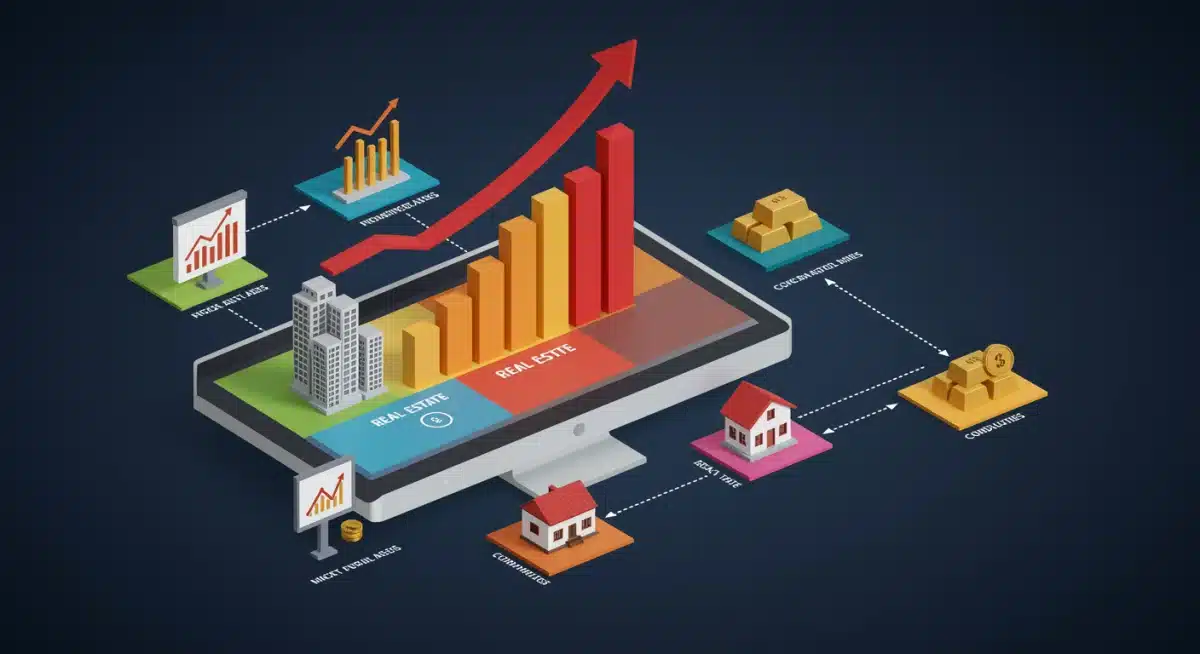
One common strategy involves investing in real assets, such as real estate and commodities. Real estate tends to appreciate with inflation, and rental income can also increase, providing a natural hedge. Commodities like gold, silver, and oil often see their prices rise as inflation heats up, as they are fundamental inputs for many goods and services. However, it’s important to approach commodity investments with caution due to their inherent volatility.
Inflation-hedging investments
- Treasury Inflation-Protected Securities (TIPS): Government bonds whose principal value adjusts with inflation.
- Real Estate: Properties can appreciate and rental income may increase with inflation.
- Commodities: Raw materials like gold, oil, and agricultural products often rise in value.
- Dividend Stocks: Companies with strong pricing power can maintain profits and pay dividends.
Another avenue to explore is dividend-paying stocks from companies with strong pricing power. These are businesses that can pass on increased costs to consumers without significantly impacting demand for their products or services. Such companies can maintain their profit margins and continue to pay dividends, providing a stream of income that can help offset inflation. Additionally, Treasury Inflation-Protected Securities (TIPS) are government bonds specifically designed to protect against inflation, as their principal value adjusts with the Consumer Price Index (CPI). Integrating a mix of these strategies into your portfolio can provide a more robust defense against the projected 3.5% inflation.
Budgeting and expense management in an inflationary environment
Effective budgeting and rigorous expense management are more crucial than ever when facing a 3.5% inflation forecast. The key is to gain a clear understanding of where your money is going and identify areas where you can cut back or optimize spending without drastically compromising your quality of life. This requires a systematic approach, moving beyond simple tracking to active management and strategic decision-making.
Start by meticulously reviewing your current budget. Categorize your expenses into fixed and variable costs. Fixed costs, such as rent or mortgage payments, are generally harder to change in the short term. Variable costs, however, offer more flexibility. This includes expenses like dining out, entertainment, and discretionary purchases. Identifying these areas allows you to prioritize spending and allocate resources more efficiently, ensuring that essential needs are met first.
Practical tips for managing expenses
- Track Every Dollar: Use budgeting apps or spreadsheets to monitor all income and outgoings.
- Cut Discretionary Spending: Temporarily reduce non-essential purchases and activities.
- Negotiate Bills: Contact service providers (internet, cable, insurance) to seek better rates.
- Meal Planning: Plan meals in advance to reduce grocery waste and impulse buys.
Beyond cutting expenses, look for ways to make your money work harder. This could involve switching to more affordable brands for groceries, utilizing coupons and loyalty programs, or even exploring alternative transportation methods to save on fuel costs. Consider energy-efficient upgrades for your home to reduce utility bills in the long run. The goal isn’t just to save money, but to consciously re-evaluate your consumption patterns and make informed choices that align with your financial goals during this inflationary period. Proactive expense management acts as a powerful shield against the eroding effects of inflation on your household budget.
Protecting long-term financial goals
While managing immediate expenses is vital, the projected 3.5% inflation also demands attention to your long-term financial goals. Retirement savings, college funds, and large purchase plans are particularly vulnerable to the compounding effect of inflation over time. Without proper adjustments, the future value of your savings could be significantly less than anticipated, potentially delaying or even derailing your financial aspirations. It’s essential to re-evaluate these goals in light of the current economic outlook.
A crucial step is to revisit your retirement planning. If your retirement nest egg is projected to be worth a certain amount in nominal terms, its real purchasing power might be much lower due to inflation. This might necessitate increasing your contributions, adjusting your investment strategy to include more inflation-resistant assets, or extending your working years. Consulting with a financial advisor can provide personalized guidance tailored to your specific situation and risk tolerance, ensuring your retirement savings remain on track.
Safeguarding future wealth
- Increase Retirement Contributions: Boost 401(k) or IRA contributions to offset inflation’s impact.
- Review Investment Asset Allocation: Ensure your portfolio includes inflation-hedging assets.
- Consider Education Savings Plans: Utilize 529 plans or other tax-advantaged accounts.
- Emergency Fund Review: Adjust your emergency fund to cover increased living expenses.
Similarly, college savings plans need careful consideration. The cost of higher education has historically outpaced general inflation, making it even more challenging to save adequately. Explore options like 529 plans, which offer tax advantages and can be invested in growth-oriented funds. For other long-term goals, such as buying a home or starting a business, regularly reassess the estimated costs and adjust your savings targets accordingly. Ignoring inflation’s long-term impact can lead to significant shortfalls, making proactive planning indispensable for securing your financial future.
Government and central bank responses
The projected 3.5% inflation rate over the next six months is not going unnoticed by policymakers. Both the government and the central bank, primarily the Federal Reserve in the United States, are actively monitoring economic conditions and implementing various measures to stabilize prices and support economic growth. Their actions, or inactions, will significantly influence the trajectory of inflation and the broader economic landscape, directly impacting consumers and businesses alike.
The Federal Reserve’s primary tool for combating inflation is monetary policy, specifically adjusting interest rates. By raising the federal funds rate, the Fed aims to slow down economic activity, reduce demand, and thereby curb price increases. However, this is a delicate balancing act, as overly aggressive rate hikes can tip the economy into a recession. The Fed also communicates its outlook and intentions, known as forward guidance, to influence market expectations and guide economic behavior.
Policy responses to inflation
- Interest Rate Adjustments: Federal Reserve raises rates to cool demand.
- Quantitative Tightening: Reducing the money supply by selling off assets.
- Fiscal Policy: Government spending and taxation measures to influence the economy.
- Supply-Side Initiatives: Government efforts to alleviate supply chain issues.
On the fiscal side, the government can utilize its spending and taxation powers to influence inflation. For instance, targeted subsidies or tax breaks could help alleviate cost pressures in specific sectors, while broader fiscal tightening could reduce overall demand. Additionally, efforts to address supply chain bottlenecks through infrastructure investments or trade policies can help reduce production costs over the long term. These coordinated efforts from both monetary and fiscal authorities are crucial in navigating an inflationary environment and working towards price stability, though their effectiveness and timing can vary.
| Key Point | Brief Description |
|---|---|
| 3.5% Inflation Forecast | Anticipated rise in cost of living over the next six months, impacting purchasing power. |
| Protecting Purchasing Power | Strategies to maintain the value of your money against rising prices. |
| Investment Strategies | Utilizing assets like TIPS, real estate, and dividend stocks to hedge against inflation. |
| Budgeting & Expense Management | Reviewing and optimizing spending habits to mitigate the impact of inflation. |
Frequently asked questions about inflation and your finances
A 3.5% inflation forecast means that, on average, the cost of goods and services is expected to increase by that percentage over the next six months. This translates to your money buying less, reducing your overall purchasing power and making everyday expenses more costly. Adjusting your budget and financial plans is crucial.
To protect your savings, consider investing in assets that historically perform well during inflationary periods. This includes Treasury Inflation-Protected Securities (TIPS), real estate, commodities, and dividend-paying stocks. Traditional savings accounts often offer insufficient returns to keep pace with rising prices.
While there are no direct government programs specifically designed to offset individual inflation impacts, the Federal Reserve uses monetary policy (like interest rate adjustments) to manage inflation. Government fiscal policies, such as targeted subsidies or tax breaks, can also indirectly help certain sectors or individuals.
Yes, it’s advisable to review your investment portfolio. Consider diversifying into inflation-hedging assets and re-evaluating your risk tolerance. Focus on companies with strong pricing power or assets that inherently appreciate with rising costs. Consulting a financial advisor for personalized advice is recommended.
Effective budgeting during high inflation involves meticulously tracking expenses, prioritizing needs over wants, and actively seeking ways to reduce variable costs. This includes meal planning, bulk buying, negotiating bills, and reducing discretionary spending. Regularly review and adjust your budget to reflect changing prices.
Conclusion
The projected 3.5% inflation over the next six months presents a clear challenge to maintaining your financial stability and purchasing power. However, by understanding the dynamics of inflation, implementing strategic investment choices, and diligently managing your household budget, you can effectively mitigate its impact. Proactive financial planning, from safeguarding your savings to protecting long-term goals, is not merely a recommendation but a necessity in today’s economic climate. Staying informed and adaptable will empower you to navigate these inflationary pressures successfully.