DHS Announces Enhanced Border Control Measures and Technology Upgrades for 2025
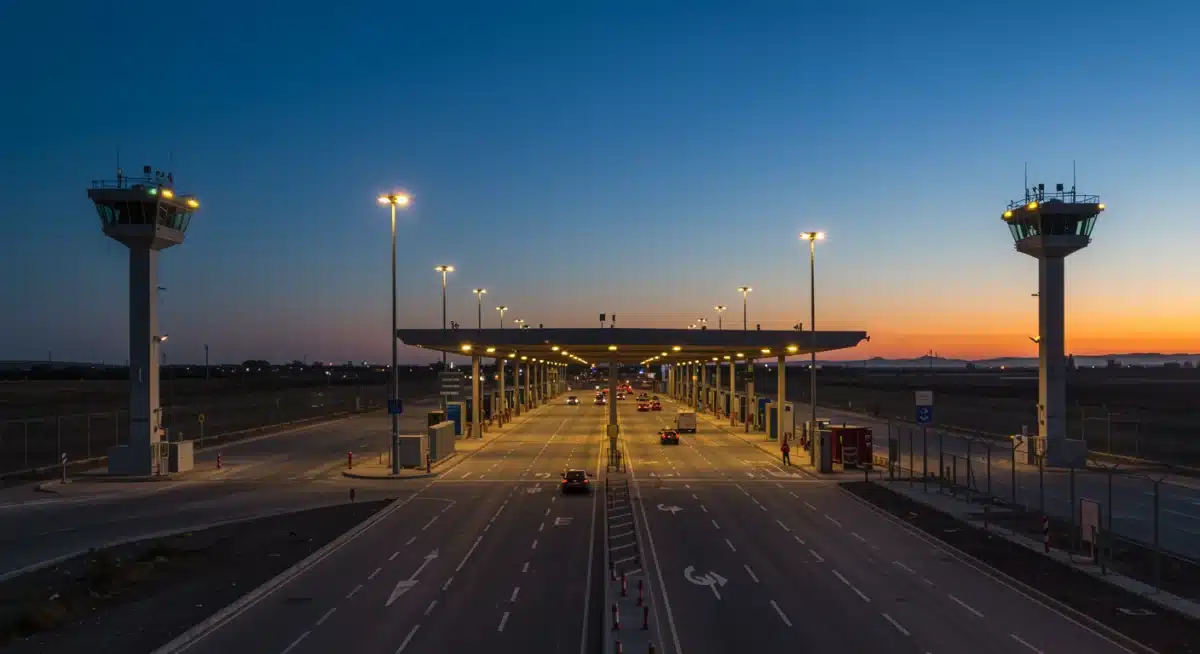
The Department of Homeland Security is set to implement enhanced border control measures and significant technology upgrades in 2025, supported by a substantial $1.5 billion budget increase to strengthen national security.
The Department of Homeland Security (DHS) has unveiled a comprehensive plan for 2025, focusing on a significant enhancement of border control measures and substantial technology upgrades. This initiative, backed by a formidable $1.5 billion budget increase, underscores a renewed commitment to securing the nation’s borders and adapting to evolving security challenges. Readers will discover the multifaceted strategies and technological advancements poised to redefine border security.
Understanding the 2025 Border Security Mandate
The Department of Homeland Security’s 2025 mandate for enhanced border control represents a pivotal shift in national security strategy. This mandate is not merely about increasing personnel or physical barriers; it’s a holistic approach integrating advanced technology, improved intelligence sharing, and more efficient operational protocols. The goal is to create a more resilient and responsive border security framework that can address both conventional and emerging threats.
This strategic overhaul is driven by a complex interplay of factors, including geopolitical shifts, increased migratory pressures, and the continuous evolution of transnational criminal organizations. The DHS recognizes that static defense mechanisms are no longer sufficient in a dynamic global environment. Therefore, the 2025 plan emphasizes adaptability and proactive measures, ensuring that the United States remains ahead of potential adversaries.
Key Pillars of the 2025 Strategy
- Technological Integration: Deploying cutting-edge surveillance systems, AI-driven analytics, and automated processing.
- Personnel Augmentation: Increasing the number of trained agents and providing specialized training for new technologies.
- International Collaboration: Strengthening partnerships with neighboring countries and global allies for intelligence sharing.
- Infrastructure Modernization: Upgrading physical barriers and checkpoints to incorporate advanced security features.
The overarching aim of the 2025 mandate is to establish a multi-layered defense that deters illegal crossings, interdicts illicit trade, and safeguards national interests. This involves a delicate balance between enforcement and humanitarian considerations, ensuring that all operations are conducted efficiently and ethically. The success of this mandate will largely depend on seamless coordination across various agencies and continuous adaptation to new challenges.
The $1.5 Billion Budget Increase: Where the Funds Go
The allocation of an additional $1.5 billion to the Department of Homeland Security for 2025 border initiatives is a clear signal of the government’s prioritization of national security. This substantial budget increase is earmarked for several critical areas, reflecting a strategic investment in both human capital and technological infrastructure. It’s designed to provide the necessary resources to implement the ambitious plans for enhanced border control.
A significant portion of these funds will be directed towards research and development, fostering innovation in surveillance, detection, and data analysis. This includes exploring new sensor technologies, improving drone capabilities, and developing sophisticated software for predictive analytics. The goal is to move beyond reactive responses to proactive threat identification, allowing border agents to anticipate and mitigate risks before they escalate.
Strategic Allocation of Funds
- Technology Procurement: Investing in new drones, ground sensors, AI-powered analytics, and advanced biometric systems.
- Infrastructure Development: Funding for smart fences, upgraded ports of entry, and secure data centers.
- Personnel Training and Recruitment: Expanding training programs for new recruits and providing advanced skill development for existing agents.
- Cross-Agency Collaboration: Supporting joint operations and intelligence-sharing platforms with federal, state, and local partners.
Beyond technology, the budget increase will also support the recruitment and training of additional border patrol agents and customs officers. This human element remains crucial, as technology serves to augment, not replace, the expertise and judgment of trained professionals. The funds will ensure that personnel are equipped with the latest tools and knowledge to effectively execute their duties, enhancing overall operational effectiveness and safety.
Technological Upgrades Driving Border Control Efficiency
The cornerstone of the DHS’s 2025 border control strategy is the integration of cutting-edge technology. These upgrades are designed to enhance efficiency, improve situational awareness, and provide border agents with a decisive advantage in securing the nation. From advanced surveillance systems to artificial intelligence, the technological landscape of border security is undergoing a profound transformation.
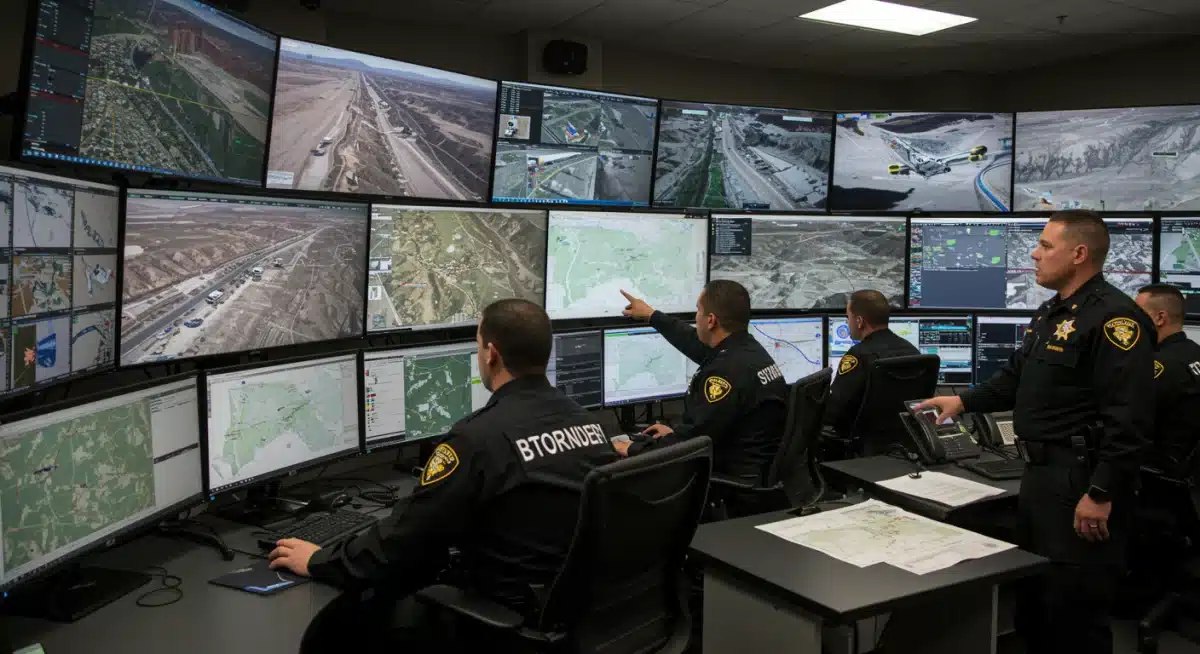
One of the key areas of focus is the deployment of next-generation surveillance tools. This includes high-resolution cameras with thermal imaging capabilities, ground-based radar systems that can detect movement over vast distances, and unmanned aerial systems (UAS) equipped with sophisticated sensors. These tools provide real-time data, allowing for quicker response times and more effective interdiction of illegal activities.
Innovations in Border Technology
- AI and Machine Learning: Utilizing algorithms to analyze vast amounts of data, identify patterns, and predict potential threats.
- Biometric Identification: Implementing advanced facial recognition and fingerprint scanning at ports of entry to streamline processing and enhance security.
- Remote Sensing: Employing satellite imagery and specialized sensors to monitor remote and challenging terrains.
- Integrated Communication Systems: Developing secure, interoperable communication platforms for seamless information exchange among agencies.
Furthermore, the DHS is investing in artificial intelligence (AI) and machine learning capabilities to process and analyze the enormous volumes of data collected from these surveillance systems. AI can identify anomalies, detect suspicious patterns, and even predict potential areas of illegal activity, allowing resources to be deployed more strategically. These technological upgrades are not just about adding new gadgets; they are about creating a smarter, more interconnected security apparatus that can adapt to evolving threats.
Impact on National Security and Economic Implications
The enhanced border control measures and technology upgrades slated for 2025 are expected to have far-reaching implications for both national security and the broader economy. A more secure border directly contributes to a safer nation by reducing the influx of illicit drugs, preventing the entry of potential threats, and disrupting transnational criminal networks. This heightened security posture is crucial for maintaining public confidence and stability.
From an economic perspective, the investment of $1.5 billion in border security is likely to stimulate growth in specific sectors. Companies involved in defense technology, surveillance systems, and infrastructure development will see increased demand for their products and services. This can lead to job creation and technological advancements that have broader applications beyond border security, fostering innovation across multiple industries.
Broader Implications
- Deterrence of Illegal Activities: Stronger borders reduce drug trafficking, human smuggling, and other illicit trade.
- Economic Boost: Investment in technology and infrastructure creates jobs and stimulates growth in related industries.
- Improved Intelligence: Enhanced data collection and analysis lead to better intelligence on global threats.
- Strengthened International Relations: Collaborative efforts with neighboring countries foster diplomatic ties and shared security goals.
However, there are also considerations regarding the economic impact on border communities and trade. While enhanced security is paramount, it is important to ensure that legitimate trade and travel are not unduly impeded. The DHS plans to implement smart solutions that balance security needs with the facilitation of legal commerce, aiming for a system that is both robust and efficient. The long-term economic benefits of a secure border, including reduced costs associated with crime and increased investor confidence, are expected to outweigh initial implementation challenges.
Challenges and Criticisms of the New Measures
While the Department of Homeland Security’s 2025 plan for enhanced border control and technology upgrades aims to bolster national security, it is not without its challenges and criticisms. Implementing such a large-scale initiative requires navigating complex logistical hurdles, technological integration issues, and significant public scrutiny. These factors can influence the effectiveness and public perception of the new measures.
One primary concern revolves around the ethical implications of increased surveillance and data collection. Civil liberties advocates often raise questions about privacy rights and the potential for misuse of advanced technologies, such as facial recognition and AI-driven predictive analytics. Striking a balance between security and individual freedoms will be a critical challenge for the DHS, requiring transparent policies and robust oversight mechanisms.
Anticipated Challenges
- Privacy Concerns: Balancing enhanced surveillance with civil liberties and data protection.
- Technological Integration: Ensuring seamless operation and compatibility of diverse new systems.
- Public Acceptance: Gaining trust and support from border communities and the wider public.
- Resource Management: Effectively deploying and maintaining new technologies and personnel across vast and varied terrains.
Another significant challenge lies in the sheer scale of integrating diverse technologies and training a large workforce to utilize them effectively. The U.S. border spans thousands of miles, encompassing a variety of terrains and environments, each presenting unique operational complexities. Ensuring that all new systems are interoperable and that personnel are adequately trained to operate them consistently across such a vast area will require meticulous planning and execution. The budget increase, while substantial, must be managed judiciously to avoid cost overruns and ensure maximum impact.
Future Outlook: Beyond 2025
The Department of Homeland Security’s enhanced border control measures and technology upgrades for 2025 are not merely a one-time overhaul but rather a foundational step towards a continuously evolving security paradigm. The initiatives laid out for 2025 are designed to establish a flexible and adaptable framework that can respond to future challenges and leverage emerging technologies. This forward-looking approach recognizes that national security threats are constantly evolving, requiring an equally dynamic defense.
Beyond 2025, the DHS is expected to continue its investment in research and development, exploring advanced concepts such as quantum computing for data encryption, autonomous robotic systems for patrol and detection, and further integration of space-based surveillance assets. The aim is to create a self-improving system that learns from its operations, adapts to new tactics employed by adversaries, and continuously optimizes resource allocation.
Long-Term Vision
- Continuous Innovation: Investing in future technologies like quantum computing and advanced robotics.
- Adaptive Strategies: Developing flexible protocols that can quickly adjust to new threats and global events.
- Global Partnerships: Expanding international cooperation to address transnational security challenges comprehensively.
- Data-Driven Decisions: Enhancing predictive analytics for more proactive and efficient security operations.
The future outlook also includes a greater emphasis on international collaboration. Recognizing that border security is not solely a national issue, the DHS will likely seek to deepen partnerships with other nations, sharing intelligence, best practices, and technological advancements. This collaborative approach will be vital in addressing global challenges such as human trafficking, terrorism, and cyber threats that transcend geographical boundaries. The vision is for a resilient, interconnected security system that protects the nation while fostering global stability.
| Key Aspect | Brief Description |
|---|---|
| Budget Increase | $1.5 billion allocated to DHS for enhanced border control and technology. |
| Technology Upgrades | Deployment of AI, advanced surveillance, biometrics, and integrated systems. |
| Enhanced Measures | Focus on multi-layered defense, intelligence sharing, and operational efficiency. |
| Future Vision | Continuous innovation, adaptive strategies, and strengthened global partnerships. |
Frequently Asked Questions About 2025 Border Security
The primary goal is to significantly enhance national security through comprehensive border control measures, integrating advanced technology and increasing operational efficiency. This aims to counter evolving threats and streamline border management.
The $1.5 billion budget increase will fund technology procurement, infrastructure development, personnel recruitment and training, and cross-agency collaboration. This ensures a holistic approach to strengthening border defenses.
The plan includes AI and machine learning for data analysis, advanced biometric identification, remote sensing capabilities, and integrated communication systems to improve real-time situational awareness and response.
Challenges include addressing privacy concerns related to increased surveillance, ensuring seamless technological integration across vast border areas, gaining public acceptance, and effectively managing resources for sustained operations.
The DHS aims to balance enhanced security with the facilitation of legitimate trade and travel. Smart solutions and streamlined processes are being developed to ensure that legal commerce and tourism are not unduly impeded by the new measures.
Conclusion
The Department of Homeland Security’s announcement of enhanced border control measures and technology upgrades for 2025, backed by a substantial $1.5 billion budget increase, marks a significant commitment to national security. This initiative represents a sophisticated blend of advanced technology, strategic personnel deployment, and international cooperation, designed to create a more resilient and responsive border defense system. While challenges such as privacy concerns and technological integration remain, the forward-looking approach aims to establish a dynamic framework capable of adapting to future threats and ensuring the continued safety and stability of the nation. The success of these comprehensive plans will undoubtedly shape the future of U.S. border security for years to come.