
Boosting Your Child’s Reading Scores by 20% in 3 Months: Evidence-Based Strategies for U.S. Parents in 2026
As parents in the U.S., we all want our children to succeed, and reading proficiency is undeniably one of the most critical foundations for academic achievement and lifelong learning. In 2026, with an ever-evolving educational landscape, the challenge to ensure our children are not just keeping up but excelling in reading feels more pressing than ever. But what if you could make a significant, measurable impact on your child’s reading scores in a relatively short period? This comprehensive guide is designed to empower U.S. parents with evidence-based strategies to boost child reading scores by a remarkable 20% within just three months. This isn’t about quick fixes; it’s about implementing consistent, targeted, and effective approaches that foster a genuine love for reading while building essential skills.
The journey to significantly improve reading scores is multifaceted, involving a blend of phonics, fluency, vocabulary, and comprehension. It also requires a deep understanding of how children learn and the role parents play as primary educators and motivators. We’ll delve into practical techniques, daily routines, and resources tailored for the modern American family, ensuring that by the end of three months, you’ll see a tangible improvement in your child’s reading ability and, more importantly, their confidence and enjoyment of books.
Understanding the Reading Landscape in 2026: Why Focus on Boosting Child Reading?
Before we dive into specific strategies, it’s crucial to understand the current context of reading education in the U.S. In 2026, educational standards continue to emphasize critical thinking, information literacy, and the ability to analyze complex texts. Standardized tests often reflect these demands, making strong reading skills paramount. A child struggling with reading can face challenges across all subjects, from math word problems to science experiments requiring textual instructions. Conversely, a child with robust reading skills is better equipped to grasp new concepts, articulate ideas, and explore interests independently.
Research consistently shows a direct correlation between early reading proficiency and long-term academic and career success. A 20% improvement in reading scores isn’t just a number; it represents a significant leap in a child’s ability to access information, understand the world around them, and develop a stronger sense of self-efficacy. This is why our focus on how to boost child reading is so critical – it’s an investment in their future.
The Three-Month Advantage: Setting Realistic Goals
Why three months? Three months provides a sufficient timeframe to implement consistent practices and observe measurable progress without being overwhelming. It’s long enough for habits to form and for foundational skills to solidify. Our goal of a 20% improvement is ambitious but achievable with dedication and the right strategies. This isn’t about cramming; it’s about systematic skill-building and fostering a positive reading environment.
Month 1: Building Foundations and Diagnosing Needs to Boost Child Reading
The first month is all about understanding where your child stands and strengthening the fundamental building blocks of reading. This includes phonological awareness, phonics, and early fluency.
Step 1: Assess Current Reading Levels and Identify Gaps
Before you can effectively boost child reading, you need to know their starting point. Many schools conduct regular reading assessments. Request your child’s latest reading scores and ask their teacher for insights into specific areas of difficulty (e.g., decoding, sight words, comprehension of specific text types). If formal assessments aren’t readily available, you can conduct informal assessments at home:
- Oral Reading Fluency (ORF): Have your child read a grade-level passage aloud for one minute. Count the number of words read correctly and note any hesitations or errors. Repeat this weekly to track progress.
- Phonics Skills: Use a simple phonics checklist or an online phonics assessment tool to identify which letter sounds, blends (e.g., ‘bl’, ‘st’), and digraphs (e.g., ‘sh’, ‘th’) your child knows and which they struggle with.
- Sight Word Recognition: Create a list of common sight words (e.g., Dolch or Fry lists for their grade level) and test their recognition.
- Comprehension Check: After reading a short story, ask open-ended questions about the characters, plot, setting, and main idea.
This initial assessment will guide your efforts and help you tailor strategies to your child’s specific needs. Remember, every child is unique, and a personalized approach is key to effectively boost child reading.
Step 2: Daily Phonics and Phonological Awareness Practice
For younger children or those struggling with decoding, phonics is non-negotiable. Phonological awareness (the ability to hear, identify, and manipulate individual sounds in spoken words) is a precursor to phonics. Dedicate 10-15 minutes daily to these activities:
- Sound Games: Play rhyming games, identify initial sounds in words (e.g., “What sound does ‘cat’ start with?”), or segment words into individual sounds (e.g., “How many sounds in ‘dog’? /d/-/o/-/g/”).
- Letter-Sound Correspondence: Use flashcards, apps, or worksheets to practice letter sounds. Focus on one or two new sounds at a time until mastered.
- Blending and Segmenting: Practice blending sounds to form words (e.g., “/c/-/a/-/t/ makes… cat”) and segmenting words into sounds.
- Word Families: Work with word families (e.g., -at, -an, -ig) to build decoding patterns.
Step 3: Building a Sight Word Vocabulary
Sight words are high-frequency words that children should recognize instantly without having to sound them out. This improves reading fluency significantly. Aim for 5-10 new sight words per week.
- Flashcards: Create or purchase flashcards. Practice daily.
- Interactive Games: Many online games and apps focus on sight word recognition.
- Word Walls: Create a word wall in your child’s room where new sight words are added and reviewed regularly.
- Contextual Practice: Encourage your child to find sight words in books they are reading.
Step 4: Implementing Daily Shared Reading (Read Alouds)
Reading aloud to your child, regardless of their age, is one of the most powerful ways to boost child reading. It exposes them to rich vocabulary, complex sentence structures, and the sheer joy of stories.
- Choose Engaging Books: Select books that match your child’s interests, even if they are above their independent reading level.
- Model Fluent Reading: Read with expression, varying your tone and pace.
- Discuss as You Go: Pause to ask questions, make predictions, and clarify vocabulary. “What do you think will happen next?” “Why do you think the character did that?”
- Point to Words (for younger children): As you read, occasionally point to the words to help them connect spoken words with written text.

Month 2: Cultivating Fluency and Expanding Vocabulary to Boost Child Reading
With foundational skills in place, the second month shifts focus to developing reading fluency and expanding vocabulary, both crucial for deeper comprehension.
Step 1: Targeted Fluency Practice
Fluency is the ability to read text accurately, quickly, and with proper expression. It’s the bridge between decoding and comprehension. Lack of fluency can make reading a laborious task, hindering understanding. Dedicate 15-20 minutes daily to fluency activities.
- Repeated Reading: Have your child read the same short passage (at their instructional level – slightly challenging but not overwhelming) three to four times. Each time, their speed and accuracy should improve.
- Paired Reading: You and your child read a text aloud simultaneously. You can model fluent reading, and your child can join in, gaining confidence from your support. Gradually, your child can take over more of the reading.
- Reader’s Theater: Assign roles from a script and have your child practice reading their lines with expression. This makes reading fun and purposeful.
- Audiobooks with Text: Listen to an audiobook while following along in the physical book. This helps with pacing, pronunciation, and intonation.
Step 2: Strategic Vocabulary Building
A strong vocabulary is directly linked to reading comprehension. The more words a child knows, the better they can understand complex texts. Integrate vocabulary building into daily life.
- Word of the Day: Choose one new word daily. Discuss its meaning, use it in sentences, and encourage your child to use it throughout the day.
- Context Clues: Teach your child how to infer the meaning of unknown words by looking at surrounding words and sentences. Practice this during shared reading.
- Prefixes, Suffixes, and Root Words: Introduce common prefixes (e.g., un-, re-), suffixes (e.g., -ing, -ful), and root words. Understanding these building blocks can unlock the meaning of many new words.
- Word Games: Play games like Scrabble Jr., Boggle, or online vocabulary games.
- Reading Diverse Texts: Expose your child to a wide range of genres – fiction, non-fiction, poetry – to encounter a broader vocabulary.
Step 3: Encouraging Independent Reading
While guided practice is essential, independent reading is where skills are truly consolidated. Create a dedicated time and space for your child to read on their own.
- The “Just Right” Book: Help your child select books that are not too easy and not too hard (the ‘Goldilocks’ principle). They should be able to read most words independently but encounter a few challenging ones.
- Reading Nook: Create a cozy, inviting reading space in your home.
- Library Visits: Make regular trips to the local library a family outing. Allow your child to choose books that genuinely excite them.
- Reading Incentives (Optional): For some children, small, non-monetary incentives (e.g., extra playtime, choosing family movie night) can encourage more reading.
Month 3: Deepening Comprehension and Critical Thinking to Boost Child Reading
The final month focuses on the ultimate goal of reading: understanding and making meaning from text. This involves teaching active comprehension strategies and fostering critical thinking.
Step 1: Teaching Active Comprehension Strategies
Good readers don’t just read words; they actively engage with the text. Teach your child these strategies:
- Making Predictions: Before and during reading, encourage your child to guess what will happen next and explain why.
- Asking Questions: Model asking questions about the text (e.g., “Who is the main character?” “What is the problem?” “Why did that happen?”). Teach them to ask their own questions.
- Visualizing: Encourage your child to create mental images as they read. “What do you see in your mind when you read this sentence?”
- Summarizing: After reading a paragraph, a chapter, or a whole book, have your child summarize the main points in their own words.
- Connecting: Help your child make connections between the text and their own experiences (text-to-self), other books (text-to-text), and the world (text-to-world).
- Identifying Main Idea and Supporting Details: Practice finding the central message of a paragraph or story and the facts or events that support it.
Step 2: Engaging in Post-Reading Discussions and Activities
Reading doesn’t end when the last page is turned. Rich discussions and creative activities solidify comprehension and encourage deeper thinking.
- Book Talks: Have informal conversations about the books your child is reading. Ask open-ended questions that go beyond simple recall.
- Character Analysis: Discuss characters’ motivations, traits, and how they change throughout a story.
- Plot Mapping: Create a simple plot map together, outlining the beginning, rising action, climax, falling action, and resolution.
- Creative Responses: Encourage your child to draw a scene, write an alternative ending, create a comic strip, or even act out a part of the story.
- Non-Fiction Exploration: If reading non-fiction, discuss the facts learned, compare them to prior knowledge, and identify the author’s purpose.
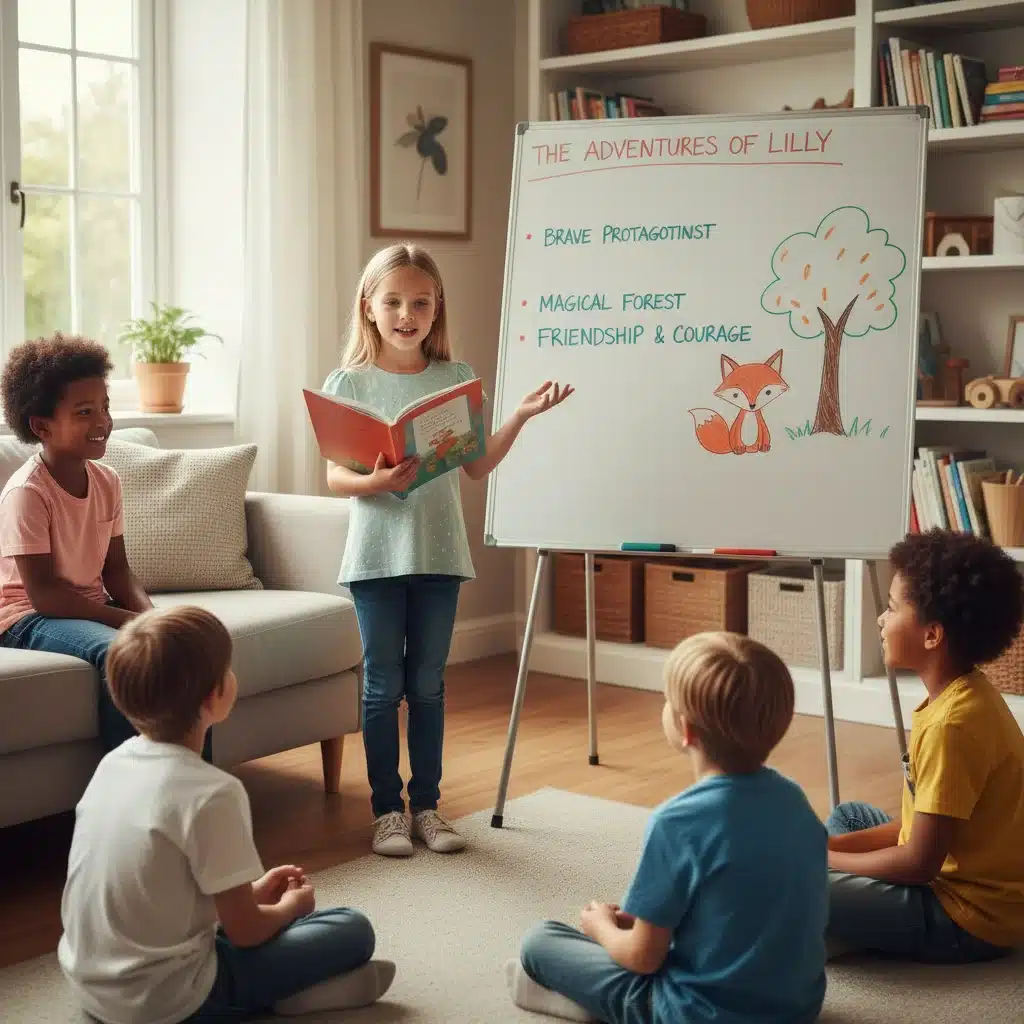
Step 3: Incorporating Writing into Reading Practice
Reading and writing are two sides of the same coin. Improving one often strengthens the other. Encourage writing activities related to reading.
- Reading Journals: Have your child keep a simple journal where they record thoughts, questions, or favorite quotes from books.
- Book Reviews: Encourage them to write short reviews of books they’ve read, explaining what they liked or disliked.
- Story Retelling: Ask them to write a summary or retell a story in their own words.
- Creative Writing Prompts: Use a character or setting from a book as a prompt for a new short story.
Beyond Three Months: Sustaining and Celebrating Progress
Achieving a 20% increase in reading scores in three months is a fantastic accomplishment, but the journey to becoming a lifelong reader is continuous. Here’s how to sustain that momentum:
Make Reading a Family Value
Children learn by example. Let your child see you reading – newspapers, magazines, novels, online articles. Talk about what you’re reading. Make reading a visible and valued activity in your home. Create a family reading time where everyone reads quietly for 20-30 minutes.
Continue Regular Practice
Even after three months, consistent daily reading and skill practice are vital. The specific activities might evolve as your child’s skills grow, but the dedication to literacy should remain.
Explore Diverse Reading Materials
Don’t limit reading to traditional books. Encourage your child to read comics, graphic novels, age-appropriate news articles, online blogs, recipes, instruction manuals, and even subtitles on TV shows. The more varied their reading experiences, the broader their vocabulary and comprehension skills will become.
Engage with Technology Wisely
In 2026, technology offers incredible resources for reading. Utilize educational apps, e-readers, and online learning platforms that offer interactive reading experiences, virtual libraries, and personalized learning paths. However, balance screen time with physical books and ensure digital content is high-quality and age-appropriate.
Communicate with Teachers
Maintain an open line of communication with your child’s teacher. Share the strategies you’re using at home and ask for their recommendations. They can offer insights into curriculum alignment and provide additional resources.
Celebrate Milestones, Big and Small
Acknowledge and celebrate your child’s progress. It doesn’t always have to be a big reward; a simple “I noticed how much more fluently you read that page!” or “You used a great new word today!” can go a long way in boosting their confidence and motivation.
Common Challenges and How to Overcome Them
Even with the best strategies, you might encounter hurdles. Here are some common challenges and solutions:
- Resistance to Reading: If your child resists, ensure the books are genuinely interesting to them. Offer choices. Make reading time fun and relaxed, not a chore. Sometimes, reading to pets or younger siblings can make it less intimidating.
- Time Constraints: Integrate reading into daily routines. Read while waiting for appointments, during meal prep, or as part of a bedtime ritual. Even 10-15 minutes of focused reading time daily can make a difference.
- Difficulty with Specific Skills: If your child consistently struggles with a particular area (e.g., phonics, comprehension of complex sentences), don’t hesitate to seek additional support from a tutor, reading specialist, or their teacher.
- Feeling Overwhelmed: Start small. Choose one or two strategies to implement consistently for a week, then gradually add more. Remember, consistency is more important than intensity.
- Sibling Dynamics: If you have multiple children, ensure each child gets dedicated, one-on-one reading time. You might also encourage older siblings to read to younger ones.
Conclusion: Empowering Your Child to Thrive Through Reading
Boosting your child’s reading scores by 20% in three months is an ambitious yet entirely achievable goal for U.S. parents in 2026. By systematically addressing foundational skills, building fluency and vocabulary, and fostering deep comprehension, you are not just improving test scores; you are equipping your child with a superpower that will serve them throughout their lives. The strategies outlined in this guide – from daily phonics practice and shared reading to active comprehension techniques and consistent encouragement – are designed to create a positive, engaging, and effective learning environment at home.
Remember that your role as a parent is invaluable. Your patience, encouragement, and active involvement are the most significant factors in your child’s reading success. Embrace this three-month challenge with enthusiasm, celebrate every small victory, and watch as your child transforms into a more confident, capable, and joyful reader. The rewards will extend far beyond improved scores, paving the way for a brighter academic future and a lifelong love of learning.