EPA’s Stricter Emissions Standards: Impact on US Industries & Consumers
The EPA’s stricter emissions standards, effective April 2025, will significantly alter operations for various US industries, leading to technological shifts, increased costs, and ultimately affecting product prices and consumer choices across the nation.
In a landmark move set to redefine environmental compliance, the Environmental Protection Agency (EPA) has announced significantly stricter EPA emissions standards, slated to take effect in April 2025. This pivotal decision marks a critical juncture for both the American industrial landscape and the everyday consumer, promising far-reaching implications that demand careful consideration and proactive adaptation. Understanding the nuances of these new regulations is crucial for navigating the evolving economic and environmental terrain.
Understanding the new EPA emissions standards
The Environmental Protection Agency’s recent announcement regarding stricter emissions standards is not merely a technical adjustment; it represents a fundamental shift in how industries are expected to operate. These new regulations, coming into force in April 2025, are designed to significantly reduce greenhouse gas emissions and other airborne pollutants, aiming for a cleaner, healthier environment. The scope of these standards is broad, touching upon various sectors that contribute substantially to the nation’s carbon footprint.
At its core, the EPA’s updated framework targets specific pollutants known for their detrimental effects on air quality and climate change. This includes, but is not limited to, carbon dioxide, methane, nitrous oxides, and particulate matter. The agency’s rationale is rooted in scientific consensus regarding the urgent need to mitigate climate change impacts and improve public health outcomes. These standards are the culmination of extensive research, public commentary, and a commitment to achieving national environmental goals.
Key regulatory components
The new standards introduce several critical components that industries must adhere to. These are not merely suggestions but legally binding requirements that will be enforced with significant penalties for non-compliance. Companies will need to invest in new technologies and processes to meet these more stringent limits.
- Reduced greenhouse gas limits: Stricter caps on carbon dioxide and methane emissions, particularly from power plants and industrial facilities.
- Enhanced monitoring and reporting: Increased requirements for industries to accurately measure and report their emissions data to the EPA.
- Technological mandates: In some cases, specific technologies or best practices may be mandated to achieve compliance, pushing innovation.
- Phased implementation: While effective April 2025, some aspects may have phased rollouts to allow for industry adaptation.
The EPA’s move is a clear signal that environmental responsibility is no longer a secondary consideration but a core aspect of business operations. Industries that embrace these changes proactively are likely to gain a competitive advantage, while those that delay may face significant challenges.
In conclusion, these new EPA emissions standards are a robust and comprehensive effort to tackle environmental challenges head-on. They set a clear direction for industries towards more sustainable practices, demanding innovation and investment in cleaner technologies to meet the ambitious targets set for April 2025 and beyond.
Impact on US industries: a landscape transformed
The implementation of stricter EPA emissions standards in April 2025 heralds a transformative period for numerous sectors within the United States. From heavy manufacturing to the energy sector, and even agriculture, businesses will need to re-evaluate their operational strategies, supply chains, and investment priorities. This shift is not just about compliance; it’s about re-imagining how goods are produced and energy is generated in America.
Industries heavily reliant on fossil fuels or those with significant emissions footprints will experience the most immediate and profound effects. Power generation, for instance, will accelerate its transition towards renewable energy sources and carbon capture technologies. The automotive industry, already moving towards electrification, will see further pressure to innovate cleaner vehicle technologies and manufacturing processes. This widespread impact underscores the comprehensive nature of the EPA’s regulatory update.
Automotive sector adjustments
For the automotive industry, the new standards will necessitate further advancements in vehicle efficiency and a greater push towards electric and hybrid models. Manufacturers will face stricter tailpipe emissions limits, requiring significant research and development investments.
- Faster EV adoption: Increased incentives and regulatory pressure for manufacturers to produce more electric vehicles.
- Supply chain overhaul: Re-evaluation of materials and production methods to reduce embedded carbon.
- Investment in charging infrastructure: Indirect pressure on related industries to build out robust charging networks.
Energy and manufacturing challenges
The energy sector, particularly coal and natural gas power plants, will need to implement advanced emissions control technologies or transition to cleaner energy sources. Manufacturing facilities will face similar demands, pushing for energy efficiency and process optimization.
The cumulative effect of these changes will be a reshaping of industrial practices across the board. While the initial investment may be substantial, the long-term benefits include increased energy independence, reduced health costs associated with pollution, and the emergence of new green industries. Industries that embrace these changes proactively will likely emerge stronger and more resilient in the evolving economic landscape. The impact of these standards will echo through every facet of industrial production, compelling a cleaner, more efficient future.
Consumer implications: costs, choices, and lifestyle shifts
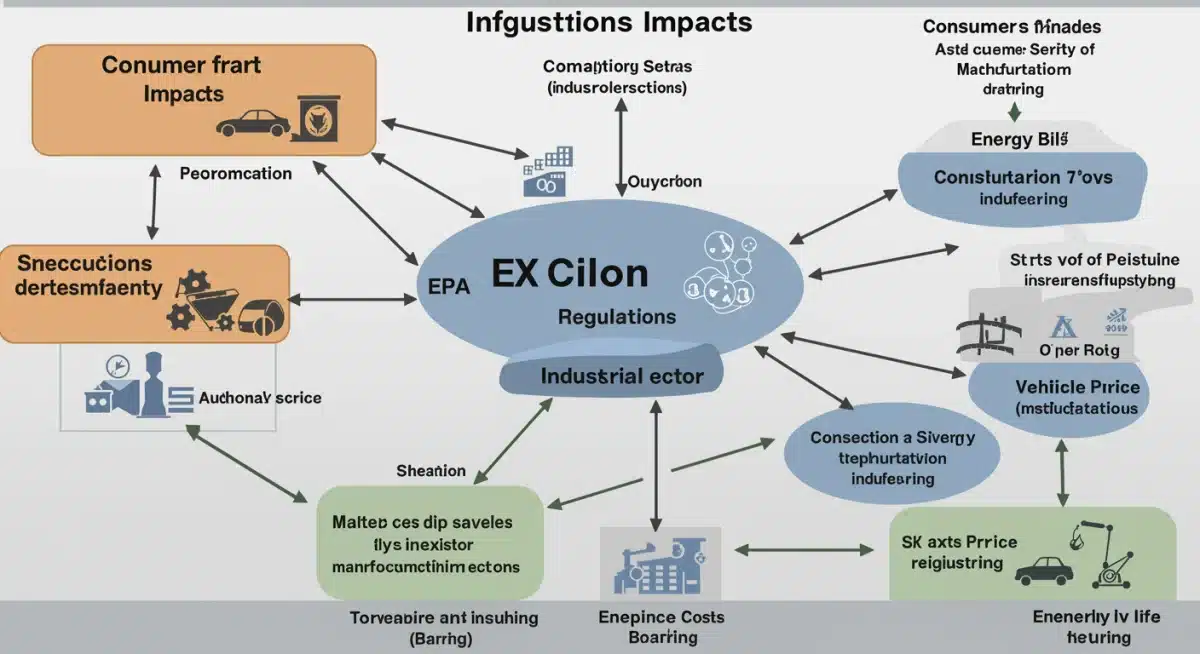
While the immediate focus of the new EPA emissions standards is on industries, the ripple effect will inevitably reach the average American consumer. Effective April 2025, these changes are expected to influence everything from the price of goods and services to the types of products available on the market, potentially leading to notable shifts in consumer choices and daily lifestyles. Understanding these potential impacts is key to preparing for the future.
Consumers may observe initial increases in the costs of certain products and services as industries pass on the expenses associated with compliance. This could manifest in higher electricity bills, more expensive vehicles, or even slight price adjustments in manufactured goods. However, these initial costs are often balanced by long-term benefits, such as improved public health and a more stable climate, which also have significant economic value.
Rising costs and new product availability
The transition to cleaner production methods and technologies is an investment for businesses, and some of these costs will likely be reflected in consumer prices. For instance, new vehicles designed to meet stricter emissions might carry a higher price tag, though they also offer better fuel efficiency and lower running costs over time.
- Vehicle prices: Expect potential increases in the upfront cost of new cars, offset by long-term fuel savings.
- Energy bills: While renewable energy sources can be cheaper in the long run, initial infrastructure investments might cause temporary fluctuations.
- Appliance costs: Energy-efficient appliances, often mandated by environmental standards, might have higher initial costs but lead to savings on utility bills.
Moreover, consumers will see a greater availability of environmentally friendly products. This push towards sustainability will likely expand choices in areas like electric vehicles, energy-efficient home appliances, and products manufactured with lower carbon footprints. This expanded availability empowers consumers to make more environmentally conscious purchasing decisions.
Ultimately, these new standards will encourage a shift towards more sustainable consumption patterns. While there may be some adjustments in costs and choices, the long-term benefits of a cleaner environment and more sustainable economy are substantial for all Americans. The consumer landscape will evolve, promoting a greener and more conscious approach to daily living.
The role of technology and innovation
The impending EPA emissions standards, effective April 2025, place a significant emphasis on technological advancement and innovation as the primary drivers for compliance. Industries are not only expected to meet new limits but are implicitly encouraged to develop and adopt cutting-edge solutions that can achieve these targets efficiently and economically. This regulatory push is poised to catalyze a new wave of green technology development across the United States.
From advanced carbon capture systems to highly efficient renewable energy technologies, the demand for innovative solutions will skyrocket. Companies that invest in research and development now will be well-positioned to meet the new standards and potentially commercialize their solutions, creating new markets and job opportunities. This symbiotic relationship between regulation and innovation is crucial for achieving environmental goals while fostering economic growth.
Emerging technologies for emissions reduction
The focus on reducing emissions is driving significant investment in technologies that were once considered niche or too expensive. Now, they are becoming mainstream necessities for industrial operations.
- Carbon capture, utilization, and storage (CCUS): Advanced systems to capture CO2 emissions from industrial sources and either store them or convert them into useful products.
- Advanced renewable energy solutions: Innovations in solar, wind, and geothermal energy, including storage solutions and smart grid integration.
- Electrification of industrial processes: Replacing fossil fuel-based heating and power with electric alternatives, often powered by renewables.
Innovation in manufacturing processes
Beyond direct emissions, the standards also encourage innovation in manufacturing processes themselves. This includes optimizing material usage, reducing waste, and improving energy efficiency throughout the production cycle.
The drive for technological innovation is not just about compliance; it’s about competitive advantage. Companies that can develop and implement cleaner technologies will not only meet EPA requirements but also appeal to an increasingly environmentally conscious consumer base. This era of stricter standards will undoubtedly accelerate the pace of green technology development, benefiting both the environment and the economy.
In essence, technology and innovation are not just tools for compliance but central pillars in the strategy to meet and exceed the new EPA emissions standards. Their role is indispensable in shaping a sustainable industrial future for the US.
Economic ramifications and competitive landscape
The introduction of stricter EPA emissions standards in April 2025 is not just an environmental mandate; it carries significant economic ramifications that will reshape the competitive landscape for US industries. While some sectors may face initial financial burdens, others stand to gain from new market opportunities and a stronger emphasis on sustainable practices. This period of adjustment will test the adaptability and resilience of American businesses.
Initial compliance costs, such as investments in new equipment, technology upgrades, and operational adjustments, could be substantial for some companies. These costs might lead to temporary price increases or reduced profit margins. However, the long-term economic benefits, including energy savings, reduced waste, and improved brand reputation, are often cited as outweighing the initial expenditures. The competitive landscape will favor companies that can innovate and adapt efficiently.
Challenges for emissions-intensive industries
Industries with high emissions will face the steepest learning curve and potentially the highest costs. This includes sectors like steel production, cement manufacturing, and certain chemical industries.
- Increased operational costs: The need for new technologies and processes will raise production expenses.
- Market consolidation: Smaller, less adaptable firms might struggle to meet standards, potentially leading to mergers or closures.
- Global competitiveness: US industries must balance environmental compliance with maintaining competitiveness against international players with different regulatory environments.
Opportunities for green industries and innovation
Conversely, the new standards present immense opportunities for businesses in renewable energy, environmental consulting, and green technology development. These sectors are poised for significant growth as demand for their products and services escalates.
The economic impact is a double-edged sword. While some traditional industries grapple with the costs of transition, a new economy focused on sustainability is emerging. This shift will create new jobs, foster innovation, and attract investment in green technologies, ultimately strengthening the US economy in the long run. The competitive landscape will evolve, rewarding those who prioritize sustainability and efficiency.
Ultimately, the EPA’s stricter emissions standards will drive a significant economic reorientation, pushing industries towards greater efficiency and sustainability, and creating new avenues for growth and innovation within the US economy.
Policy support and future outlook
As the EPA’s stricter emissions standards loom for April 2025, the conversation naturally shifts to the policy support mechanisms available and the broader future outlook for environmental regulation in the US. Successful implementation and sustained progress will rely heavily on a combination of federal and state initiatives designed to assist industries in their transition and to foster continued environmental stewardship. This support aims to mitigate economic disruption while maximizing ecological benefits.
Government agencies are expected to roll out various programs, including tax incentives, grants, and technical assistance, to help businesses adopt cleaner technologies and practices. This proactive approach acknowledges the challenges industries face and seeks to provide a pathway for compliance and innovation. The future outlook also suggests a continued trajectory towards more stringent environmental oversight, driven by scientific consensus and public demand for a healthier planet.
Federal and state support mechanisms
To ease the transition, policymakers are likely to implement a range of support systems. These are crucial for ensuring that businesses, particularly small and medium-sized enterprises, can meet the new requirements without undue financial strain.
- Tax credits and deductions: Incentives for investing in renewable energy, energy efficiency upgrades, and emissions reduction technologies.
- Grant programs: Funding opportunities for research and development of green technologies and for implementing sustainable practices.
- Technical assistance: Government-provided expertise and resources to help businesses understand and comply with new regulations.
Long-term regulatory trends
Looking beyond 2025, the trend is clear: environmental regulations are likely to become even more comprehensive and ambitious. This means industries should view the upcoming standards not as a one-time hurdle but as part of an ongoing commitment to sustainability.
The future outlook for environmental policy in the US is one of progressive action. The April 2025 standards are a significant step, but they are part of a larger, evolving framework aimed at addressing climate change and promoting a sustainable future. Continued policy support and a forward-thinking approach from industries will be essential for navigating this evolving landscape successfully.
In conclusion, robust policy support will be critical for industries to successfully adapt to the new EPA emissions standards. This support, coupled with a forward-looking regulatory environment, paints a future where environmental responsibility and economic prosperity can coexist and thrive.
Preparing for April 2025: strategies for businesses and consumers
With the EPA’s stricter emissions standards set to take effect in April 2025, both businesses and consumers have a crucial window to prepare and adapt. Proactive planning can minimize disruption, unlock new opportunities, and ensure a smoother transition into the new regulatory landscape. This preparation involves understanding the changes, evaluating current practices, and strategically investing in future-proof solutions.
For businesses, this means conducting thorough assessments of their current emissions, identifying areas for improvement, and exploring available technologies and policy support. Consumers, on the other hand, can prepare by becoming more informed about sustainable choices, budgeting for potential cost adjustments, and considering energy-efficient alternatives in their purchasing decisions. Early preparation is key to navigating these significant shifts effectively.
Business adaptation strategies
Companies need to develop comprehensive strategies to ensure compliance and maintain competitiveness. This involves a multi-faceted approach addressing technology, operations, and financial planning.
- Emissions audit: Conduct a detailed audit of current emissions to identify key sources and prioritize reduction efforts.
- Technology adoption: Research and invest in cleaner production technologies, energy-efficient equipment, and renewable energy sources.
- Supply chain review: Assess and optimize supply chain sustainability, working with suppliers who also prioritize emissions reduction.
- Employee training: Educate staff on new operational procedures and sustainable practices.
Consumer readiness and smart choices
Consumers also have a role in adapting to the new standards, making informed decisions that align with both their personal values and the evolving market.
This period leading up to April 2025 is not just about compliance but about embracing a sustainable future. Businesses that proactively adapt and innovate will thrive, while consumers who make informed choices can contribute to a healthier environment and potentially save money in the long run. Strategic preparation is the cornerstone of successful adaptation for all stakeholders.
In conclusion, diligent preparation is paramount for both businesses and consumers as the April 2025 EPA emissions standards approach. By understanding the implications and implementing proactive strategies, all parties can contribute to a successful transition towards a more sustainable and environmentally responsible future.
| Key Point | Brief Description |
|---|---|
| Stricter Emissions Standards | EPA regulations effective April 2025 aim to significantly reduce greenhouse gases and pollutants across industries. |
| Industry Transformation | Sectors like automotive, energy, and manufacturing face immediate operational and investment changes for compliance. |
| Consumer Impact | Potential for higher product costs, but also increased availability of eco-friendly goods and long-term health benefits. |
| Innovation & Policy Support | Regulations drive green tech innovation, supported by government incentives to aid industry transition. |
Frequently asked questions about EPA emissions standards
The primary goals are to significantly reduce greenhouse gas emissions and other harmful air pollutants from various industrial sources. This aims to combat climate change, improve air quality, and enhance public health outcomes across the United States, aligning with global environmental efforts.
Industries with significant emissions footprints, such as power generation (especially coal and natural gas plants), heavy manufacturing, and the automotive sector, will experience the most direct and substantial impacts. They will need to invest heavily in cleaner technologies and operational changes.
Consumers may see initial price increases for certain goods, like vehicles or energy. However, it will also lead to greater availability of energy-efficient products and electric vehicles, offering long-term savings and healthier living environments.
Technology and innovation are crucial. Industries will rely on advancements like carbon capture systems, renewable energy solutions, and efficient industrial processes to comply. This will drive significant investment and development in green technologies.
Federal and state governments are expected to offer various support mechanisms, including tax incentives, grants for green technology adoption, and technical assistance programs. These initiatives aim to help businesses manage the transition costs and foster innovation.
Conclusion
The EPA’s impending stricter emissions standards, set for April 2025, represent a monumental step towards a more sustainable future for the United States. While challenging for many industries, these regulations are poised to drive unprecedented innovation, foster new economic opportunities, and ultimately lead to significant improvements in public health and environmental quality. Both industries and consumers must proactively engage with these changes, adapting strategies and making informed choices to navigate the evolving landscape successfully. The long-term benefits of a cleaner, more sustainable economy are well worth the collective effort and investment required during this pivotal transition.