US Education System Overhaul: Analyzing Federal K-12 Funding Changes for 2026

The landscape of education in the United States is constantly evolving, driven by societal needs, technological advancements, and, perhaps most critically, funding. As we approach 2026, the proposed shifts in Federal K-12 Funding are poised to trigger a significant overhaul of the US education system. These changes are not merely administrative adjustments; they represent a potential paradigm shift in how K-12 schools are supported, how resources are allocated, and ultimately, how future generations are educated. Understanding the intricacies of these proposed changes requires a deep dive into the underlying motivations, the mechanisms of distribution, and the anticipated impacts on various stakeholders, from students and teachers to state and local governments. The debate surrounding federal funding for K-12 education is a perennial one, often characterized by competing priorities, ideological differences, and the ever-present challenge of ensuring equitable and effective educational opportunities for all. The 2026 proposals bring these discussions to the forefront once again, demanding careful analysis and thoughtful consideration from all corners of the educational ecosystem.
The federal government’s role in K-12 education funding, while significant, is often misunderstood. Unlike many other nations where education is primarily a national responsibility, the US system is highly decentralized, with states and local districts bearing the brunt of the financial burden. Federal funding typically supplements state and local contributions, often targeting specific areas such as programs for low-income students, students with disabilities, and initiatives aimed at improving teacher quality or fostering innovation. However, even a seemingly small percentage of the total education budget coming from federal sources can have a profound impact, especially when tied to specific mandates, incentives, or performance metrics. The proposed changes for 2026 aim to recalibrate this delicate balance, potentially altering the very fabric of how schools operate and how educational outcomes are achieved. This article will meticulously dissect these proposed shifts in Federal K-12 Funding, exploring their historical context, the specific policy levers being considered, and the multifaceted implications for the diverse array of schools and students across the nation.
The Historical Context of Federal K-12 Funding
To truly grasp the significance of the 2026 proposed changes, it’s essential to understand the historical trajectory of Federal K-12 Funding. Federal involvement in education has a long and complex history, evolving from early land grants for schools to the landmark Elementary and Secondary Education Act (ESEA) of 1965. ESEA, a cornerstone of President Lyndon B. Johnson’s ‘War on Poverty,’ was designed to provide financial assistance to schools with high concentrations of children from low-income families, aiming to close achievement gaps and ensure educational equity. Over the decades, ESEA has been reauthorized and amended several times, most notably as No Child Left Behind (NCLB) in 2002 and the Every Student Succeeds Act (ESSA) in 2015. Each reauthorization brought new priorities, accountability measures, and funding mechanisms, reflecting the prevailing educational philosophies and political climates of the time.
NCLB, for instance, emphasized standardized testing and accountability, linking federal funding to states’ abilities to demonstrate adequate yearly progress. While it brought a renewed focus on student achievement, it also faced criticism for its rigid requirements and potential to narrow the curriculum. ESSA, in contrast, aimed to return more control to states and local districts, allowing them greater flexibility in developing accountability systems and interventions for struggling schools. It maintained a focus on equity but provided more avenues for states to tailor their approaches to their unique contexts. These historical shifts illustrate a constant tension between federal oversight and local control, a dynamic that continues to shape the debate around Federal K-12 Funding. The proposed changes for 2026 are not occurring in a vacuum; they are built upon this rich and often contentious history, seeking to address perceived shortcomings of previous policies while attempting to chart a new course for the future of American education.
Furthermore, federal funding has also played a crucial role in supporting specific educational initiatives beyond general aid. Programs like the Individuals with Disabilities Education Act (IDEA) have ensured that students with disabilities receive appropriate services and accommodations, while various grant programs have spurred innovation in areas like STEM education, early childhood learning, and school safety. The cumulative effect of these federal interventions has been a complex web of funding streams, regulations, and reporting requirements that influence virtually every aspect of K-12 education. Understanding this historical foundation is critical for analyzing the potential ripple effects of the 2026 proposals, as any changes to the current system will inevitably interact with and build upon the existing framework of Federal K-12 Funding.
Key Proposed Changes to Federal K-12 Funding for 2026
The proposed changes to Federal K-12 Funding for 2026 are multi-faceted and aim to address several critical areas within the US education system. While specific details are still under discussion and subject to political negotiation, several key themes and proposals have emerged. One significant area of focus is a potential restructuring of how Title I funds, the largest federal program for K-12 education, are allocated. Currently, Title I funds are distributed to districts based on their number of low-income students. The 2026 proposals might introduce new metrics, such as student achievement growth or specific demographic indicators beyond just poverty levels, to ensure a more targeted and equitable distribution of resources. This could lead to significant shifts in funding for individual districts, with some potentially gaining and others losing resources, depending on how the new criteria are weighted and applied.
Another crucial aspect of the proposed overhaul involves a greater emphasis on early childhood education. Recognizing the long-term benefits of high-quality pre-kindergarten programs, the federal government may propose increased dedicated funding streams for states and districts to expand access to and improve the quality of early learning opportunities. This could include grants for new pre-K classrooms, professional development for early childhood educators, and initiatives to integrate early learning with the K-12 system. Such an investment reflects a growing consensus that foundational learning experiences are paramount for future academic success and overall well-being. The implications for schools would be substantial, potentially leading to expanded programs, new hiring, and a re-evaluation of curriculum alignment across different educational stages, all influenced by the new Federal K-12 Funding priorities.
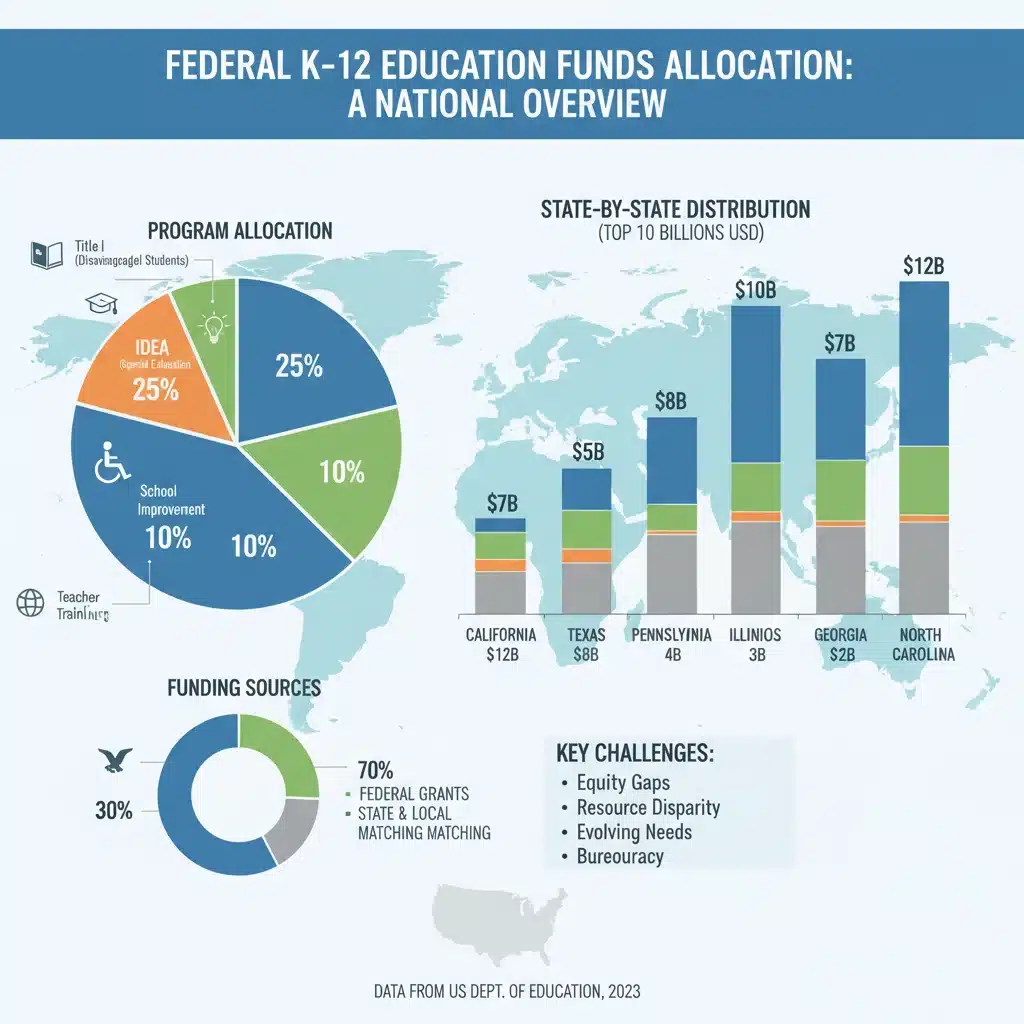
Furthermore, there are discussions around streamlining and consolidating various smaller federal grant programs. The current landscape of federal education funding can be complex, with numerous specialized grants, each with its own application process and reporting requirements. The 2026 proposals may seek to combine some of these programs into larger, more flexible block grants, giving states and districts greater autonomy in how they utilize federal resources to meet their specific needs. While this could reduce administrative burden and allow for more localized decision-making, it also raises concerns about whether specific critical areas, such as arts education or rural school support, might lose dedicated funding or be deprioritized. The balance between flexibility and targeted investment is a central challenge in designing effective Federal K-12 Funding policies.
Beyond funding allocation, changes in accountability measures and reporting requirements are also on the table. The proposals might introduce new performance indicators, focusing not just on standardized test scores but also on broader measures of student success, such as college and career readiness, social-emotional learning, and civic engagement. This could encourage schools to adopt more holistic approaches to education and provide a more comprehensive picture of student progress. However, developing and implementing such diverse accountability measures fairly and effectively across all states and districts presents a considerable challenge. The proposed changes to Federal K-12 Funding are thus not just about money; they are about redefining what success looks like in American education and how the federal government can best support its achievement.
Anticipated Impact on States and Local Districts
The proposed changes to Federal K-12 Funding for 2026 are expected to have a profound and varied impact on states and local school districts across the nation. For states, the shifts in funding formulas and priorities could necessitate significant adjustments to their own education budgets and strategic plans. States that traditionally rely heavily on federal Title I funding, for instance, might need to re-evaluate their financial models if the allocation criteria change. This could lead to increased pressure on state legislatures to either backfill potential federal shortfalls or to reallocate existing state resources to compensate. Conversely, states that align well with the new federal priorities, such as those with strong early childhood education initiatives or innovative accountability systems, might find themselves in a more advantageous position, potentially receiving increased federal support.
At the local district level, the implications could be even more immediate and tangible. School districts, particularly those serving high-needs populations, depend on federal funds to support a wide array of programs and services, from supplemental instruction and after-school programs to professional development for teachers and specialized services for students with disabilities. A change in the amount or allocation of Federal K-12 Funding could directly affect a district’s ability to maintain these critical programs. Districts might be forced to make difficult decisions about staffing, program offerings, or resource allocation, potentially impacting student services and educational quality. For example, if the emphasis shifts towards new early childhood programs, districts might need to invest in new infrastructure, hire specialized staff, and develop new curricula, all while navigating potential changes to existing funding streams.
The consolidation of federal grant programs, while aiming for flexibility, could also present challenges. Smaller, specialized programs often cater to unique needs within certain districts or student populations. If these are rolled into larger block grants, districts might struggle to prioritize these specific needs against broader educational goals, especially if they lack the internal capacity or expertise to navigate the new, more flexible funding landscape. This could lead to an uneven distribution of resources, with well-resourced districts potentially benefiting more from the flexibility than those with limited administrative capacity. The success of such a consolidation would heavily depend on clear guidance from the federal government and robust support for states and districts in adapting to the new funding structures for Federal K-12 Funding.
Challenges and Opportunities for Education Stakeholders
The proposed changes to Federal K-12 Funding for 2026 present both significant challenges and unique opportunities for various education stakeholders. For educators and school leaders, the challenge lies in adapting to new funding realities, potentially adjusting curricular priorities, and ensuring that any shifts do not disrupt the learning environment or negatively impact student outcomes. There will be a need for extensive professional development to help teachers implement new strategies aligned with federal priorities, especially if there’s a greater focus on areas like social-emotional learning or college and career readiness. School leaders will also face the complex task of navigating new accountability frameworks and demonstrating effective use of federal funds, which could involve new data collection and reporting requirements. The administrative burden associated with these changes can be substantial, requiring robust support systems at both the state and federal levels.
For students and families, the impact could be profound. Depending on how the new Federal K-12 Funding is allocated, some students may see an expansion of services, such as increased access to high-quality pre-kindergarten or specialized support programs. Conversely, if funding shifts reduce resources for existing programs that serve specific student populations, some students might experience a decrease in available support. Parental involvement and advocacy will become even more critical as families seek to understand how these changes will affect their children’s education and ensure their voices are heard in local and state-level decision-making processes. The equity implications of any funding reallocation will be a central concern, with advocates working to ensure that vulnerable student populations are not disproportionately affected.

However, these changes also present significant opportunities. A renewed focus on early childhood education, for instance, could lead to a stronger foundation for all students, reducing achievement gaps before they widen. Greater flexibility in federal funding, if implemented thoughtfully, could empower states and districts to innovate and tailor programs to their specific community needs, fostering more responsive and effective educational systems. The emphasis on broader measures of student success could encourage a more holistic approach to education, moving beyond a narrow focus on test scores to cultivate well-rounded individuals prepared for the complexities of the 21st century. Furthermore, these changes could spur greater collaboration between various educational entities, including community organizations, higher education institutions, and workforce development agencies, creating a more integrated and supportive ecosystem for student learning, all driven by strategic Federal K-12 Funding.
The Role of Data and Accountability in the New Funding Landscape
In any discussion of Federal K-12 Funding, the twin pillars of data and accountability are paramount. The proposed changes for 2026 are likely to place an even greater emphasis on these aspects, seeking to ensure that federal investments yield tangible results and that resources are used effectively. This means that states and districts will need to develop more sophisticated data collection and analysis systems to track student progress, program effectiveness, and resource utilization. The challenge will be to move beyond simply collecting data to actively using it to inform instructional practices, policy decisions, and resource allocation. This requires not only robust technological infrastructure but also a culture of data literacy among educators and administrators.
New accountability frameworks are expected to be more comprehensive, potentially incorporating a wider range of indicators beyond traditional standardized test scores. This could include measures of school climate, student engagement, post-secondary enrollment rates, and workforce outcomes. While this broader approach offers a more nuanced picture of school performance, it also introduces complexities in terms of measurement, comparability, and interpretation. States and districts will need to work collaboratively with the federal government to develop equitable and reliable accountability systems that genuinely reflect student growth and school effectiveness without imposing undue burden or leading to unintended consequences. The goal should be to create systems that support continuous improvement rather than simply penalizing underperformance, a critical aspect of effective Federal K-12 Funding oversight.
Transparency will also be a key component of the new funding landscape. Stakeholders, including parents, taxpayers, and policymakers, will demand clear and accessible information on how federal funds are being spent and what impact they are having on student learning. This will require robust reporting mechanisms and clear communication strategies from states and districts. The ability to demonstrate the return on investment for federal dollars will be crucial for maintaining public support for these programs and ensuring their long-term sustainability. Ultimately, the effectiveness of the 2026 Federal K-12 Funding changes will hinge on the ability of all stakeholders to embrace a data-driven approach to education, using evidence to guide decisions and continuously improve outcomes for all students.
Navigating the Path Forward: Recommendations and Considerations
As the US education system prepares for the proposed shifts in Federal K-12 Funding for 2026, several recommendations and considerations emerge for navigating this complex path forward. First and foremost, open and transparent communication will be essential. The federal government must provide clear guidance to states and districts regarding the new funding formulas, eligibility requirements, and accountability measures. Similarly, states and districts must communicate effectively with their schools, educators, and communities to ensure everyone understands the changes and their potential implications. This proactive communication can help mitigate uncertainty and foster a sense of shared purpose.
Secondly, states and districts should begin proactively planning for potential changes. This includes conducting thorough analyses of their current funding streams, identifying areas of potential gain or loss, and developing contingency plans. Early scenario planning can help districts anticipate challenges and strategically allocate resources to minimize disruption. Investing in capacity building, particularly in areas like data analysis, grant writing, and program evaluation, will also be crucial to ensure that districts can effectively compete for and manage the new federal funds. This preparedness is vital for maximizing the benefits of any changes in Federal K-12 Funding.
Thirdly, a strong emphasis on collaboration and partnership will be vital. The federal government, states, local districts, educators, parents, and community organizations must work together to ensure that the 2026 changes achieve their intended goals of improving educational outcomes for all students. This could involve forming task forces, hosting public forums, and establishing mechanisms for ongoing feedback and dialogue. By fostering a collaborative environment, stakeholders can collectively identify best practices, address emerging challenges, and advocate for policies that truly serve the needs of students and schools. The success of the new Federal K-12 Funding framework will depend on a unified vision and concerted effort from all parties.
Finally, continuous evaluation and adaptation will be necessary. The education landscape is dynamic, and what works today may not be effective tomorrow. The federal government should establish mechanisms for ongoing monitoring and evaluation of the 2026 funding changes, allowing for adjustments and refinements based on real-world data and feedback from the field. This iterative approach can ensure that the policies remain relevant, effective, and responsive to the evolving needs of the US education system. The ultimate goal of any reform in Federal K-12 Funding must be to create a system that is equitable, effective, and sustainable, providing every child with the opportunity to reach their full potential.
Conclusion: Shaping the Future of US Education
The proposed federal K-12 funding changes for 2026 represent a critical juncture for the US education system. These shifts, while potentially disruptive, also offer a significant opportunity to redefine priorities, streamline processes, and ultimately enhance the quality of education for millions of students. From adjusting Title I allocations to emphasizing early childhood education and reforming accountability measures, the breadth of these proposals underscores a comprehensive effort to address long-standing challenges and build a more robust educational foundation for the future. The success of this overhaul will not solely depend on the legislative details but on the collaborative spirit and adaptive capacity of all stakeholders involved.
As we move towards 2026, the ongoing dialogue, meticulous planning, and commitment to data-driven decision-making will be paramount. States and local districts must be prepared to navigate new funding landscapes, strategically allocate resources, and innovate in their approaches to teaching and learning. Educators will be tasked with implementing new strategies and adapting to evolving expectations, while parents and communities will play a crucial role in advocating for their students’ needs and ensuring transparency. The future of US education hinges on these interconnected efforts, ensuring that the changes in Federal K-12 Funding translate into tangible improvements in student outcomes and a more equitable, effective, and resilient educational system for all. The journey ahead is complex, but with careful foresight and dedicated collaboration, the 2026 funding reforms have the potential to profoundly shape a brighter educational future for generations to come.