Student Loan Forgiveness 2026: Apply Before July Deadline

Understanding the intricacies of student loan forgiveness programs in 2026 is crucial for borrowers seeking financial relief, as various federal initiatives offer pathways to debt reduction, with critical deadlines approaching, including a significant July cut-off for specific applications.
As we navigate the complexities of higher education financing, the prospect of student loan forgiveness programs in 2026 offers a beacon of hope for countless Americans. This comprehensive guide will illuminate the pathways available, detailing eligibility, application processes, and, critically, the imminent July deadline that could significantly impact your financial future.
Understanding the Landscape of Student Loan Forgiveness in 2026
The federal government continues to implement and refine various programs designed to alleviate the burden of student loan debt. In 2026, borrowers must be keenly aware of the evolving landscape, as eligibility criteria and program specifics can shift. These initiatives are not one-size-fits-all, catering to different professions, financial situations, and repayment histories.
Staying informed about these programs is paramount, especially as new policies are introduced or existing ones are modified. The overarching goal remains to provide relief to those who have dedicated years to education, often incurring substantial debt in the process. This section will delve into the primary types of forgiveness available and what borrowers need to consider.
Key Federal Forgiveness Programs
Several federal programs form the cornerstone of student loan forgiveness efforts. Each program has distinct requirements and benefits, making it essential for borrowers to identify which one, if any, aligns with their circumstances.
- Public Service Loan Forgiveness (PSLF): Designed for individuals working full-time for eligible non-profit organizations or government agencies.
- Income-Driven Repayment (IDR) Plan Forgiveness: Offers forgiveness of remaining loan balances after 20 or 25 years of payments, depending on the plan.
- Teacher Loan Forgiveness: Provides relief for teachers working in low-income schools or educational service agencies for five consecutive academic years.
- Perkins Loan Cancellation: Specific to Perkins Loans, offering cancellation for certain public service professions.
Navigating Eligibility Requirements
Eligibility is often the most critical hurdle. Each program has specific criteria related to loan type, employment, payment history, and sometimes even the date loans were disbursed. For instance, PSLF generally requires Direct Loans and 120 qualifying monthly payments.
Borrowers should begin by confirming their loan types through their loan servicer or the Federal Student Aid website. Understanding the intricacies of each program’s requirements early can prevent wasted effort and ensure a smoother application process. It’s also crucial to monitor any changes in these requirements, as policies can be updated by legislative action or administrative decisions.
In summary, the 2026 student loan forgiveness landscape is dynamic, offering multiple avenues for relief. Borrowers must thoroughly research available programs, understand their specific eligibility criteria, and proactively track any policy updates to maximize their chances of debt reduction.
The Imminent July Deadline: What You Need to Know
Amidst the various ongoing initiatives, a critical deadline looms large: the July cut-off for specific student loan forgiveness applications. This deadline is not universal for all programs but pertains to particular temporary waivers or expanded flexibilities that have been put into place to address unique circumstances or historical issues within federal student aid. Missing this window could mean forfeiting significant opportunities for debt relief.
Borrowers must identify if their situation falls under the purview of these time-sensitive provisions. Typically, such deadlines are established to conclude a temporary policy or to transition to new regulations. Procrastination in this instance could have lasting financial consequences.
Identifying Affected Programs and Waivers
The July deadline primarily impacts specific temporary programs or waivers designed to broaden eligibility for existing forgiveness initiatives. One prominent example is the Public Service Loan Forgiveness (PSLF) limited waiver, which previously allowed certain payments that wouldn’t normally count towards PSLF to be included. While the original PSLF waiver had an earlier deadline, similar temporary provisions, or specific administrative flexibilities, could have a July 2026 cut-off. Borrowers need to check the official Federal Student Aid website for the most current information regarding any ongoing temporary waivers.
Actionable Steps Before July
For those who believe they might be affected by the July deadline, immediate action is required. The first step involves verifying which specific programs or waivers are subject to this cut-off. This information is typically communicated through official channels like the Department of Education or your loan servicer.
- Consolidate Loans: If a program requires Direct Loans, and you have FFEL or Perkins loans, consolidation into a Direct Consolidation Loan is often necessary. This process itself can take time, so initiating it well before July is crucial.
- Submit Employment Certification: For PSLF-related waivers, ensuring all periods of eligible employment are certified by your employers is vital. This often involves submitting the PSLF Employment Certification Form.
- Review Payment History: Carefully examine your payment history to ensure all qualifying payments are accurately counted. Discrepancies should be addressed immediately with your loan servicer.
Consequences of Missing the Deadline
Missing a critical deadline, especially one in July 2026, could result in the loss of eligibility for specific forgiveness benefits that may not be offered again. This could mean continuing to make payments on a larger balance for a longer duration, or missing out on the opportunity to have a significant portion of your debt discharged. The urgency cannot be overstated; proactive engagement is the key to securing these benefits.
In essence, the July deadline represents a crucial window for specific student loan forgiveness opportunities. Borrowers must actively research, consolidate if necessary, certify employment, and submit all required documentation well in advance to avoid missing out on potentially life-changing financial relief.
Navigating the Application Process: Step-by-Step Guide
Applying for student loan forgiveness can appear daunting, but by breaking it down into manageable steps, borrowers can navigate the process effectively. Each program has its own specific forms and requirements, but a general framework applies to most. Understanding this framework and gathering necessary documentation proactively will streamline your application journey.
The key to a successful application lies in meticulous attention to detail and early preparation. Avoid last-minute rushes, especially with critical deadlines like the upcoming July cut-off, as errors or missing information can cause significant delays or even outright rejection.
Pre-Application Checklist
Before even beginning the application, a thorough review of your financial and employment history is essential. This pre-application phase ensures you have all the necessary information at your fingertips.
- Verify Loan Types: Confirm all your federal student loans are eligible for the desired program. Private loans are generally not eligible for federal forgiveness programs.
- Gather Employment Records: Collect documentation from all relevant employers, especially for programs like PSLF or Teacher Loan Forgiveness. This includes start and end dates, job titles, and proof of full-time status.
- Review Payment History: Access your loan servicer’s portal to review your entire payment history, noting any periods of deferment, forbearance, or late payments.
- Update Contact Information: Ensure your contact details with your loan servicer and the Department of Education are current to receive important communications.
The Application Submission Process
Once you have completed your pre-application checklist, you can proceed with the actual submission. This often involves online forms, but some programs may require mailed documentation.
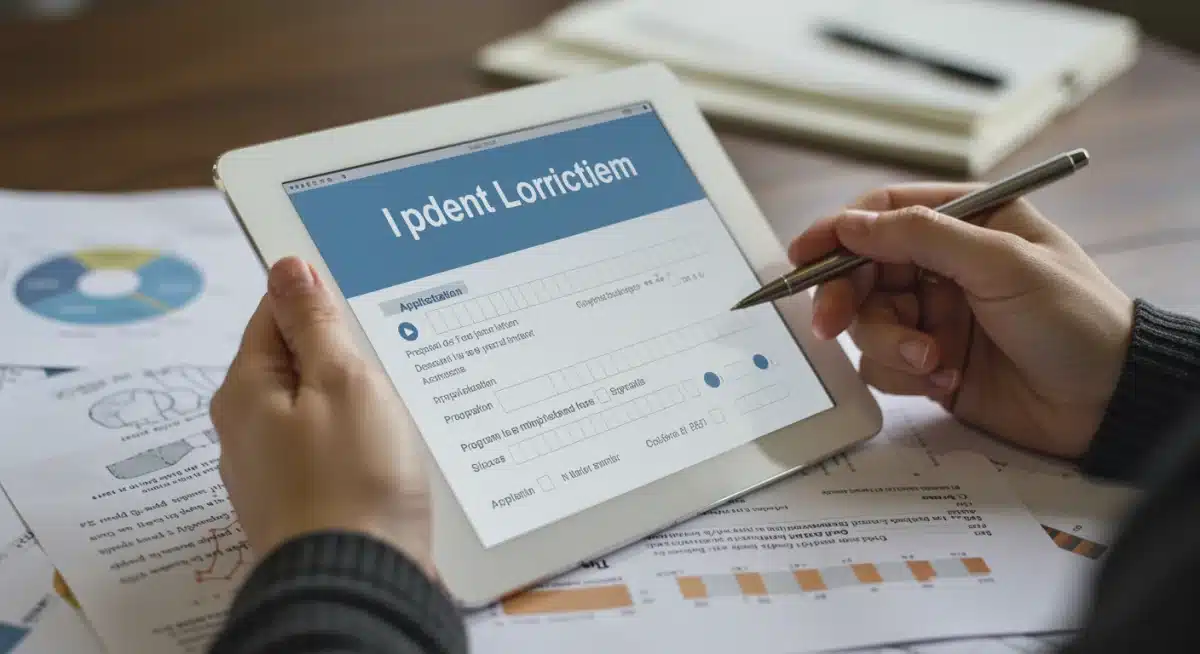
For most federal programs, applications are submitted through the Federal Student Aid website or directly to your loan servicer. Be prepared to provide detailed personal information, financial data, and employment verification. Double-check every field for accuracy before submission.
After submission, keep copies of all documents and confirmation numbers. This creates a paper trail in case any issues arise during processing. Some programs may require annual re-certification, so understand the ongoing commitments.
Post-Application Follow-Up
The application process doesn’t end with submission. It’s crucial to follow up to ensure your application is being processed correctly and efficiently. Regularly check your loan servicer’s portal for status updates and respond promptly to any requests for additional information.
If you encounter delays or have questions, contact your loan servicer directly. Keep a record of all communications, including dates, names of representatives, and summaries of conversations. This diligence can be invaluable if disputes arise.
In summary, a structured, step-by-step approach to the application process, beginning with thorough preparation and extending through diligent follow-up, is critical for successfully securing student loan forgiveness. Attention to detail and proactive engagement are your best allies.
Common Pitfalls and How to Avoid Them
While the promise of student loan forgiveness is appealing, the path to obtaining it is often fraught with potential missteps. Many borrowers encounter obstacles that can delay or even derail their applications. Being aware of these common pitfalls and understanding how to proactively avoid them is crucial for a successful outcome in 2026.
The complexity of federal regulations, coupled with the sheer volume of applicants, means that even minor errors can have significant consequences. This section aims to equip you with the knowledge to navigate these challenges effectively.
Incorrect Loan Type or Program Mismatch
One of the most frequent issues is attempting to apply for a program for which your loans are not eligible. For instance, private student loans never qualify for federal forgiveness programs. Similarly, some federal programs, like PSLF, specifically require Direct Loans. Borrowers with FFEL or Perkins Loans might need to consolidate them into a Direct Consolidation Loan first.
- Solution: Verify your loan types through the National Student Loan Data System (NSLDS) or your loan servicer. Thoroughly read the eligibility requirements for each program before applying.
Missing or Inaccurate Documentation
Applications often require extensive documentation, including employment certification forms, income verification, and proof of payments. Incomplete or incorrect paperwork is a leading cause of application delays or rejections. This is particularly relevant for programs with strict deadlines, like the July 2026 cut-off.
Solution: Start gathering all required documents well in advance. Keep organized records and make copies of everything you submit. If unsure about a document, contact your loan servicer for clarification. Use certified mail for important paper submissions to track delivery.
Misunderstanding Payment Requirements
Forgiveness programs often have specific payment requirements, such as making a certain number of qualifying payments under a particular repayment plan. Many borrowers unknowingly make payments that do not count towards forgiveness, leading to disappointment later.
Solution: Ensure you are enrolled in an eligible income-driven repayment plan if required. Understand what constitutes a ‘qualifying payment’ for your specific program. Regularly check your payment count with your servicer, especially for PSLF, and dispute any inaccuracies promptly.
Ignoring Deadlines and Communication
Missing deadlines, particularly the crucial July 2026 cut-off for certain waivers, can be the most detrimental mistake. Additionally, failing to respond to requests for information from your loan servicer or the Department of Education can lead to your application being closed.
Solution: Mark all relevant deadlines on your calendar. Regularly check your email and physical mail for communications from your servicer. Respond to all requests for information promptly and keep detailed records of all interactions.
By proactively addressing these common pitfalls, borrowers can significantly increase their chances of successfully securing student loan forgiveness. Diligence, accuracy, and timely action are indispensable throughout this process.
The Future of Student Loan Forgiveness Beyond 2026
While the immediate focus is on navigating current student loan forgiveness programs and the critical July 2026 deadline, it’s also prudent for borrowers to consider the potential future landscape of student loan relief. The policies governing federal student aid are subject to change, influenced by legislative actions, executive orders, and broader economic conditions.
Understanding these potential shifts can help borrowers plan long-term financial strategies, even if immediate forgiveness isn’t on the horizon. The conversation around student loan debt is ongoing, and future reforms are always a possibility.
Potential Legislative Changes and Policy Shifts
The political climate significantly impacts student loan policy. Future administrations or legislative bodies may introduce new forgiveness programs, modify existing ones, or even restrict eligibility. Discussions often revolve around the scope of forgiveness, income caps, and the types of loans included.
- Broader Forgiveness Initiatives: There is consistent advocacy for more widespread loan forgiveness, potentially tied to income levels or specific economic hardships.
- Reforms to IDR Plans: Ongoing efforts to simplify and improve Income-Driven Repayment plans could lead to more straightforward paths to forgiveness and reduced payment burdens.
- Targeted Relief: Continued focus on relief for specific populations, such as public servants, teachers, or borrowers with disabilities, is likely to persist.
Monitoring Official Sources for Updates
Given the fluid nature of student loan policy, staying informed directly from official sources is paramount. Relying on rumors or unofficial reports can lead to misinformation and missed opportunities.
The Federal Student Aid website (studentaid.gov) is the definitive source for all federal student loan information, including updates on forgiveness programs and deadlines. Regularly checking this site, as well as communications from your loan servicer, will ensure you have the most accurate and up-to-date information.
Long-Term Financial Planning Strategies
Even with the possibility of forgiveness, adopting sound long-term financial planning strategies is always advisable. This includes understanding your repayment options, budgeting effectively, and exploring ways to pay down your principal balance if forgiveness isn’t guaranteed or sufficient.
Consider consulting with a financial advisor specializing in student loan debt. They can help you evaluate your specific situation, project future scenarios, and develop a robust plan that accounts for both current forgiveness opportunities and potential future changes in policy. Diversifying your financial strategy beyond just relying on forgiveness can provide greater security.
In conclusion, while the present offers specific opportunities for student loan forgiveness, the future remains dynamic. Staying informed through official channels, understanding potential policy shifts, and engaging in proactive financial planning will empower borrowers to navigate their student loan journey effectively, regardless of what changes may come.
Resources and Support for Borrowers
Navigating the complex world of student loan forgiveness, especially with critical deadlines approaching in 2026, can be challenging. Fortunately, numerous resources and support systems are available to assist borrowers. Leveraging these tools can significantly ease the application process and help ensure you make informed decisions.
From official government websites to non-profit organizations and professional advisors, a wealth of information and guidance is at your disposal. Knowing where to turn for reliable assistance is key to maximizing your chances of securing debt relief.
Official Government Resources
The primary source for accurate and up-to-date information regarding federal student loans and forgiveness programs is the U.S. Department of Education’s Federal Student Aid (FSA) website. This portal is a comprehensive hub for borrowers.
- StudentAid.gov: This website provides detailed information on all federal loan programs, including eligibility criteria, application forms, and updates on policy changes. It’s also where you can access your loan history and manage your federal student aid.
- Loan Servicer Websites: Your specific loan servicer (e.g., Nelnet, MOHELA, Edfinancial) will have portals where you can view your account details, payment history, and communicate directly with their support teams. They are often the first point of contact for application-specific questions.
- Department of Education Help Lines: The Department of Education offers help lines for general inquiries and technical assistance related to federal student aid.
Non-Profit and Advocacy Organizations
Several non-profit organizations are dedicated to helping student loan borrowers understand their options and navigate the forgiveness process. These groups often provide free resources, counseling, and advocacy.
Organizations like the National Consumer Law Center or The Institute for College Access & Success (TICAS) publish guides, offer webinars, and advocate for borrower rights. While they don’t process applications, their educational materials can be invaluable for understanding the nuances of different programs.
Professional Financial Counseling
For complex situations or if you prefer personalized guidance, consulting with a certified financial advisor or a student loan counselor can be beneficial. These professionals can offer tailored advice based on your unique financial circumstances.
When selecting a financial advisor, ensure they specialize in student loan debt and are reputable. Look for certifications and positive client reviews. They can help you strategize repayment, identify eligible programs, and assist with the application process, offering peace of mind.
In conclusion, a robust ecosystem of resources exists to support student loan borrowers. By actively utilizing official government websites, engaging with reputable non-profit organizations, and considering professional financial counseling, individuals can confidently navigate the path to student loan forgiveness and make well-informed decisions about their financial future.
| Key Point | Brief Description |
|---|---|
| July 2026 Deadline | Crucial cut-off for specific temporary waivers and expanded flexibilities in federal loan forgiveness programs. |
| Eligibility Verification | Confirm your loan types (e.g., Direct Loans) and meet program-specific criteria for PSLF, IDR, or Teacher Loan Forgiveness. |
| Application Process | Gather documentation, consolidate loans if needed, submit forms via StudentAid.gov or servicer, and ensure timely follow-up. |
| Avoid Pitfalls | Guard against incorrect loan types, missing documents, misunderstanding payment rules, and ignoring official communications. |
Frequently Asked Questions About Student Loan Forgiveness 2026
The July 2026 deadline specifically applies to certain temporary waivers or expanded flexibilities within federal student loan forgiveness programs. It’s crucial for borrowers to check the Federal Student Aid website for announcements regarding which specific programs or waivers are affected by this cut-off.
No, private student loans are generally not eligible for federal student loan forgiveness programs. These programs, such as PSLF or IDR forgiveness, are exclusively for federal student loans. Borrowers with private loans should explore alternative relief options directly with their private lenders.
To qualify for PSLF, you must work full-time for an eligible U.S. federal, state, local, or tribal government agency or a qualifying non-profit organization. You need to submit the PSLF Employment Certification Form annually or whenever you change employers to confirm eligibility.
If your application is denied, you should first understand the reason for denial, which will be communicated to you. You can then appeal the decision, correct any errors, or provide additional documentation. Consulting a student loan advisor can also be beneficial for navigating the appeals process effectively.
The most reliable and official source for information on federal student loan forgiveness programs is the U.S. Department of Education’s Federal Student Aid website, StudentAid.gov. You should also regularly check communications from your specific loan servicer for personalized updates.
Conclusion
The landscape of student loan forgiveness in 2026 presents both significant opportunities and critical deadlines for borrowers seeking financial relief. Understanding the nuances of programs like PSLF and IDR forgiveness, coupled with a keen awareness of the imminent July cut-off for specific waivers, is not merely advantageous but essential. Proactive engagement, meticulous attention to application details, and leveraging available resources are the cornerstones of a successful journey toward debt reduction. By staying informed through official channels and acting decisively, borrowers can navigate these complexities and secure the financial future they deserve, transforming potential burdens into pathways for economic stability and growth.