Judicial Review: Supreme Court’s Landmark 2026 Cases
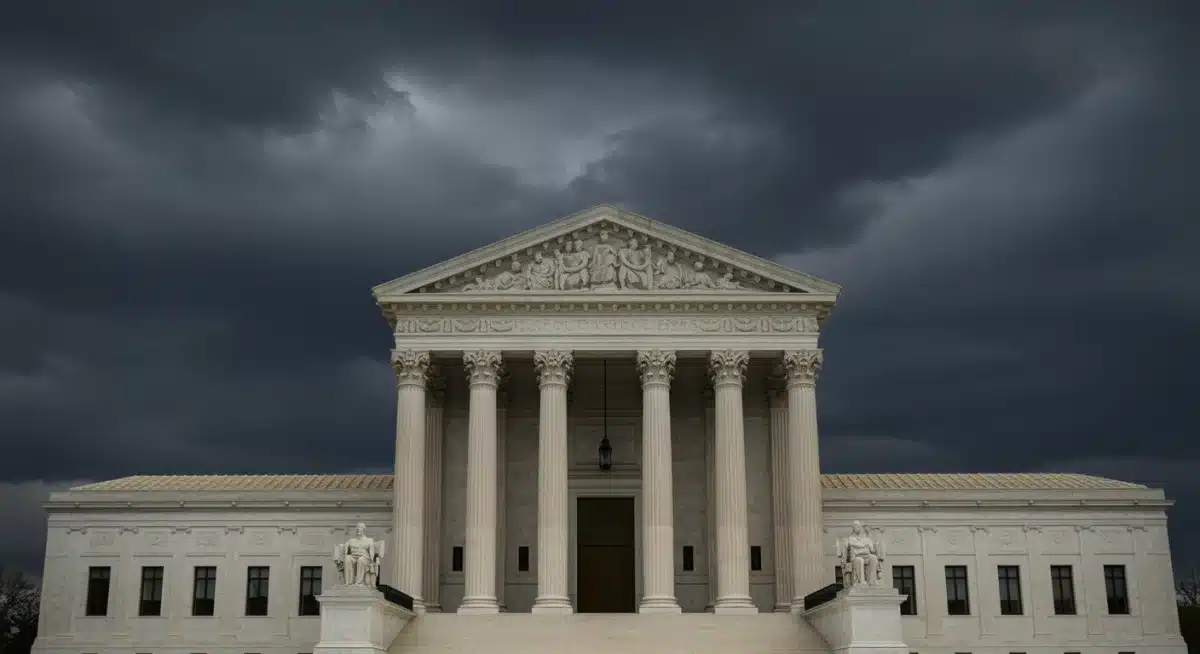
The U.S. Supreme Court is poised to hear critical judicial review cases in Fall 2026, decisions that could fundamentally reshape American law and society across various sectors.
As Fall 2026 approaches, legal scholars and the American public are keenly watching the U.S. Supreme Court, which is set to tackle a series of pivotal cases under its power of Supreme Court Judicial Review, promising broad national implications that could redefine constitutional interpretation and policy for decades.
Understanding Judicial Review’s Enduring Power
Judicial review stands as a cornerstone of American constitutional law, allowing courts to assess the constitutionality of legislative acts and executive actions. This fundamental power, though not explicitly enumerated in the Constitution, was firmly established by the Supreme Court in Marbury v. Madison (1803), creating a critical check on the other branches of government. Its application ensures that laws passed by Congress and actions taken by the President adhere to the parameters set forth by the Constitution, thereby upholding the rule of law and protecting individual liberties. The potency of judicial review lies in its ability to invalidate unconstitutional measures, making the judiciary a crucial arbiter of governmental power.
Historical Context and Evolution
The doctrine of judicial review has evolved significantly since its inception, adapting to changing societal norms and political landscapes. Early interpretations focused primarily on federal statutes, but its scope expanded over time to encompass state laws and executive orders. This expansion has often placed the Supreme Court at the center of major national debates, from civil rights to economic regulation. Understanding this historical trajectory is essential for appreciating the profound impact of upcoming cases, as the Court’s past decisions frequently inform its future rulings. Each era presents new challenges, and the Court’s application of judicial review reflects its contemporary understanding of constitutional principles and societal needs.
- Marbury v. Madison (1803): Established the principle of judicial review.
- McCulloch v. Maryland (1819): Affirmed implied powers of Congress and federal supremacy.
- Dred Scott v. Sandford (1857): A controversial decision that ultimately fueled the Civil War.
- Brown v. Board of Education (1954): Declared state-sponsored segregation in schools unconstitutional.
The enduring power of judicial review is not merely theoretical; it is a living, breathing mechanism that continually shapes the nation’s legal and social fabric. As the Court prepares for its 2026 docket, the historical precedents of judicial review will undoubtedly play a significant role in how these new challenges are approached and ultimately decided. The balance between judicial restraint and judicial activism remains a constant tension within this powerful framework, influencing how broad or narrow the Court’s interpretations become.
Key Areas of Focus: Constitutional Interpretation in 2026
The Fall 2026 term for the Supreme Court promises to be a watershed moment, with several cases poised to significantly redefine key aspects of constitutional law. These cases touch upon fundamental rights, governmental powers, and the interpretation of foundational clauses that have long been subject to debate. The outcomes will not only set new legal precedents but also influence policy-making and the daily lives of millions of Americans. Areas like free speech, federal regulatory authority, and the balance between state and federal powers are expected to be at the forefront.
First Amendment Freedoms Under Scrutiny
Several cases on the docket will directly address the scope and limitations of First Amendment protections, particularly concerning digital speech and religious freedom in public life. The rise of social media and evolving cultural norms have presented new challenges to traditional interpretations of free expression. The Court will likely explore how existing precedents apply to online platforms, content moderation, and the rights of individuals to express themselves without undue governmental interference. Similarly, cases involving religious practices in public institutions will test the boundaries of the Establishment Clause and the Free Exercise Clause, seeking to clarify the extent to which religious beliefs can influence public policy or be accommodated within secular frameworks. These decisions could have profound implications for civil liberties organizations and advocacy groups.
- Digital Speech and Platform Regulation: Examining censorship and content moderation online.
- Religious Expression in Public Spaces: Clarifying the interaction between church and state.
- Political Campaign Finance: Rethinking limits on political contributions and expenditures.
Beyond the First Amendment, the Court will also grapple with issues surrounding the Fourth Amendment’s protection against unreasonable searches and seizures, particularly in the context of advanced surveillance technologies. The balance between national security interests and individual privacy rights continues to be a contentious area, and the Court’s rulings in 2026 could establish new guidelines for law enforcement and intelligence agencies. These cases underscore the dynamic nature of constitutional interpretation, where timeless principles must be applied to ever-evolving technological and social landscapes. The Court’s decisions will inevitably shape how future generations understand and experience their constitutional rights.
The Impact on Federal Regulatory Authority
A significant portion of the Supreme Court’s 2026 agenda will involve cases that challenge the scope and authority of federal regulatory agencies. This area of law, often referred to as administrative law, determines how much power agencies like the Environmental Protection Agency (EPA), the Food and Drug Administration (FDA), and others can wield in implementing and enforcing federal statutes. The Court’s approach to these cases could either solidify or significantly curtail the ability of the executive branch to regulate various sectors, from environmental protection to public health and economic markets. This is a critical battleground for those who advocate for a robust administrative state versus those who believe in limiting federal government overreach.
Chevron Deference and its Future
Central to many of these challenges is the doctrine of Chevron U.S.A., Inc. v. Natural Resources Defense Council, Inc. (1984), commonly known as Chevron deference. This principle dictates that courts should defer to a federal agency’s reasonable interpretation of an ambiguous statute that it administers. For decades, Chevron deference has been a cornerstone of administrative law, granting agencies significant latitude in interpreting broad congressional mandates. However, recent Supreme Court terms have seen growing skepticism towards Chevron deference, with some justices expressing concerns about its impact on the separation of powers and the delegation of legislative authority to unelected bureaucrats. A decision in 2026 to significantly modify or even overturn Chevron could dramatically shift the balance of power between Congress, the executive branch, and the judiciary, leading to a more active role for courts in reviewing agency actions.
The implications of any changes to Chevron deference would be far-reaching. Industries currently regulated by federal agencies might experience significant shifts in compliance requirements, potentially leading to increased litigation and uncertainty. Environmental regulations, consumer protection standards, and financial oversight could all be subject to reevaluation if agencies lose their interpretive flexibility. Conversely, a reaffirmation of Chevron deference would bolster the administrative state, allowing agencies to continue their work with established legal backing. The arguments in these cases will likely revolve around originalist interpretations of the Constitution versus a more pragmatic view of modern governance, reflecting deeply held philosophical differences among the justices regarding the role and structure of government.
Electoral Integrity and Voting Rights Challenges
The Supreme Court’s Fall 2026 term is also expected to feature cases that directly address electoral integrity and the future of voting rights in the United States. These issues remain highly contentious, reflecting ongoing national debates about access to the ballot box, election administration, and the fairness of electoral processes. Decisions in this area could reshape how elections are conducted, impact voter turnout, and ultimately influence the democratic landscape for years to come. The Court’s jurisprudence on voting rights has a long and complex history, marked by landmark decisions that have both expanded and, at times, restricted access to voting.
Redistricting and Gerrymandering Debates
Among the most anticipated cases are those concerning redistricting and gerrymandering. After every decennial census, states redraw their legislative and congressional districts, a process that can be highly politicized. Partisan gerrymandering, where districts are drawn to favor one political party over another, has been a persistent source of legal challenges. The Court has previously struggled to establish clear, judicially manageable standards for addressing partisan gerrymandering, often deferring to state legislatures. However, new legal theories and evolving judicial philosophies might lead to a different outcome in 2026. The Court could potentially set new limits on how far states can go in drawing districts, aiming to ensure fairer representation. Such rulings would profoundly impact the balance of power in Congress and state legislatures, affecting policy outcomes across the nation.
- Voter ID Laws: Scrutinizing the balance between preventing fraud and ensuring access.
- Felon Disenfranchisement: Examining constitutional challenges to denying voting rights to former felons.
- Independent State Legislature Theory: Potentially re-evaluating the role of state courts in federal elections.
Beyond redistricting, cases involving voter identification laws, absentee voting rules, and the restoration of voting rights for formerly incarcerated individuals are also likely to be heard. Each of these areas presents complex legal and constitutional questions, pitting arguments about election security against claims of voter suppression. The Supreme Court’s pronouncements in 2026 will undoubtedly guide future electoral reforms and judicial interpretations at the state and federal levels. The outcomes will be closely watched by political parties, civil rights organizations, and every American concerned with the integrity and accessibility of their democratic process.
Socio-Economic Policy and National Implications
The Supreme Court’s Fall 2026 docket is not limited to traditional constitutional law but also extends into critical areas of socio-economic policy, with potential national implications for healthcare, labor rights, and economic regulation. These cases often reflect the ongoing tension between individual economic freedoms and collective social welfare, presenting the Court with opportunities to shape the future direction of American capitalism and its social safety nets. The rulings could impact everything from employment contracts to access to essential services, reverberating through industries and households nationwide.
Healthcare Access and Funding
One prominent area of concern involves challenges to federal healthcare legislation and regulations affecting access to medical services. Cases might arise concerning the Affordable Care Act (ACA), particularly its provisions related to insurance mandates or subsidies, which have been subjects of persistent legal battles. The Court could also address issues related to pharmaceutical pricing, Medicare/Medicaid funding, or the scope of federal authority to regulate public health emergencies. Decisions in these areas would have immediate and significant consequences for millions of Americans, influencing the cost and availability of healthcare, as well as the responsibilities of both federal and state governments in providing it. The balance between market-based solutions and government intervention in healthcare remains a central theme.
Another significant set of cases could involve labor laws, particularly those concerning union rights, minimum wage standards, or the classification of workers in the gig economy. As the economy continues to evolve, the legal framework governing employment relations faces new pressures. The Court’s interpretations of existing labor statutes and constitutional protections for workers could impact collective bargaining power, working conditions, and the economic security of a substantial portion of the workforce. These decisions are crucial for organized labor, businesses, and individual employees, shaping the future of work in the United States. The intersection of technology, labor, and law presents novel challenges that the Court will need to navigate with careful consideration of both economic realities and social justice.
The Role of Amicus Briefs and Public Advocacy
In cases of such broad national importance, the influence of amicus curiae (friend of the court) briefs and public advocacy cannot be overstated. These external contributions play a crucial role in informing the Supreme Court justices about the wider implications of their decisions, providing perspectives beyond those presented by the direct litigants. As the Fall 2026 term approaches, various organizations, academic institutions, and even individual citizens will be preparing to submit their arguments, aiming to sway the Court’s opinion and highlight the real-world impact of potential rulings. This engagement underscores the democratic aspect of judicial review, where public input, albeit indirect, can shape legal outcomes.
Shaping Judicial Understanding
Amicus briefs serve several vital functions. They can offer specialized expertise on complex technical or scientific issues that may be beyond the Court’s general legal knowledge. For instance, in cases involving environmental regulations, scientific organizations might submit briefs explaining ecological impacts. In cases related to digital speech, technology experts could provide insights into platform algorithms and user behavior. Furthermore, amicus briefs often present social science data, historical context, or comparative legal analysis from other jurisdictions, enriching the Court’s understanding of a case’s broader societal context. These diverse perspectives help the justices appreciate the full spectrum of consequences that their decisions might entail, moving beyond the narrow legal arguments of the immediate parties.
- Expert Opinions: Providing specialized knowledge on complex subjects.
- Social Impact Analysis: Detailing the potential societal effects of rulings.
- Historical Context: Offering background on legal and constitutional developments.
- Comparative Law: Presenting insights from other legal systems.
Public advocacy, conducted through media campaigns, protests, and grassroots organizing, also plays a significant, albeit less direct, role. While justices are expected to be insulated from political pressures, the broader public discourse surrounding a case can create an environment in which decisions are made. Advocacy groups often work to educate the public about the stakes involved, generating public interest and sometimes shaping the national conversation. This can, in turn, subtly influence how a case is perceived, even within the Court. The interplay between formal legal arguments presented in briefs and the informal pressures of public opinion creates a dynamic environment where the Court’s decisions are not made in a vacuum, but within a rich tapestry of societal concerns and expectations.
Anticipating the Long-Term Legal Landscape
The Supreme Court’s decisions in Fall 2026 are not merely isolated rulings; they represent critical junctures that will inevitably shape the long-term legal landscape of the United States. Each pronouncement from the highest court sets precedents that lower courts must follow, influencing countless future cases and legislative efforts. Understanding these potential long-term impacts is crucial for lawyers, policymakers, and citizens alike, as the ripple effects of these landmark decisions will be felt for decades, redefining rights, responsibilities, and the very structure of governance. The Court’s role as the ultimate interpreter of the Constitution means its rulings carry immense weight, often dictating the direction of national policy without direct legislative action.
Precedent and Future Legislation
When the Supreme Court issues a ruling, especially on a constitutional matter, it establishes a binding precedent that all other courts in the country must adhere to. This doctrine of stare decisis ensures consistency and predictability in the law. However, the Court also has the power to overturn or modify its own precedents, a rare but significant occurrence that can drastically alter legal interpretations. The 2026 cases might lead to such shifts, thereby opening new avenues for litigation or closing existing ones. For instance, a reinterpretation of federal regulatory authority could necessitate new legislative frameworks to address issues previously handled by agencies. Similarly, changes to voting rights jurisprudence might prompt states to revise their election laws, leading to a cascade of legal and political adjustments across the nation. The legislative branches, both federal and state, will be closely monitoring these decisions to understand the new legal boundaries within which they must operate.
Beyond direct legal application, the Court’s decisions also have a profound cultural impact, shaping societal norms and public discourse. Landmark cases often become touchstones in national conversations about justice, equality, and freedom. The outcomes of the Fall 2026 term could either affirm existing societal trends or challenge them, sparking new movements and debates. For example, rulings on free speech in the digital age could influence how individuals interact online, while decisions on healthcare access could redefine public expectations about social welfare. The Court’s role is therefore not just legal but also deeply sociological, reflecting and influencing the values of American society. Anticipating these long-term effects requires a comprehensive understanding of both legal principles and the broader social and political context in which these decisions are made, highlighting the immense responsibility borne by the justices.
| Key Point | Brief Description |
|---|---|
| Judicial Review Power | Supreme Court’s authority to declare laws unconstitutional, shaping government checks and balances. |
| Constitutional Interpretation | Fall 2026 cases will redefine First Amendment, regulatory authority, and voting rights. |
| Federal Regulatory Impact | Decisions on Chevron deference could significantly alter agency power and industry oversight. |
| Long-Term Legal Shifts | Rulings will establish precedents affecting future legislation, societal norms, and public discourse for decades. |
Frequently Asked Questions About Supreme Court Judicial Review
The primary function of judicial review is to determine whether legislative acts and executive actions comply with the U.S. Constitution. This power ensures a system of checks and balances, preventing any single branch from overstepping its constitutional authority and protecting fundamental rights.
The Fall 2026 cases are expected to redefine First Amendment rights, especially concerning digital speech and religious freedoms. Rulings could clarify the extent of content moderation on online platforms and the boundaries of religious expression in public life, affecting millions.
Chevron deference is a legal doctrine requiring courts to defer to federal agencies’ reasonable interpretations of ambiguous statutes. Its future is crucial because modifying or overturning it could significantly shift power from federal agencies to courts, impacting regulations across many sectors.
Decisions on electoral integrity in Fall 2026 could reshape redistricting, gerrymandering, and voting rights laws. These rulings may influence how elections are administered, voter access, and the overall fairness of democratic processes for years to come.
Amicus curiae, or friend of the court, briefs provide external perspectives, specialized expertise, and broader societal context to the justices. They help inform the Court about the real-world implications of their decisions, influencing judicial understanding and shaping legal outcomes.
Conclusion
The impending Fall 2026 term of the U.S. Supreme Court is poised to be a period of intense scrutiny and profound legal transformation. The high-stakes cases involving Supreme Court Judicial Review will not only test the adaptability of constitutional principles in a rapidly changing world but also redefine the boundaries of governmental power, individual rights, and socio-economic policy. As the nation anticipates these landmark decisions, the Court’s role as the ultimate arbiter of justice and constitutional interpretation remains paramount, shaping the American legal landscape for generations to come.