Latest on US Trade Negotiations: Key Agreements and Their Potential Economic Ramifications for 2026
The global economic landscape is constantly shifting, and at its core are the intricate webs of international trade agreements. For the United States, US trade negotiations are not merely diplomatic exercises; they are pivotal drivers of economic growth, job creation, and geopolitical influence. As we look towards 2026, the outcomes of ongoing and impending trade discussions will have profound and lasting effects across various sectors, both domestically and globally. This comprehensive analysis delves into the current state of US trade negotiations, highlighting key agreements, their potential economic ramifications, and what businesses and consumers can expect in the coming years.
The Evolving Landscape of US Trade Policy
The United States, as the world’s largest economy, wields immense power and influence in global trade. Its trade policy is often a complex interplay of domestic priorities, international relations, and evolving geopolitical realities. In recent years, there has been a noticeable shift in the approach to US trade negotiations, moving from a focus solely on tariff reduction to a broader consideration of fair trade practices, intellectual property rights, environmental standards, and labor protections. This holistic approach aims to create a more equitable and sustainable global trading system, though it often leads to more intricate and prolonged negotiations.
Understanding the context of these negotiations requires acknowledging the historical backdrop. From the post-World War II era’s General Agreement on Tariffs and Trade (GATT) to the establishment of the World Trade Organization (WTO), the US has been a central figure in shaping multilateral trade frameworks. However, recent administrations have shown a willingness to pursue bilateral and regional agreements, often in response to perceived imbalances or to address specific strategic interests. This shift reflects a dynamic and often contentious environment where national interests are fiercely protected, and global supply chains are re-evaluated for resilience and security.
The Biden administration, for instance, has emphasized a ‘worker-centric’ trade policy, prioritizing labor rights, environmental sustainability, and inclusive growth. This approach contrasts with previous administrations that might have focused more heavily on pure market access. Such policy shifts naturally influence the direction and content of US trade negotiations, leading to new types of clauses and enforcement mechanisms within agreements. Businesses, therefore, must remain agile and informed about these evolving policy directions to anticipate potential impacts on their operations and supply chains.
Key Trade Agreements and Their Current Status
Several significant trade agreements and initiatives are currently shaping the future of US trade negotiations. These range from established pacts undergoing review to new frameworks designed to address modern economic challenges. Each holds unique implications for various sectors.
The United States-Mexico-Canada Agreement (USMCA)
Replacing NAFTA in 2020, the USMCA has been a cornerstone of North American trade. It introduced stricter rules on automotive content, enhanced labor provisions, and updated intellectual property protections. For 2026, the focus will likely remain on compliance and enforcement, particularly concerning the automotive rules of origin. Any disputes or adjustments in these areas could significantly impact the manufacturing sectors in all three countries. The agreement’s built-in review mechanism also means that its provisions are subject to periodic scrutiny, ensuring its continued relevance but also introducing potential for renegotiation or amendment.
The USMCA’s labor provisions, in particular, have been a point of emphasis for the US administration. The rapid response labor mechanism allows for enforcement actions against facilities that violate workers’ rights. This has already led to several cases in Mexico, demonstrating the US’s commitment to these new standards. For businesses operating within North America, understanding and adhering to these labor standards is paramount to avoiding potential trade disruptions and penalties. The long-term implications of these provisions on wages and working conditions across the continent are still unfolding but are expected to contribute to a more level playing field.
Indo-Pacific Economic Framework for Prosperity (IPEF)
The IPEF is not a traditional free trade agreement focused on tariff reduction but rather a comprehensive economic framework designed to deepen engagement with allies in the Indo-Pacific region. Launched in 2022, it covers four key pillars: trade, supply chains, clean economy, and fair economy (tax and anti-corruption). While tariffs are not on the table, successful negotiations within IPEF could lead to harmonized standards, improved supply chain resilience, and greater cooperation on digital trade and environmental initiatives. This will be crucial for diversifying supply chains away from over-reliance on single countries and fostering regional economic stability.
The IPEF represents a strategic pivot for the US, aiming to counter China’s growing economic influence in the region without resorting to traditional market access agreements that have faced domestic political hurdles. Its success will be measured by its ability to create tangible benefits for participating economies through regulatory coherence and collaborative projects. Businesses with significant interests in the Indo-Pacific should closely monitor the progress of IPEF negotiations, as agreements on digital trade standards, for instance, could significantly impact their operational models and market access strategies. The framework also offers an opportunity for the US to demonstrate leadership in developing sustainable and ethical trade practices.
Transatlantic Trade and Technology Council (TTC)
The TTC, established between the US and the European Union, serves as a forum to coordinate approaches on key global trade, economic, and technology issues. It addresses challenges such as supply chain resilience, emerging technologies, climate and green tech, and the misuse of technology threatening security and human rights. While not a trade agreement in itself, the TTC’s work informs and shapes the broader transatlantic trade relationship, aiming to prevent new trade barriers and foster cooperation on critical technological standards. For 2026, continued collaboration on AI governance, cybersecurity, and green technology standards will be paramount, impacting industries ranging from software development to renewable energy.
The TTC is particularly important for industries that operate at the cutting edge of technological innovation. By aligning regulatory approaches and standards, the US and EU can create a more predictable and favorable environment for businesses developing and deploying new technologies. This can prevent the fragmentation of markets due to divergent regulations, fostering innovation and economic growth. The council also plays a critical role in addressing geopolitical challenges, such as countering economic coercion and ensuring the security of critical supply chains. Its ongoing dialogues are essential for maintaining a robust and cooperative transatlantic economic partnership.
Potential Economic Ramifications for 2026
The outcomes of these US trade negotiations will ripple through the American and global economies, creating both opportunities and challenges. Understanding these ramifications is vital for strategic planning.
Impact on Manufacturing and Supply Chains
One of the most significant areas of impact will be on manufacturing and global supply chains. The emphasis on supply chain resilience, de-risking, and nearshoring/friendshoring in US trade negotiations means that companies might face incentives or pressures to reconfigure their production networks. This could lead to increased domestic investment, job creation in certain sectors, but also potentially higher production costs in the short term. Industries heavily reliant on specific foreign inputs, such as electronics or pharmaceuticals, will need to adapt to new sourcing strategies.
For example, stricter rules of origin in agreements like USMCA encourage greater North American content, benefiting regional manufacturers. Similarly, efforts within IPEF to diversify critical supply chains could lead to new manufacturing hubs emerging in Southeast Asia, reducing reliance on China. This strategic realignment is not without its complexities, requiring significant investment in infrastructure, technology, and workforce development. Companies that proactively assess their supply chain vulnerabilities and explore alternative sourcing options will be better positioned to navigate these changes and capitalize on new opportunities arising from these trade shifts.
Agricultural Sector Implications
The agricultural sector is always a sensitive area in US trade negotiations. While the US often pushes for greater market access for its agricultural products, other countries frequently seek to protect their domestic industries. For 2026, the outcome of specific bilateral discussions, particularly with key trading partners in Asia and Europe, could determine the profitability of various agricultural exports. Non-tariff barriers, such as sanitary and phytosanitary measures, also remain significant hurdles that negotiators aim to address.
Increased market access for US agricultural products could provide a much-needed boost to farmers, particularly for commodities like soybeans, corn, and beef. Conversely, if negotiations falter or lead to retaliatory tariffs, the sector could face significant headwinds. The administration’s focus on sustainable agriculture and food security may also influence future agreements, potentially leading to new standards or certifications that US producers must meet to access certain markets. Farmers and agricultural businesses need to stay informed about these developments to adjust their planting and export strategies accordingly. The long-term stability of agricultural exports hinges on favorable trade terms and robust enforcement mechanisms.
Technology and Digital Trade
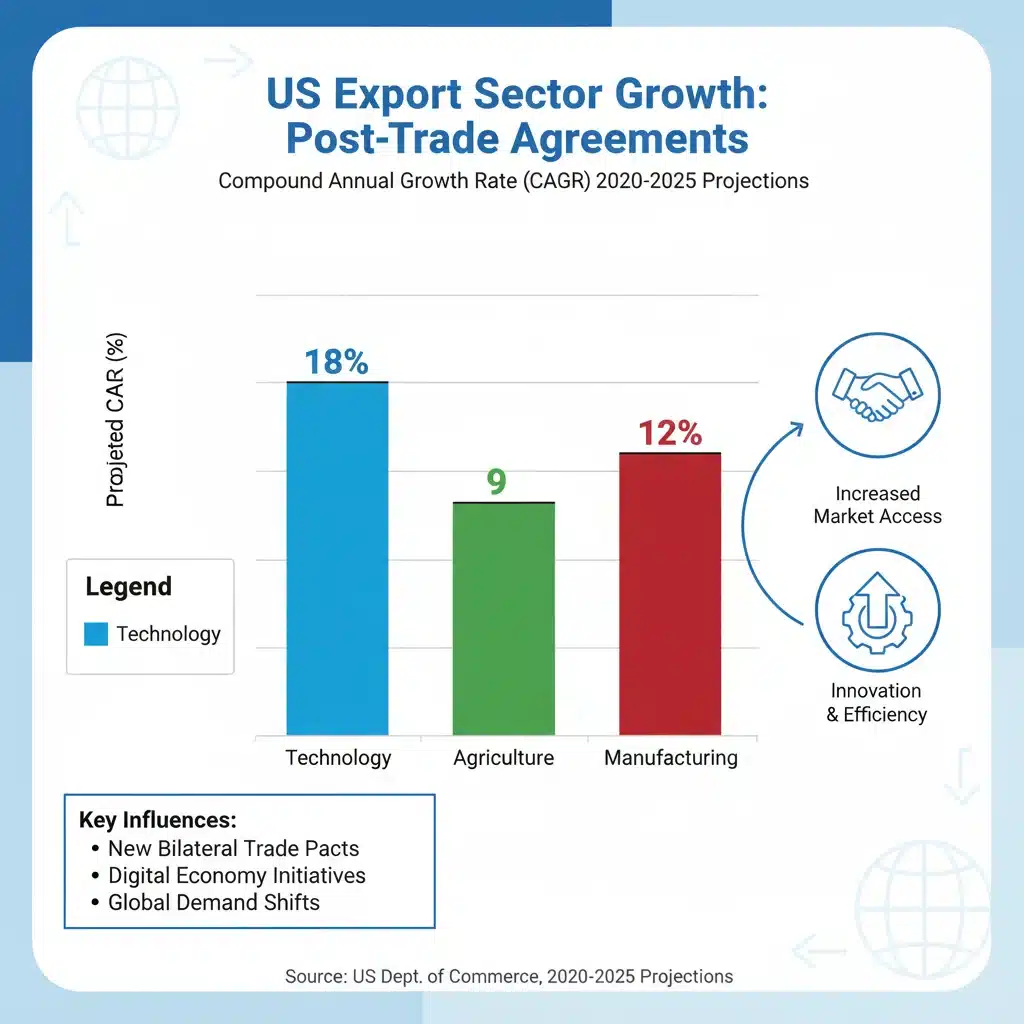
Digital trade is an increasingly crucial component of modern commerce, and US trade negotiations are actively addressing its complexities. Agreements on data localization, cross-border data flows, and intellectual property protection for digital products will have substantial implications for the tech industry, e-commerce, and services sectors. The IPEF and TTC are particularly relevant here, aiming to establish common standards and frameworks that facilitate secure and open digital trade while safeguarding privacy and national security interests.
The ability to transfer data across borders freely and securely is fundamental to the operations of many global tech companies. Restrictive data localization laws can significantly increase operational costs and hinder innovation. Therefore, successful negotiations that promote free data flow while ensuring robust privacy protections are critical for the continued growth of the digital economy. Furthermore, agreements on intellectual property rights in the digital realm are essential for protecting the innovations of US tech companies. As the digital economy continues to expand, these aspects of US trade negotiations will only grow in importance, shaping the competitive landscape for tech giants and startups alike.
Investment and Services Trade
Beyond goods, investment and services trade represent a substantial portion of the US economy. Future US trade negotiations will continue to focus on reducing barriers to foreign direct investment (FDI) and improving market access for US service providers, from financial services to entertainment and consulting. Provisions that ensure fair and transparent regulatory environments are critical for encouraging cross-border investment and expanding the reach of American service industries.
For example, agreements that streamline regulatory approvals for foreign investors or ensure national treatment for service providers can unlock new growth opportunities. Conversely, protectionist measures or discriminatory regulations in other countries can severely limit the potential for US firms to compete globally. The ongoing dialogues within various frameworks aim to address these issues, seeking to create a more predictable and open environment for both outbound and inbound investment. The financial sector, in particular, stands to benefit significantly from harmonized regulatory frameworks and reduced barriers to cross-border operations.
Challenges and Opportunities in US Trade Negotiations
While the potential benefits of successful US trade negotiations are clear, the path forward is fraught with challenges. Geopolitical tensions, domestic political considerations, and the inherent complexities of multilateral agreements all play a role.
Geopolitical Dynamics
The increasingly complex geopolitical landscape significantly influences US trade negotiations. The rivalry with China, the war in Ukraine, and regional instabilities all add layers of complexity, often intertwining economic goals with national security objectives. Trade agreements are increasingly seen not just as economic tools but as instruments of foreign policy, used to strengthen alliances and counter adversarial influence. This means negotiations can be slower and more contentious, as non-economic factors weigh heavily on decision-making.
For instance, efforts to de-risk supply chains from China are driven by both economic and national security concerns. This can lead to policies that prioritize resilience and security over pure cost efficiency. Similarly, trade discussions with allies may include provisions aimed at bolstering collective security. Businesses must be acutely aware of these geopolitical undercurrents, as they can lead to abrupt policy shifts or the imposition of new trade restrictions. Adapting to a world where trade and geopolitics are inextricably linked requires a nuanced understanding of international relations.
Domestic Political Considerations
Any US trade negotiations must navigate a diverse and often polarized domestic political environment. Support from Congress, labor unions, environmental groups, and various industry associations is crucial for the successful ratification and implementation of agreements. The ‘worker-centric’ approach of the current administration reflects a response to past criticisms that trade agreements did not adequately protect domestic jobs or environmental standards.
Securing broad domestic consensus often requires concessions and compromises, which can prolong negotiations or limit their scope. For example, strong lobbying from specific industries can influence the inclusion or exclusion of certain provisions. Understanding the domestic political currents is therefore essential for anticipating the likely outcomes of trade talks and for businesses to effectively advocate for their interests. Public opinion also plays a significant role, with growing skepticism about the benefits of globalization leading to greater scrutiny of trade deals.
Multilateral vs. Bilateral Approaches
The debate between pursuing multilateral agreements (e.g., through the WTO) versus bilateral or regional deals continues to shape US trade negotiations. While multilateralism offers the promise of comprehensive, rules-based trade, progress at the WTO has been slow, particularly in areas like dispute settlement reform. This has led the US and other nations to increasingly pursue more agile bilateral or regional frameworks.
Each approach has its merits and drawbacks. Multilateral agreements can provide greater stability and reduce trade fragmentation but are often difficult to negotiate due to the diverse interests of many countries. Bilateral deals can be tailored to specific needs and interests, leading to quicker results, but can also create a ‘spaghetti bowl’ of overlapping and potentially conflicting rules. For 2026, it is likely that the US will continue a hybrid approach, engaging in targeted bilateral discussions while also working to reform and strengthen the multilateral system where possible. Businesses need to understand which agreements impact them most directly and prepare for a potentially fragmented global trading environment.

The Role of Technology in Trade Enforcement and Facilitation
Technology is not only a subject of US trade negotiations but also a critical tool in their enforcement and facilitation. Advanced analytics, blockchain, and artificial intelligence are increasingly being used to monitor compliance with trade agreements, track goods through supply chains, and streamline customs processes. This can enhance transparency, reduce fraud, and improve the efficiency of international trade.
For example, digital platforms can help small and medium-sized enterprises (SMEs) navigate complex customs requirements and access new markets, thereby democratizing trade. Blockchain technology can provide immutable records of supply chain transactions, ensuring compliance with rules of origin and labor standards. As trade agreements become more sophisticated, incorporating provisions on environmental sustainability and labor rights, technology will be indispensable in ensuring their effective implementation and monitoring. Businesses that embrace these technological advancements will gain a competitive edge in navigating the evolving trade landscape.
Looking Ahead: What to Expect in 2026 and Beyond
As we approach 2026, the trajectory of US trade negotiations points towards several key themes. Expect a continued emphasis on resilient supply chains, a focus on digital trade standards, and the integration of environmental and labor provisions into new agreements. The geopolitical context will remain a dominant factor, with trade policy serving as a tool for strategic alliance building and economic statecraft.
Businesses should anticipate a dynamic and potentially unpredictable trade environment. Staying informed about ongoing negotiations, engaging with policymakers, and diversifying supply chain strategies will be crucial for mitigating risks and capitalizing on new opportunities. The commitment to a ‘worker-centric’ approach suggests that labor and environmental standards will continue to be non-negotiable elements in future agreements, potentially reshaping global production practices.
Furthermore, the US will likely continue to explore innovative frameworks like IPEF, which aim to address modern economic challenges without solely relying on traditional tariff-reduction models. This signals a shift towards a more comprehensive approach to economic engagement, where trade is intertwined with technology, climate, and governance. The success of these initiatives will depend on their ability to deliver tangible benefits to participating countries and foster greater economic integration.
Conclusion: Navigating the Future of US Trade
The future of global commerce is inextricably linked to the outcomes of US trade negotiations. For 2026, key agreements like USMCA and emerging frameworks such as IPEF and TTC will play a decisive role in shaping economic landscapes, influencing industries from manufacturing and agriculture to technology and services. The potential economic ramifications are vast, encompassing shifts in supply chains, market access opportunities, and the adoption of new standards.
Navigating this complex environment requires foresight, adaptability, and a deep understanding of both economic and geopolitical forces. Businesses and policymakers alike must collaborate to ensure that future trade agreements foster sustainable growth, create equitable opportunities, and strengthen global economic stability. By staying abreast of the latest developments in US trade negotiations, stakeholders can better prepare for the challenges and opportunities that lie ahead, securing a prosperous future in an interconnected world.
The journey of international trade is one of continuous evolution, and the United States remains a central architect of its future. The decisions made in the coming years will not only define America’s economic standing but also profoundly impact the lives of billions worldwide. As we move closer to 2026, the spotlight remains firmly on the negotiating tables where the next chapter of global trade is being written.