

Understanding the 2026 Child Tax Credit Changes: A Guide to Maximizing Your $3,600 per Child Benefit
The landscape of tax credits for families is constantly evolving, and keeping up with these changes is paramount for maximizing your financial well-being. As we look ahead, the 2026 Child Tax Credit is poised to bring significant shifts that could impact millions of American families. For many, the promise of up to $3,600 per child is a substantial benefit, offering crucial support for raising children. This comprehensive guide will delve into the anticipated changes, eligibility requirements, and strategic approaches to ensure you fully leverage the 2026 Child Tax Credit.
Understanding these intricacies now can save you headaches and potentially thousands of dollars in the future. We’ll break down the complexities, offer practical advice, and equip you with the knowledge to confidently navigate the upcoming tax season. From who qualifies to how to claim the maximum benefit, every aspect of the 2026 Child Tax Credit will be explored in detail, ensuring you’re well-prepared for what’s to come.
What is the 2026 Child Tax Credit? A Historical Context and Future Outlook
The Child Tax Credit (CTC) has been a cornerstone of American family tax policy for decades, designed to help offset the costs associated with raising children. Initially introduced in 1997, it has undergone several significant revisions, each aimed at enhancing its impact and reach. The most recent notable expansion occurred with the American Rescue Plan Act of 2021, which temporarily increased the maximum credit amount and made it fully refundable for that year, providing a much-needed boost to families during the pandemic.
However, many of those temporary enhancements expired, leading to a reversion to pre-2021 rules. The 2026 Child Tax Credit is a critical juncture because it marks the sunset of certain provisions from the Tax Cuts and Jobs Act (TCJA) of 2017. Without new legislative action, the CTC is set to revert to its original TCJA parameters, which include a maximum credit of $2,000 per qualifying child, with a refundable portion capped at $1,600 (indexed for inflation). However, ongoing discussions in Congress suggest potential new legislation could re-expand or modify the credit, potentially maintaining a higher amount like the $3,600 per child figure that gained prominence during the pandemic era. This guide assumes a scenario where the credit is indeed enhanced to $3,600, reflecting current legislative proposals and the desire to provide substantial relief to families.
The current legislative environment is dynamic, with various proposals on the table. Some aim to restore the full refundability and increased amounts seen in 2021, while others seek a more moderate approach. The $3,600 per child figure represents an ambitious but frequently discussed target that would significantly benefit low- and middle-income families. Understanding the historical context helps us appreciate the potential impact of the 2026 Child Tax Credit and why its structure is so crucial for family finances. This credit is not just a tax break; it’s an investment in the future of our children and the economic stability of households across the nation.
As discussions continue, families should remain informed about potential legislative changes that could solidify or alter the proposed $3,600 per child benefit. The outcome will largely depend on bipartisan negotiations and the evolving economic landscape. Regardless of the final structure, the Child Tax Credit remains a vital component of the tax code, designed to alleviate the financial burden of raising children and support family well-being.
Who Qualifies for the 2026 Child Tax Credit? Eligibility Criteria Explained
Eligibility for the 2026 Child Tax Credit hinges on several key factors related to the child, the taxpayer, and their income. Meeting these criteria is the first step toward claiming this valuable benefit. Let’s break down the essential requirements:
Qualifying Child Requirements:
- Age: The child must be under the age of 17 (i.e., 16 years old or younger) at the end of the tax year (December 31, 2026). This is a crucial distinction, as some past versions of the CTC included older children.
- Relationship: The child must be your son, daughter, stepchild, foster child, brother, sister, half-brother, half-sister, stepbrother, stepsister, or a descendant of any of them (e.g., a grandchild, niece, or nephew).
- Residency: The child must have lived with you for more than half of the tax year (more than six months) in the United States. Temporary absences due to special circumstances like school, vacation, medical care, military service, or detention are generally counted as time living at home.
- Support: The child must not have provided more than half of their own support for the tax year.
- Joint Return: If married, the child cannot file a joint return for the year (unless it’s filed only to claim a refund of withheld income tax or estimated tax paid).
- Social Security Number (SSN): The child must have a valid Social Security Number issued by the Social Security Administration. An Individual Taxpayer Identification Number (ITIN) is not sufficient for the Child Tax Credit, although it may qualify for the Credit for Other Dependents.
Taxpayer Eligibility:
The primary taxpayer (and spouse, if filing jointly) must also meet certain criteria:
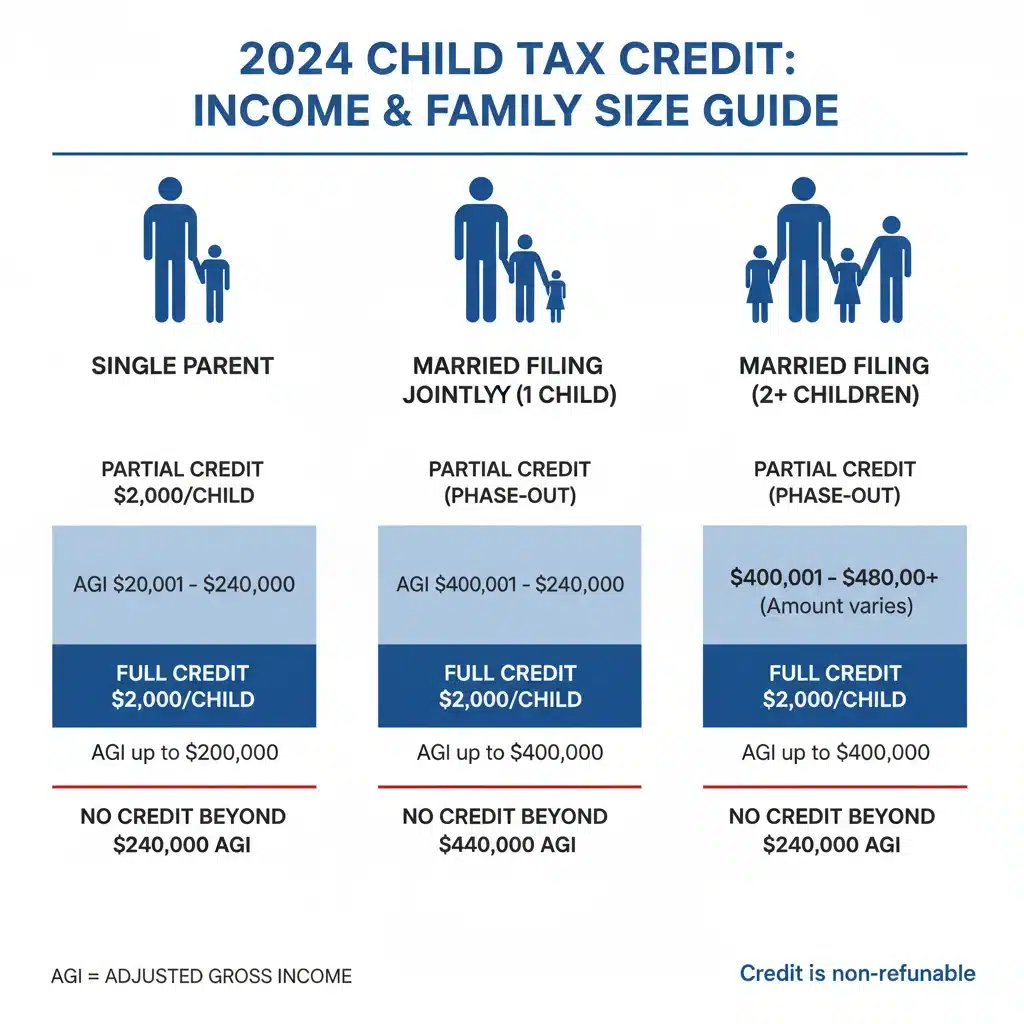
- Income Thresholds: The credit begins to phase out at certain income levels. While the exact thresholds for 2026 will be confirmed closer to the tax year, historically, the credit starts to reduce for single filers with Modified Adjusted Gross Income (MAGI) above $200,000 and for married couples filing jointly with MAGI above $400,000. It’s important to note that a higher $3,600 credit might come with different or additional phase-out rules, potentially targeting lower and middle-income families more directly.
- U.S. Citizenship/Residency: You must be a U.S. citizen or resident alien.
It’s vital to remember that legislative proposals for an enhanced 2026 Child Tax Credit may include specific provisions regarding income eligibility, particularly concerning full refundability. Some proposals aim to make the credit fully refundable for all low-income families, meaning they could receive the full credit even if they owe little or no federal income tax. This is a significant consideration, as it directly impacts the most vulnerable families.
Staying informed about these precise income thresholds and refundability rules as they are finalized will be crucial. The IRS website and reputable tax professionals will be your best resources for the most up-to-date information once legislation is passed and enacted. Proper planning based on these eligibility criteria will ensure you are positioned to receive the maximum benefit for your qualifying children.
Maximizing Your $3,600 per Child Benefit: Strategies and Considerations
Securing the full $3,600 per child from the 2026 Child Tax Credit requires proactive planning and a clear understanding of the rules. Here are key strategies and considerations to help you maximize your benefit:
1. Accurate Record Keeping:
This is perhaps the most fundamental step. Maintain meticulous records for all qualifying children. This includes birth certificates, Social Security cards, and documentation proving residency for more than half the year. If you have shared custody, ensure you have a clear understanding and agreement with the other parent about who will claim the child for tax purposes. The IRS has specific tie-breaker rules if both parents claim the same child.
2. Monitor Income Levels:
The Child Tax Credit is subject to income phase-outs. As your Modified Adjusted Gross Income (MAGI) increases above certain thresholds, the credit amount begins to reduce. For a potential $3,600 credit, the phase-out thresholds might be adjusted, or new tiers introduced. Keep a close eye on your income throughout the year, especially if you anticipate significant bonuses, capital gains, or changes in employment. If your income is close to a phase-out threshold, strategic financial planning (e.g., contributing more to a 401(k) or IRA to reduce MAGI) could help you retain a larger portion of the credit.
3. Understand Refundability:
A key aspect of maximizing the 2026 Child Tax Credit is understanding its refundability. If the credit is fully refundable, it means you can receive the full amount even if it exceeds your tax liability, essentially resulting in a refund. If it’s partially refundable, there will be a limit to the refundable portion. For families with lower incomes, full refundability is critical as it ensures they benefit from the credit regardless of their tax burden. Stay updated on the final refundability rules for 2026, as this directly impacts how much cash you could receive.
4. File Accurately and On Time:
To receive your 2026 Child Tax Credit, you must file a federal income tax return, even if you don’t typically need to. Use reputable tax software or a qualified tax professional to ensure accuracy. Mistakes or omissions can delay your refund or lead to an audit. Filing on time also ensures you receive your benefit without unnecessary delays.
5. Address Changes in Family Status:
Life events can significantly impact your eligibility. Getting married, getting divorced, having a new child, or a child moving out can all affect your CTC. Report these changes to the IRS if required, and adjust your tax planning accordingly. For instance, if you have a child born in 2026, they will qualify for the credit for that tax year.
6. Consult a Tax Professional:
For complex situations, or if you simply want peace of mind, consulting a tax professional is highly recommended. They can provide personalized advice, help you navigate intricate rules, and ensure you’re claiming all eligible credits and deductions, including the 2026 Child Tax Credit.
By diligently applying these strategies, families can significantly improve their chances of receiving the maximum $3,600 per child benefit, providing valuable financial support for their household. The proactive approach to understanding and planning for the 2026 Child Tax Credit is the best way to ensure you don’t leave money on the table.
The Impact of the 2026 Child Tax Credit on Family Budgets and the Economy
The potential for a $3,600 per child benefit from the 2026 Child Tax Credit carries significant implications for both individual family budgets and the broader economy. This substantial financial injection can serve multiple purposes, from alleviating poverty to stimulating local economies.
Alleviating Financial Strain for Families:
For many low- and middle-income families, the Child Tax Credit is not merely a bonus; it’s a critical financial lifeline. An extra $3,600 per child can mean the difference between struggling to meet basic needs and having enough to cover essentials like food, housing, childcare, and healthcare. It can help families avoid debt, build emergency savings, or invest in their children’s education and development. The enhanced credit can reduce child poverty rates, offering a pathway to greater financial stability for millions of children and their caregivers.
The flexibility of a cash-like benefit allows families to address their most pressing needs, whether that’s paying for unexpected medical bills, purchasing new school supplies, or affording extracurricular activities that enrich a child’s life. This direct support empowers parents to make the best decisions for their children’s welfare, without restrictive spending mandates.
Economic Stimulus:
From an economic perspective, the 2026 Child Tax Credit can act as a powerful stimulus. When families receive additional funds, they often spend it on goods and services, injecting money directly into local economies. This increased consumer spending can support small businesses, create jobs, and foster economic growth. Studies on previous expansions of the CTC have shown a measurable impact on economic activity, particularly in communities where financial relief is most needed.
Furthermore, by reducing financial stress on families, the credit can indirectly lead to improved productivity and participation in the workforce. Parents who are less worried about making ends meet may be more stable in their employment, contributing to a more robust labor market.
Long-Term Benefits for Children:
Beyond immediate financial relief, the 2026 Child Tax Credit has the potential for long-term positive effects on children. Research indicates that investments in children’s well-being, especially during early development, can lead to better educational outcomes, improved health, and higher earning potential in adulthood. By providing resources for better nutrition, stable housing, and access to educational materials or opportunities, the CTC contributes to breaking cycles of poverty and fostering a healthier, more educated future generation.
The discussion surrounding the 2026 Child Tax Credit is not just about tax policy; it’s about social investment. The structure and amount of this credit reflect societal priorities regarding family support and economic equity. As such, its implementation will be closely watched for its tangible effects on families and the national economy.
Common Misconceptions and FAQs About the Child Tax Credit
The Child Tax Credit can sometimes be a source of confusion due to its evolving nature and specific rules. Addressing common misconceptions and frequently asked questions can help clarify how the 2026 Child Tax Credit works.
1. “The Child Tax Credit is only for low-income families.”
Correction: While the credit is particularly impactful for low- and middle-income families, it’s generally available to a wide range of income earners. The full credit typically begins to phase out at higher income levels (e.g., $200,000 for single filers, $400,000 for married filing jointly). Many middle- and even upper-middle-income families can still qualify for a partial or full credit, depending on their specific MAGI and the final rules for 2026.
2. “I don’t owe any taxes, so I can’t get the Child Tax Credit.”
Correction: This depends on the refundability of the credit. If the 2026 Child Tax Credit is fully refundable (as it was in 2021), you can receive the full credit amount even if it exceeds your tax liability, meaning you could get a refund check for the difference. If it’s partially refundable, there’s a limit to how much you can receive as a refund if you owe no tax. It is crucial to check the specific refundability rules for 2026 once they are finalized, as this directly impacts low-income families.
3. “My child turned 17 during the tax year, so they still qualify.”
Correction: For the Child Tax Credit, a qualifying child must be under the age of 17 (i.e., 16 or younger) at the end of the tax year (December 31, 2026). If your child turns 17 at any point during 2026, they would generally not qualify for the Child Tax Credit for that year, though they might qualify for the Credit for Other Dependents.
4. “I can claim the credit even if my child doesn’t have an SSN.”
Correction: To claim the Child Tax Credit, your child must have a valid Social Security Number issued by the Social Security Administration. An Individual Taxpayer Identification Number (ITIN) is not sufficient for the CTC, though it may be used for other dependent credits.
5. “The $3,600 per child is guaranteed for everyone.”
Correction: The $3,600 per child amount is a proposed or discussed maximum. The actual amount a family receives depends on their income, the number of qualifying children, and the specific phase-out rules enacted for the 2026 Child Tax Credit. Families with higher incomes will likely see their credit reduced or phased out entirely.
6. “I don’t need to file taxes if my income is below the filing threshold.”
Correction: Even if your income is below the standard filing threshold, you must file a tax return to claim the Child Tax Credit. This is especially important for refundable credits, as filing is the only way to receive the benefit you are owed.
By understanding these common points of confusion, families can better prepare for the 2026 tax season and ensure they are taking all necessary steps to claim their rightful 2026 Child Tax Credit benefit. When in doubt, always refer to official IRS guidance or consult a tax professional.

Preparing for the 2026 Tax Season: A Checklist for Families
With the 2026 Child Tax Credit on the horizon, proactive preparation is key to a smooth tax season and maximizing your benefits. Here’s a checklist to help families get ready:
1. Gather Essential Documents:
- Social Security Numbers: Ensure you have valid SSNs for yourself, your spouse (if applicable), and all qualifying children. Double-check that names on SSN cards match your records.
- Birth Certificates: Keep these accessible for any verification needs, especially for new children.
- Residency Proof: While often not explicitly requested, having school records or medical bills showing your child’s address can be helpful in case of an audit.
2. Monitor Legislative Updates:
- Stay Informed: Follow news from the IRS, Congress, and reputable financial news outlets regarding the finalization of the 2026 Child Tax Credit rules. Pay close attention to the maximum credit amount, income thresholds, and refundability status.
- IRS Website: Regularly check IRS.gov for official publications, FAQs, and forms related to the CTC.
3. Review Your Income and Deductions:
- Estimate Your MAGI: Get a rough estimate of your Modified Adjusted Gross Income for 2026. This will give you an idea of where you stand concerning the credit’s phase-out limits.
- Optimize Contributions: Consider increasing contributions to tax-advantaged accounts like 401(k)s or IRAs, which can lower your MAGI and potentially allow you to qualify for a larger credit.
4. Update Your Withholding (W-4):
- Adjust as Needed: Once the final rules for the 2026 Child Tax Credit are clear, you might want to adjust your W-4 form with your employer. If you anticipate a significant refund from the CTC, you could potentially reduce your withholding to receive more money in each paycheck throughout the year, rather than waiting for a large refund at tax time. Use the IRS Tax Withholding Estimator tool for guidance.
5. Plan for Childcare Expenses:
- Child and Dependent Care Credit: Remember that the Child Tax Credit is separate from the Child and Dependent Care Credit. If you pay for childcare, keep detailed records of those expenses as you may qualify for an additional credit.
6. Seek Professional Guidance:
- Consult a Tax Preparer: If your financial situation is complex, or if you’re unsure about any aspect of the 2026 Child Tax Credit, engage a qualified tax professional. They can provide tailored advice and ensure you claim all eligible benefits.
7. Be Wary of Scams:
- Official Sources Only: Only rely on information from official IRS channels or trusted tax professionals. Be cautious of unofficial websites or individuals promising guaranteed, quick access to credit funds.
By diligently following this checklist, families can approach the 2026 tax season with confidence, ensuring they are fully prepared to claim and maximize their 2026 Child Tax Credit benefits. Early preparation is always the best strategy when it comes to taxes.
Conclusion: Empowering Families with the 2026 Child Tax Credit
The 2026 Child Tax Credit stands as a crucial piece of legislation with the potential to significantly impact the financial well-being of millions of American families. While the specifics are still subject to legislative finalization, the prospect of a $3,600 per child benefit offers a beacon of hope for many, promising substantial relief and support for the demanding costs of raising children.
Throughout this guide, we’ve explored the historical context, detailed eligibility criteria, and strategic approaches to maximizing this vital credit. From meticulous record-keeping and income monitoring to understanding refundability and seeking professional advice, the path to fully leveraging the 2026 Child Tax Credit is paved with informed decision-making and proactive planning. The economic and social benefits extend far beyond individual households, contributing to broader economic stability and long-term positive outcomes for children.
As we move closer to 2026, it is imperative for families to remain engaged and informed about any legislative developments. The official IRS website and trusted tax professionals will be your most reliable sources for the most up-to-date information. By taking the necessary steps now, you can ensure that your family is well-positioned to receive the maximum benefit from the 2026 Child Tax Credit, providing valuable financial support that empowers you to invest in your children’s future and secure your family’s financial health.
Don’t let the complexities deter you. With the right knowledge and preparation, the 2026 Child Tax Credit can be a powerful tool in your family’s financial arsenal, helping you navigate the costs of raising children with greater ease and confidence.