

The landscape of education is in a constant state of evolution, driven by societal changes, new research in cognitive science, and, perhaps most significantly, technological advancements. As we peer into the near future, specifically to 2026, one trend stands out as particularly transformative for U.S. education: the widespread adoption and sophistication of adaptive learning technologies. These innovations are not merely enhancing traditional teaching methods; they are fundamentally reshaping the entire educational paradigm, moving us from a one-size-fits-all approach to a truly personalized learning experience.
For decades, educators have dreamed of an educational system that caters to the unique needs, pace, and learning styles of each individual student. The traditional classroom, with its standardized curriculum and uniform pace, often struggles to achieve this ideal. Bright students might feel bored, while those who need more time or a different explanation can fall behind. This persistent challenge has fueled the development of intelligent systems designed to adapt to the learner, a concept now becoming a tangible reality thanks to advancements in artificial intelligence, machine learning, and big data analytics. The integration of adaptive learning technologies is poised to be the most significant shift in educational methodology this decade.
The Genesis and Evolution of Adaptive Learning Technologies
To fully appreciate where we are headed, it’s crucial to understand the journey of adaptive learning technologies. The roots of personalized instruction can be traced back to early 20th-century educational reformers like Maria Montessori and John Dewey, who advocated for child-centered learning. However, the practical application of truly individualized instruction on a large scale remained elusive due to logistical and resource constraints. The advent of computers in education in the latter half of the 20th century offered a glimpse of this potential, with early computer-assisted instruction (CAI) programs providing drill-and-practice exercises. These early programs, while foundational, were largely linear and lacked the sophisticated adaptability we see today.
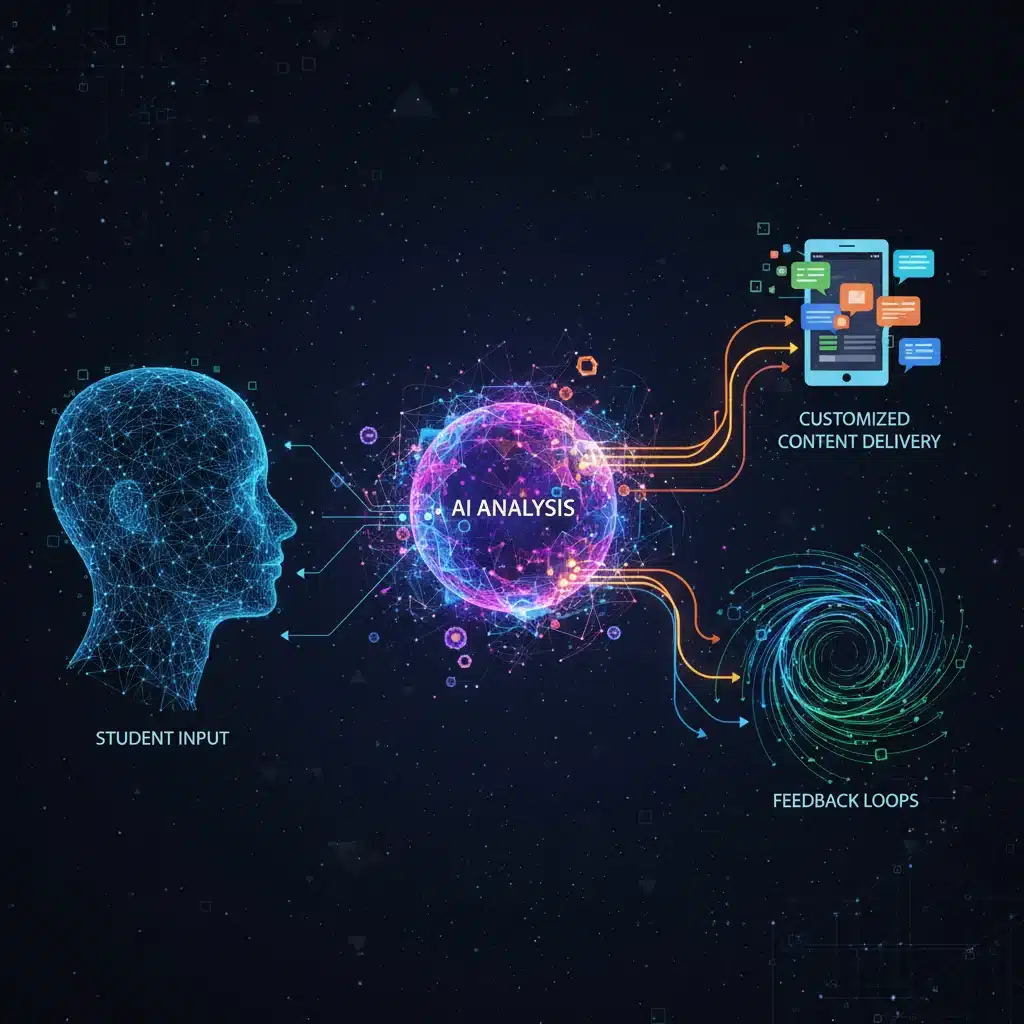
The real breakthrough came with the development of artificial intelligence and machine learning algorithms. These technologies enabled platforms to not just present content but to analyze student responses, identify patterns in their learning, and dynamically adjust the curriculum in real-time. This iterative process of assessment, adaptation, and delivery is the core of modern adaptive learning technologies. By the early 2020s, these systems had begun to mature, moving beyond simple quizzes to incorporate complex problem-solving scenarios, interactive simulations, and even virtual reality components. The data generated from these interactions provides invaluable insights, allowing for continuous refinement of the learning path.
Looking at 2026, we anticipate these technologies will be even more deeply embedded in the educational infrastructure. No longer niche tools, adaptive learning technologies will be integral to daily classroom activities, extending from K-12 to higher education and professional development. Their evolution has been rapid, and their impact is now undeniable, promising a future where every student’s learning journey is truly their own.
Key Components and Mechanics of Adaptive Learning Platforms
What exactly makes adaptive learning technologies so effective? At their heart, these platforms are sophisticated ecosystems built on several key components:
- Student Modeling: This is perhaps the most critical component. The system continuously builds a detailed profile of each student, tracking their knowledge mastery, skill proficiency, learning pace, preferred modalities (visual, auditory, kinesthetic), and even their engagement levels and emotional state (through sentiment analysis or interaction patterns). This model is dynamic, updating with every interaction.
- Content Repository: A vast and diverse library of educational content, including texts, videos, interactive exercises, simulations, and assessments. This content is often tagged with metadata indicating difficulty levels, prerequisite knowledge, learning objectives, and pedagogical approaches.
- Adaptive Engine (AI/ML Algorithms): This is the brain of the system. Based on the student model, the adaptive engine selects and delivers the most appropriate content from the repository. It determines when to provide remediation, when to accelerate learning, when to offer alternative explanations, and when to introduce new topics. Machine learning algorithms allow the engine to improve its recommendations over time, learning from the success and struggles of thousands of students.
- Feedback and Assessment Mechanisms: Continuous assessment is integrated seamlessly into the learning process, often in formative ways that don’t feel like traditional tests. The system provides immediate, personalized feedback, explaining why an answer was right or wrong and suggesting next steps.
- Reporting and Analytics: For educators and administrators, these platforms offer powerful dashboards that provide granular insights into student progress, areas of difficulty, and overall class performance. This data empowers teachers to intervene effectively and tailor their in-person instruction.
By 2026, these components will be further refined. We’ll see more sophisticated AI capable of understanding natural language, allowing for more intuitive student interactions. Emotional AI, while still in nascent stages for education, may also play a role in detecting frustration or disengagement and adjusting the learning path accordingly. The synergy of these elements ensures that adaptive learning technologies provide a truly responsive and effective educational experience.
The Impact on U.S. Education by 2026: A Paradigm Shift
The integration of adaptive learning technologies is not just an incremental improvement; it represents a fundamental paradigm shift in how education is conceived and delivered across the United States. By 2026, we can expect several profound impacts:
1. Truly Personalized Learning Paths
No two students learn exactly alike, and adaptive learning technologies finally address this reality at scale. Each student will navigate a unique learning journey tailored to their individual needs, strengths, and weaknesses. This means: If a student struggles with a particular concept, the system will provide additional resources, different explanations, or remedial exercises until mastery is achieved. Conversely, if a student quickly grasps a topic, they can accelerate and explore more advanced concepts or related subjects, preventing boredom and fostering deeper engagement. This level of personalization was once the exclusive domain of expensive one-on-one tutoring, but now it’s becoming accessible to millions.
2. Enhanced Student Engagement and Motivation
When learning is relevant and appropriately challenging, students are more likely to be engaged. Adaptive learning technologies excel at maintaining this optimal zone of proximal development, where tasks are neither too easy nor too difficult. Gamification elements, immediate feedback, and the feeling of agency over one’s learning path contribute significantly to increased motivation. Students become active participants in their education rather than passive recipients of information. This proactive engagement is crucial for developing lifelong learners.
3. Redefined Role of the Educator
Far from replacing teachers, adaptive learning technologies empower them. By automating the customization of content and providing rich data analytics, these platforms free up teachers from administrative burdens and the constant struggle to differentiate instruction for a diverse classroom. Teachers can then focus on higher-order tasks: providing individualized mentorship, facilitating collaborative projects, fostering critical thinking, addressing socio-emotional needs, and intervening with targeted support where the technology identifies specific challenges. By 2026, the teacher will evolve from a lecturer to a facilitator, mentor, and data-informed strategist.
4. Data-Driven Decision Making
The wealth of data generated by adaptive learning technologies offers unprecedented insights for all stakeholders. Administrators can identify curriculum gaps, assess program effectiveness, and allocate resources more efficiently. Parents can gain a clearer understanding of their child’s progress and areas for support. Most importantly, students themselves can use this data to reflect on their learning habits and take ownership of their educational journey. This data-driven approach fosters continuous improvement at every level of the educational system.
5. Bridging Achievement Gaps
One of the most promising aspects of adaptive learning technologies is their potential to reduce educational inequities. By providing tailored support, these platforms can help students who might otherwise fall behind due to varying prior knowledge, learning disabilities, or lack of access to additional resources. They can offer a consistent, high-quality learning experience that adapts to individual paces, ensuring that foundational concepts are mastered before moving on. This could significantly impact achievement gaps, particularly in underserved communities, by offering a level playing field for learning.
Challenges and Considerations for Widespread Adoption
While the promise of adaptive learning technologies is immense, their widespread and effective implementation by 2026 is not without challenges:
1. Equitable Access to Technology
The digital divide remains a significant concern. For adaptive learning technologies to truly equalize opportunities, all students must have reliable access to devices and high-speed internet, both at school and at home. Initiatives to provide devices and broadband access will be critical to ensure that these technologies do not inadvertently exacerbate existing inequalities.
2. Teacher Training and Professional Development
The shift in the teacher’s role requires comprehensive and ongoing professional development. Educators need training not only on how to operate these platforms but, more importantly, on how to interpret the data, integrate technology into their pedagogy, and leverage their new role as facilitators and mentors. This necessitates a significant investment in teacher support programs.
3. Content Quality and Curation
The effectiveness of any adaptive system relies heavily on the quality and breadth of its content repository. Ensuring that content is accurate, engaging, culturally relevant, and aligned with educational standards is paramount. There will be a growing need for expert curriculum developers and content curators to feed these intelligent systems.
4. Data Privacy and Security
As these platforms collect vast amounts of sensitive student data, robust data privacy and security protocols are non-negotiable. Schools and technology providers must adhere to strict regulations (like FERPA in the U.S.) and implement best practices to protect student information from breaches and misuse. Transparency with parents and students about data usage will also be crucial.
5. Integration with Existing Infrastructure
Schools often use a myriad of different systems – learning management systems (LMS), student information systems (SIS), assessment tools. Seamless integration of new adaptive learning technologies with these existing platforms is essential to avoid fragmentation and ensure a cohesive educational experience. Interoperability standards will become increasingly important.
Real-World Examples and Future Innovations
Several platforms are already demonstrating the power of adaptive learning technologies. Companies like Khan Academy, Knewton, DreamBox Learning, and ALEKS are pioneers in this space, offering personalized learning experiences in subjects ranging from mathematics to language arts. These platforms constantly refine their algorithms based on user data, leading to more precise and effective adaptations.
By 2026, we can anticipate even more sophisticated innovations:
- AI Tutors: More advanced AI capable of engaging in natural language conversations, providing explanations, answering questions, and even offering emotional support, mimicking the best human tutors.
- Virtual and Augmented Reality Integration: Immersive learning experiences that allow students to explore complex concepts in 3D environments, conduct virtual experiments, or take field trips to historical sites, all personalized to their learning objectives.
- Predictive Analytics for Intervention: Systems that can predict which students are at risk of falling behind or dropping out based on their learning patterns, allowing for proactive human intervention before problems become severe.
- Competency-Based Learning: Further shifts towards competency-based models where students progress based on demonstrated mastery rather than seat time, facilitated by adaptive assessments.
- Interdisciplinary Adaptive Paths: Systems that can draw connections between different subjects, offering personalized learning paths that highlight the interconnectedness of knowledge and foster holistic understanding.
The Ethical Imperatives of Adaptive Learning
As adaptive learning technologies become more pervasive, it’s vital to address the ethical considerations that accompany such powerful tools. Ensuring fairness in algorithms is paramount to prevent biases that could inadvertently disadvantage certain student groups. Transparency in how these systems make decisions and how student data is used will build trust among students, parents, and educators. Moreover, the focus should always remain on augmenting human teaching and learning, not replacing it. The human element – empathy, critical thinking, social interaction – remains irreplaceable and should be championed alongside technological advancement. Balancing innovation with ethical responsibility will define the success of these technologies in the long run.
Conclusion: A Brighter Future for U.S. Education
The year 2026 will mark a significant milestone in the journey of U.S. education, largely thanks to the transformative power of adaptive learning technologies. These innovations promise to unlock the full potential of every student, providing tailored learning experiences that foster engagement, accelerate mastery, and cultivate a lifelong love of learning. While challenges related to access, training, and ethics must be proactively addressed, the benefits of moving towards a truly personalized educational system are too profound to ignore. By embracing these technologies thoughtfully and strategically, we can build an educational future that is more equitable, effective, and inspiring for all.
The era of one-size-fits-all education is rapidly fading, replaced by a dynamic, responsive, and student-centric model. The integration of adaptive learning technologies is not just a technological upgrade; it’s a commitment to recognizing and nurturing the unique brilliance within every learner, preparing them not just for tests, but for the complexities and opportunities of the 21st century.