
In the relentless pace of modern life, where work often spills into personal hours, the concept of a well-deserved break has never been more crucial. Paid Time Off (PTO) isn’t just a perk; it’s a vital component of employee well-being, fostering mental clarity, reducing burnout, and ultimately, boosting productivity. Yet, many employees leave vacation days on the table, failing to fully capitalize on this invaluable benefit. What if you could significantly expand your leisure time without earning a single extra day of PTO? What if you could strategically plan your 2026 calendar to unlock an additional 5 to 7 days of vacation, transforming short breaks into extended getaways and maximizing your paid time off?
This comprehensive guide is your blueprint to achieving just that. We’ll delve into the nuances of PTO policies, reveal clever scheduling hacks, and equip you with the knowledge to make every single paid day off count. Forget haphazard vacation requests; it’s time to become a PTO strategist. By the end of this article, you’ll be armed with actionable insights to meticulously plan your 2026 vacations, ensuring you return refreshed, revitalized, and ready to tackle new challenges, all while enjoying more personal time than ever before. Let’s embark on this journey to maximize paid time off and transform your work-life balance.
Understanding Your PTO: The Foundation of Strategic Planning
Before you can effectively maximize paid time off, you need a crystal-clear understanding of your company’s specific PTO policy. This isn’t just about knowing how many days you get; it’s about understanding the intricate rules that govern their usage. Many employees overlook the fine print, missing opportunities to optimize their vacation time. Let’s break down the key elements you need to scrutinize:
Accrual Methods: How You Earn Your Days Off
- Annual Grant: Some companies grant a lump sum of PTO days at the beginning of the year. This offers immediate flexibility but requires careful budgeting to ensure you don’t run out before year-end.
- Per-Pay-Period Accrual: More commonly, PTO is accrued incrementally with each pay period. Understanding your accrual rate (e.g., 4 hours per pay period) is crucial for forecasting how many days you’ll have available at any given point.
- Years of Service: Many policies increase PTO accrual rates or grant additional days based on your tenure with the company. Are you approaching a milestone that will unlock more time off?
Rollover Policies: Use It or Lose It?
This is perhaps one of the most critical aspects to understand. Does your company allow you to roll over unused PTO days into the next year? If so, is there a cap on the number of days you can carry over? Knowing this can significantly impact your year-end vacation planning. If you have a ‘use it or lose it’ policy, you have a strong incentive to utilize all your days before the year concludes.
Blackout Periods and Approval Processes
Are there specific times of the year when vacation requests are restricted or require special approval due to business needs? Common blackout periods include fiscal year-ends, major product launches, or peak operational seasons. Familiarize yourself with these to avoid disappointment. Additionally, understand the approval hierarchy and the typical lead time required for vacation requests. Submitting requests well in advance often increases your chances of approval, especially during popular vacation times.
Sick Days vs. Vacation Days vs. Personal Days
Some companies differentiate between these types of leave, while others consolidate them into a single PTO bank. If they are separate, understand what each category can be used for. For instance, if sick days don’t roll over, but vacation days do, you might prioritize using sick days for minor ailments and saving vacation days for longer trips. If you have personal days, these can be incredibly flexible for extending weekends or bridging gaps.
Understanding the Impact of Leave of Absence
While not directly related to vacation, understanding how extended leaves (e.g., FMLA, parental leave) interact with PTO accrual and usage is important for long-term planning, especially if such events are on your horizon. Does your PTO continue to accrue during these periods, or is it paused?
By thoroughly reviewing your employee handbook, consulting with HR, or checking your company’s internal PTO tracking system, you can gain the insights necessary to build a robust strategy to maximize paid time off. This foundational knowledge is the first, indispensable step towards an expanded vacation calendar in 2026.
Leveraging Public Holidays: The Ultimate PTO Hack
The most straightforward and often overlooked method to maximize paid time off is by strategically aligning your vacation days with public holidays. These are built-in long weekends that, with just a few PTO days, can be transformed into extended breaks. The key is to look at the 2026 calendar and identify these opportunities well in advance.
The Power of the ‘Bridge Day’
A ‘bridge day’ is a single PTO day taken between a public holiday and a weekend, effectively turning a three-day weekend into a four-day mini-vacation. For example, if a holiday falls on a Tuesday, taking Monday off creates a four-day break. If it falls on a Thursday, taking Friday off does the same. This simple tactic is incredibly effective for maximizing short bursts of time off without depleting your PTO bank too quickly.
Turning Long Weekends into Week-Long Getaways
This is where the real magic happens. By taking just 4 PTO days around a public holiday that creates a three-day weekend, you can often craft a 9-day vacation (Saturday to the following Sunday). For instance, if a public holiday is on a Monday, taking Tuesday, Wednesday, Thursday, and Friday off gives you nine consecutive days away from work. Similarly, if a holiday is on a Friday, taking Monday, Tuesday, Wednesday, and Thursday off achieves the same result. This strategy is a cornerstone of how to maximize paid time off effectively.
Identifying 2026 Public Holiday Opportunities
While specific public holidays vary by country and region, here’s a general framework for identifying potential PTO expansion opportunities in 2026. You’ll need to overlay your specific country’s holiday calendar onto this strategy:
- New Year’s Day (January 1st, 2026): If this falls on a Thursday or Friday, taking a few days around it can extend your holiday season significantly. If it falls on a Wednesday, taking Monday/Tuesday or Thursday/Friday can create a 5-day break with just 2 PTO days.
- Martin Luther King Jr. Day (US – January 19th, 2026): A Monday holiday. Take Tuesday-Friday off for a 9-day break.
- Presidents’ Day (US – February 16th, 2026): Another Monday holiday. Take Tuesday-Friday off for a 9-day break.
- Good Friday/Easter Monday (Varies, often March/April): These often create a four-day weekend. Taking the surrounding days can easily lead to a 9 or even 10-day vacation with minimal PTO. For example, if Good Friday is April 3rd and Easter Monday is April 6th, taking April 7th-10th off gives you a 10-day break (April 3rd-12th) using only 4 PTO days.
- Memorial Day (US – May 25th, 2026): A Monday holiday. Take Tuesday-Friday off for a 9-day break.
- Juneteenth (US – June 19th, 2026): A Friday holiday. Take Monday-Thursday off for a 9-day break.
- Independence Day (US – July 4th, 2026): If it falls on a Friday or Monday, it’s an instant long weekend. If it’s mid-week, it’s a prime bridge-day opportunity. In 2026, July 4th is a Saturday. This means July 3rd (Friday) or July 6th (Monday) might be observed, creating a long weekend.
- Labor Day (US – September 7th, 2026): A Monday holiday. Take Tuesday-Friday off for a 9-day break.
- Columbus Day/Indigenous Peoples’ Day (US – October 12th, 2026): A Monday holiday. Take Tuesday-Friday off for a 9-day break.
- Veterans Day (US – November 11th, 2026): A Wednesday holiday. Taking Monday/Tuesday or Thursday/Friday off can create a 5-day break with 2 PTO days.
- Thanksgiving (US – November 26th, 2026): A Thursday holiday. Taking Friday off gives you a 4-day weekend with just 1 PTO day. Taking Monday-Wednesday off as well creates a 9-day break (November 21st-29th) with 3 PTO days.
- Christmas (December 25th, 2026): A Friday holiday. Taking Monday-Thursday off gives you a 9-day break (December 19th-27th) with 4 PTO days.
- New Year’s Eve (December 31st, 2026): A Thursday. Taking Friday, January 1st off (if not already a holiday) can extend the New Year’s celebrations.
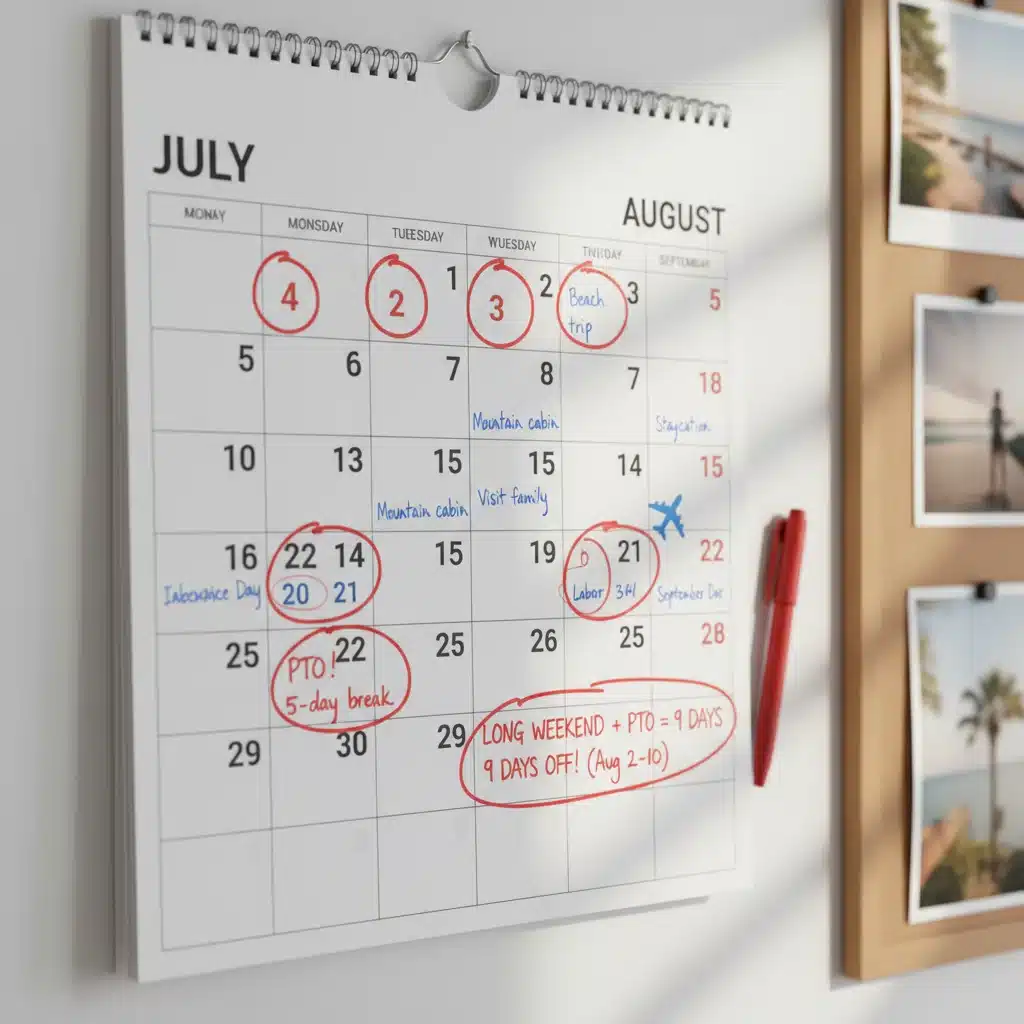
By meticulously mapping out these opportunities at the beginning of 2026, you can submit your requests early and significantly increase your chances of approval, ensuring you maximize paid time off throughout the year. This proactive approach is key to securing those coveted extended breaks.
Advanced PTO Strategies for Maximum Impact
Beyond simply aligning with public holidays, there are several advanced techniques you can employ to further maximize paid time off and gain those extra vacation days. These strategies often require a bit more planning and communication but yield significant rewards.
The Art of the ‘Shoulder Season’ Vacation
Shoulder seasons (the periods just before or after peak travel times) often offer lower prices, fewer crowds, and more flexibility for PTO approvals. By taking your main vacations during these times, you not only save money but also face less competition for vacation slots, making it easier to get your requests approved. This indirect method helps you maximize paid time off by making your days off more effective and less stressful to plan.
Banking and Rollover Optimization
If your company allows PTO rollovers, strategically banking some days for a larger trip in the following year can be a powerful tactic. However, be mindful of rollover caps. If you’re approaching the cap, ensure you use those days before they expire. Conversely, if you have unlimited rollover, you might consider taking shorter, more frequent breaks in one year and saving up for an epic adventure in the next. This requires a long-term view to maximize paid time off over multiple years.
Leveraging Unpaid Leave (When Necessary and Strategic)
While the goal is to maximize paid time off, sometimes a few days of unpaid leave can unlock a much longer, more impactful vacation, especially if you’ve exhausted your PTO but a unique travel opportunity arises. This should be used sparingly and after careful financial consideration, but it’s an option to keep in your back pocket for truly special occasions.
The Power of Split Vacations
Instead of taking one long vacation, consider splitting your PTO into several shorter breaks throughout the year. This can lead to more frequent rejuvenation and can be easier to get approved by management, as it minimizes your absence from critical projects. For example, instead of a two-week trip, take two one-week trips, or several long weekends. This approach allows you to maximize paid time off by spreading the benefits of relaxation throughout the year.
Negotiating Additional PTO (If Applicable)
For some employees, especially those with in-demand skills or at certain career stages, negotiating additional PTO can be an option. This might be part of an initial compensation package negotiation or a discussion during an annual review. While not a universal strategy, it’s worth considering if you have leverage and value time off highly.
Understanding Company Culture Around PTO
Every workplace has an unspoken culture around taking time off. Do senior leaders take their full PTO? Is there a perception that taking too much time off is frowned upon? While you shouldn’t let this deter you from using your benefits, understanding the culture can help you frame your requests and choose optimal times that align with team schedules and project cycles. Being a team player in your PTO planning can make approvals smoother.
The Benefits of a ‘Staycation’
Sometimes, the best way to maximize paid time off isn’t to travel far, but to simply take time to decompress at home. A well-planned staycation can be incredibly rejuvenating, allowing you to catch up on hobbies, spend quality time with family, or simply relax without the stresses of travel. This can be particularly useful for shorter PTO periods, freeing up your longer blocks for travel.
By integrating these advanced strategies with your foundational understanding of PTO policies and public holiday alignment, you create a multi-faceted approach to truly maximize paid time off. This isn’t just about taking days; it’s about optimizing your time away from work for maximum personal benefit and well-being.
Communicating and Planning with Your Team and Manager
Strategic PTO planning isn’t a solo endeavor; it requires effective communication and coordination with your team and manager. A well-communicated plan is far more likely to be approved and less likely to cause disruptions, ultimately making it easier for you to maximize paid time off.
Early Communication is Key
As soon as you’ve identified your desired vacation dates, communicate them to your manager and team. The earlier, the better. This allows your manager to plan for your absence, allocate resources, and avoid scheduling conflicts with other team members’ vacations. Proactive communication demonstrates responsibility and consideration.
Be Flexible, But Stand Your Ground
While it’s important to be flexible and willing to adjust your dates if there are critical business needs, don’t be afraid to advocate for your desired time off. Frame your request by highlighting how you’ve planned around peak periods or how your work will be covered. Remember, PTO is a benefit you’ve earned.
Prepare for Your Absence
Before you leave, ensure all your critical tasks are completed or delegated. Create a clear handover document for your colleagues, outlining ongoing projects, key contacts, and any urgent items. Set up an out-of-office email response and update your internal communication channels. A smooth transition before and during your absence makes it easier for your team and reduces stress for you, enabling you to truly disconnect and maximize paid time off.
Check-Ins During Extended Leave (Optional, and with Boundaries)
For very long vacations, some employees might opt for a brief, pre-arranged check-in with their manager or team. However, it’s crucial to set clear boundaries. The goal of PTO is to disconnect. If you do check in, make it a brief update, not a working session. Ideally, empower your team to handle things in your absence.
Document Your PTO Requests
Always submit your PTO requests through the official company channels (HR system, email, etc.) to ensure there’s a documented record. This protects both you and the company and avoids misunderstandings.
By mastering the art of communication and preparation, you not only secure your vacation days but also foster a positive working relationship, making future PTO requests smoother. This collaborative approach is integral to your overall strategy to maximize paid time off.
Benefits Beyond the Break: Why Maximizing PTO Matters
Taking full advantage of your paid time off isn’t just about getting away from the office; it’s about investing in your overall well-being, productivity, and career longevity. The benefits extend far beyond the immediate relaxation of a vacation.
Improved Mental Health and Reduced Burnout
The constant demands of work can lead to stress, anxiety, and ultimately, burnout. Regular breaks provide an essential reprieve, allowing your mind to rest, recharge, and return with renewed energy and perspective. Studies consistently show that employees who take regular vacations experience lower stress levels and higher job satisfaction. This is a primary driver to maximize paid time off.
Enhanced Creativity and Problem-Solving
Stepping away from daily tasks can spark new ideas and provide fresh insights. When your mind is relaxed, it’s more open to creative thinking and innovative solutions to problems that might have seemed insurmountable at your desk. Many breakthroughs happen when people are away from their usual work environment.
Increased Productivity and Focus
It might seem counterintuitive, but taking time off actually makes you more productive when you return. A well-rested employee is a more focused, efficient, and engaged employee. The quality of your work often improves after a break, rather than suffering from your absence. Maximizing paid time off directly contributes to sustained high performance.
Better Physical Health
Stress impacts physical health in numerous ways, from weakened immune systems to cardiovascular issues. Vacations provide an opportunity to break unhealthy routines, engage in physical activity, get more sleep, and eat better, all contributing to improved physical well-being.
Stronger Relationships
Time off provides invaluable opportunities to reconnect with family and friends, engage in shared experiences, and strengthen personal bonds. These relationships are crucial for a balanced and fulfilling life.
New Experiences and Personal Growth
Travel and new experiences broaden your horizons, expose you to different cultures, and challenge your perspectives. These experiences contribute to personal growth, making you a more well-rounded individual, which can indirectly benefit your professional life as well.

Reduced Absenteeism (Sick Days)
By taking proactive breaks to de-stress and recharge, you might find yourself less susceptible to illness, potentially reducing the need for sick days throughout the year. This further optimizes your overall time away from work.
Ultimately, maximizing your paid time off isn’t just about taking days; it’s about strategically managing your most valuable asset – your time – to foster a healthier, happier, and more productive life. It’s a testament to your commitment to both your personal well-being and your professional success.
Final Checklist for Your 2026 PTO Master Plan
To ensure you’re fully prepared to maximize paid time off in 2026, here’s a quick checklist to guide your planning:
- Review Your Company’s PTO Policy: Understand accrual, rollover, blackout dates, and approval processes.
- Obtain the 2026 Public Holiday Calendar: Get the official list for your region/country.
- Map Out Strategic PTO Days: Identify all opportunities to create extended weekends and week-long vacations using bridge days.
- Prioritize Your Vacations: Decide which periods are most important for longer breaks.
- Communicate Early and Clearly: Inform your manager and team about your planned absences well in advance.
- Prepare for Your Absence: Complete tasks, delegate, and create handover documents.
- Set Boundaries: Plan to fully disconnect during your time off.
- Consider Shoulder Seasons: Look for opportunities to travel during less busy times.
- Track Your PTO: Keep an eye on your accrued and remaining days throughout the year.
- Enjoy Your Hard-Earned Time Off!
Conclusion: Reclaim Your Time in 2026
The year 2026 presents a fresh opportunity to redefine your relationship with work and leisure. By adopting a proactive, strategic approach to your paid time off, you can significantly enhance your quality of life, boost your professional effectiveness, and embark on more memorable adventures. This isn’t about gaming the system; it’s about intelligently utilizing a valuable benefit that is rightfully yours.
Remember, the goal is not just to take days off, but to truly maximize paid time off – to make each day count towards genuine rest, rejuvenation, and personal enrichment. So, grab your 2026 calendar, consult your company’s PTO policy, and start planning your extended breaks today. You’ve earned it. Embrace these insider strategies, and prepare to gain an extra 5-7 days of vacation benefits this year, transforming 2026 into your most rested and adventurous year yet.