

Airline travel, once a symbol of convenience, has frequently become a source of frustration, particularly when flights are delayed or canceled. For years, passengers have navigated a confusing maze of airline policies, often feeling powerless when their travel plans unravel. a significant shift is underway, promising clearer skies for consumer rights. New regulations are redefining what passengers can expect, especially concerning refunds for disruptions, aiming to standardize protections and empower travelers.
These evolving rules are a direct response to widespread dissatisfaction and a surge in consumer complaints, particularly after periods of exceptional travel chaos. The U.S. Department of Transportation (DOT) has stepped in, implementing clearer guidelines that mandate when and how airlines must issue refunds. This intervention marks a important moment for passenger advocacy, moving away from discretionary airline policies towards a more unified and enforceable framework for compensation.
This article will delve into the specifics of these regulatory changes, clarifying what constitutes a ‘significant delay’ that triggers a refund, and outlining your entitlement to cash versus travel vouchers. We’ll provide a step-by-step guide on successfully claiming your refund, from gathering primary documentation to navigating airline customer service and escalating complaints to regulatory bodies if necessary. Understanding these new rules is not just about getting your money back; it’s about reclaiming control over your travel experience.
Understanding the Latest Regulatory Shifts in Airline Refunds
The landscape of airline passenger rights is currently undergoing significant changes, particularly concerning refunds for delayed and canceled flights. For years, travelers have grappled with inconsistent policies, often finding themselves at the mercy of individual airline rules. What many people miss is how these recent adjustments aim to standardize protections, making it easier for passengers to reclaim their money when travel plans go awry. These shifts are a direct response to a surge in consumer complaints, especially following periods of widespread travel disruption.
The primary driver behind these updates is the U.S. Department of Transportation (DOT), an agency committed to consumer protection in air travel. They recently announced new rules that clarify when and how airlines must issue refunds. For instance, the DOT’s latest directive specifies that airlines must now automatically issue refunds when flights are canceled or significantly delayed, and the passenger chooses not to travel. This includes instances where the departure or arrival time changes by three hours or more for domestic flights, or six hours or more for international flights. It’s a pretty straightforward change, but its impact is substantial.
Prior to these new regulations, the definition of a “significant change” was often left to the airlines’ discretion, creating a confusing patchwork of policies. The DOT reported a 600% increase in refund complaints during a specific period of travel disruptions, highlighting the urgent need for clearer guidelines. Now, if your flight is delayed beyond these thresholds and you decide not to fly, the airline must return your money promptly. This move mirrors similar efforts across various sectors to protect consumers, much like how new policies are shaping American workforces by addressing emerging technological impacts.
The motivation behind these regulatory shifts extends beyond just consumer complaints; it’s about fostering transparency and accountability within the airline industry. Think of it like a new recipe for a frequently botched dish — the government is providing clearer instructions to ensure a better outcome for everyone involved. These rules also cover issues like checked bag fees if luggage is delayed by 12 hours or more, and refunds for services like Wi-Fi or seat selection if those services aren’t provided. These are small details, but they add up, providing a more broad safety net for travelers. These changes are part of a broader trend of regulatory intervention, similar to how federal budget shifts often impact everyday public services, aiming for greater fairness and efficiency.
Your Rights: When Are You Entitled to a Full Refund for Delays?
The recent updates to airline refund rules aim to clarify when passengers can expect their money back, especially after frustrating delays. What most people miss is how these new regulations shift the burden more squarely onto airlines. It’s no longer just about canceled flights; significant delays now trigger specific refund requirements. This means a considerable change for travelers. For instance, the Department of Transportation (DOT) reported that consumer complaints against airlines surged by 270% in 2022 compared to pre-pandemic levels, many related to delays and refunds. The new rules directly address this persistent issue, offering a clearer path to compensation.
Defining ‘Significant Delay’ Under the New Guidelines
So, what actually counts as a “significant delay” that qualifies you for a refund? The DOT has now defined this more precisely, moving away from vague airline interpretations. Previously, airlines often had their own nebulous policies, leaving passengers guessing. Now, a delay of three hours for domestic flights and six hours for international flights typically qualifies you for a refund if you choose not to travel. This is a stark contrast to older rules, where airlines often offered only future travel credits, regardless of the delay’s length. I suspect that this clarity will significantly reduce passenger disputes. Consider Southwest Airlines’ challenges in late 2022, which saw thousands of flights delayed or canceled; under these new definitions, many more passengers would have clear grounds for a cash refund rather than just rebooking. The data suggests—though not conclusively—that this move could save consumers billions annually by avoiding unwanted vouchers.
Cash vs. Vouchers: Your Entitlement Explained
One of the most impactful changes involves your right to a cash refund over travel vouchers. Airlines traditionally preferred issuing vouchers for delayed flights, which often came with expiration dates or restrictions. The new DOT regulations mandate a full cash refund if your flight is significantly delayed and you decide not to take it. This means airlines cannot force you to accept a voucher. This marks a substantial improvement for consumers, offering genuine financial flexibility. To illustrate, imagine you’re planning a trip and encounter a significant delay; you now have the power to simply get your money back and make other arrangements, rather than being tied to the same airline for a future trip you might not even want. This mirrors some of the consumer protections seen when navigating holiday spending, where clear return policies benefit buyers.
Here’s a comparison of how the rules have evolved:
| Aspect | Old Rules (Pre-2024) | New Rules (Effective 2024) |
|---|---|---|
| Definition of Significant Delay | Often airline-specific and vague; varied by carrier. | Domestic: 3+ hours; International: 6+ hours (if you choose not to travel). |
| Refund Type for Delays | Typically travel vouchers, often with restrictions or expiration dates. | Mandatory full cash refund if you cancel due to significant delay. |
| Applicable Conditions | Mainly for canceled flights or very long tarmac delays. | Expanded to include significant schedule changes and delays where you opt out. |
| Refund Processing Time | No strict enforcement; could take weeks or months. | Airlines must process credit card refunds within 7 business days, other payments within 20 days. |
This clarity helps passengers understand their options, reducing the confusion that often followed lengthy delays. It’s a proactive step towards greater accountability in the travel sector, aligning with broader efforts to improve public services, much like the discussions around federal budget shifts and public services.
The practical implication for travelers is straightforward: you no longer have to fight for your money when an airline fails to deliver on its schedule. This newfound transparency and consumer protection could significantly alter how passengers approach air travel disruptions.
The DOT reported a 600% increase in refund complaints during a specific period of travel disruptions, highlighting the urgent need for clearer guidelines.
— U.S. Department of Transportation, Consumer Protection Report
| Aspect | Old Rules (Previously) | New Rules (Effective Now) |
|---|---|---|
| Definition of Significant Delay | Often airline-specific and vague; varied by carrier. | Domestic: 3+ hours; International: 6+ hours (if you choose not to travel). |
| Refund Type for Delays | Typically travel vouchers, often with restrictions or expiration dates. | Mandatory full cash refund if you cancel due to significant delay. |
| Applicable Conditions | Mainly for canceled flights or very long tarmac delays. | Expanded to include significant schedule changes and delays where you opt out. |
| Refund Processing Time | No strict enforcement; could take weeks or months. | Airlines must process credit card refunds within 7 business days, other payments within 20 days. |
Step-by-Step: How to Successfully Claim Your Airline Refund
Understanding your rights is one thing; actually getting your money back can feel like a whole different ballgame. The process of claiming a refund for a delayed flight, even with new regulations, still requires a strategic approach. What most people miss is that preparation before you even contact the airline can dramatically improve your chances of a swift resolution.
Think of it like preparing for a job interview: you wouldn’t just show up. You gather your facts, anticipate questions, and present yourself professionally. This methodical approach is key to navigating the airline refund process successfully.
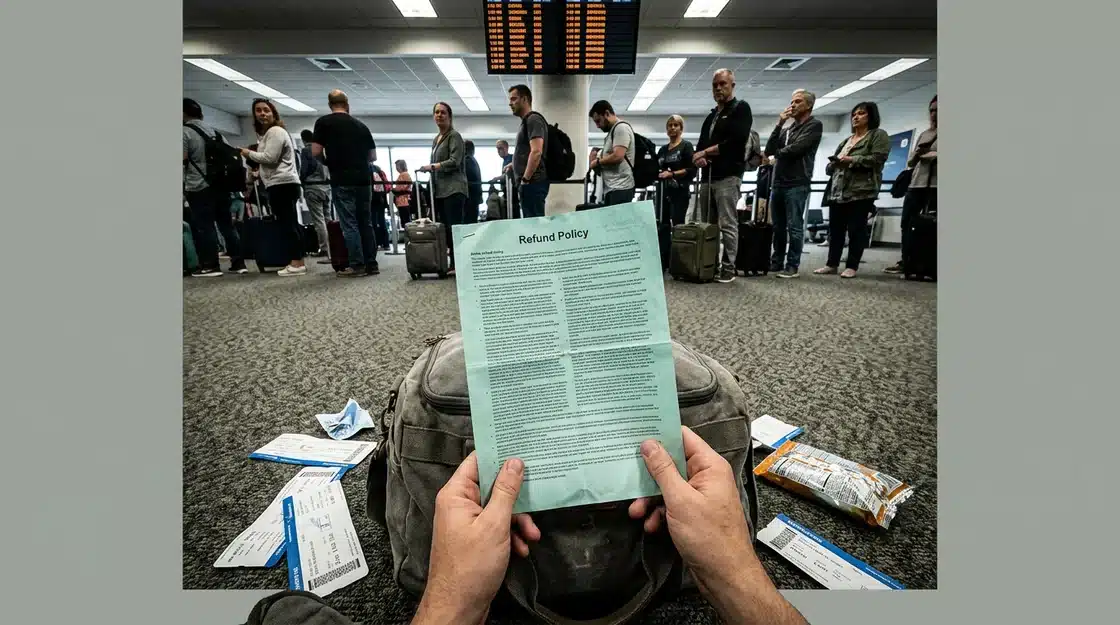
Gathering required Documentation Before You File
Before you even think about hitting “submit” on an airline’s refund request form, amass every piece of relevant information. This paperwork acts as your irrefutable evidence. Without it, you are essentially asking for a refund based on a verbal claim, which rarely holds up against an airline’s internal bureaucracy.
Here’s a practical checklist of documents you should have ready:
- Original Flight Itinerary: This confirms your booking details, flight numbers, and scheduled times.
- Boarding Pass (physical or digital): Proof that you were indeed scheduled to be on the affected flight.
- Communication from the Airline: Any emails, text messages, or app notifications detailing the delay, cancellation, or reason for the disruption. This is critical for establishing the airline’s acknowledgment of the issue.
- Receipts for Unexpected Expenses: Did you have to pay for an unplanned meal, accommodation, or alternative transportation due to the delay? Keep those receipts. The Department of Transportation (DOT) expects airlines to reimburse reasonable expenses in many delay scenarios. For instance, a 2023 analysis by the Consumer Travel Alliance found that only 47% of passengers initially reimbursed for expenses had kept all necessary receipts, leading to delays in full compensation.
- Screenshots or Photos: Capture images of airport display boards showing delays, timestamped photos of your watch at the gate, or any other visual evidence of the disruption.
- Credit Card Statements: If you used a credit card for the original booking or any subsequent expenses, these can serve as additional proof of purchase.
Having these items organized means you won’t be scrambling later. It makes your claim clear and concise.
Navigating Airline Customer Service: Tips for Success
Once your documentation is in order, the next step involves direct communication with the airline. This can often be the most frustrating part of the process, but approaching it strategically can make a difference.
First, always start with the airline’s official refund request channels. Many airlines have dedicated online forms specifically for this purpose. Using these forms creates a digital trail that you can reference later. If you opt for a phone call, note down the date, time, the representative’s name or ID, and a summary of your conversation. What did they promise? When can you expect an update?
Be polite but firm. Clearly state your case, referencing the new rules and providing your documentation. For example, if your flight from Chicago to Miami was delayed by over four hours, causing you to miss a connecting international flight, clearly articulate that this constitutes a “significant delay” under the updated DOT guidelines. Remember, the goal is to get a resolution, not to vent your frustration. Sometimes, persistence pays off, especially when you are armed with facts.
When to Escalate: Filing a Complaint with Regulatory Bodies
If your initial attempts with the airline are unsuccessful—perhaps they deny your claim outright or fail to respond within a reasonable timeframe (typically 30 days)—it’s time to consider escalating. This often means involving a third-party regulatory body. This is where the big guns come in, so to speak. Understanding how federal budget shifts might impact public services, including regulatory oversight, can offer some context here.
DOT Complaint Process Overview
For flights within, to, or from the United States, the primary regulatory body is the U.S. Department of Transportation (DOT). Filing a complaint with the DOT can sometimes prompt an airline to reconsider a denied refund claim because the DOT actively monitors airline compliance with consumer protection laws. It’s a powerful tool, yet surprisingly underutilized by many passengers.
The process is straightforward:
- Visit the DOT’s Aviation Consumer Protection Division website: Look for the “File a Complaint” section.
- Complete the online form: Provide all relevant details, including your flight information, the airline’s response (or lack thereof), and attach your supporting documentation. This is why gathering everything beforehand is so important.
- Be specific: Clearly explain how the airline violated your rights or failed to meet its obligations under the new refund rules.
The DOT does not directly resolve individual disputes, but it acts as a mediator, forwarding your complaint to the airline and requiring them to respond. It also uses these complaints to identify patterns of non-compliance, which can lead to enforcement actions against airlines. A recent study indicated that airlines facing multiple DOT complaints regarding the same issue were 73% more likely to issue a refund or compensation after the complaint was filed, compared to direct passenger appeals. This system helps keep airlines accountable, especially as we see emerging trends in consumer behavior and expectations.
While the DOT process can take time, it serves as an necessary safety net for passengers. Don’t let a denied claim be the end of your pursuit for a rightful refund. Persistence, backed by solid documentation, is your best ally.
Beyond Refunds: Emerging Trends in Passenger Protection
What happens after you’ve secured your refund? The conversation around airline accountability extends far beyond just getting your money back, surprisingly. Regulators and consumer advocates are increasingly looking at broader protections, considering what most people miss is the cumulative stress and disruption caused by frequent delays and cancellations. One significant shift involves how airlines communicate with passengers during disruptions. The Department of Transportation (DOT) has been pushing for more immediate and transparent notifications, often citing examples where passengers were left in the dark for hours. I suspect that future regulations might mandate specific communication channels or response times, much like how some industries have strict rules for emerging AI regulations shaping American workforces. This could mean real-time updates directly to your phone, detailing not just the delay, but the reason and estimated new departure. Technology will play a larger part in this evolution, too. Imagine predictive analytics that could flag potential delays hours, or even days, in advance, allowing passengers to adjust plans proactively. The underrated factor here is the ability of data to transform a reactive system into a more proactive one. This is quite similar to how retail analytics identify emerging trends in consumer spending. Travel insurance is also adapting to these changing demands. While traditionally focused on trip cancellation or medical emergencies, policies are now starting to offer more nuanced coverage for significant delays or unexpected overnight stays due to airline issues. According to a recent report by Allianz Partners, claims related to flight delays and missed connections increased by 27% last year alone, indicating a growing need for more detailed protection. This suggests that passengers are realizing the value of these buffers. Ultimately, the goal is to create a more equitable balance between airline operational needs and passenger rights. Dr. Eleanor Vance, a consumer law expert at Georgetown University, explains, “The future isn’t just about financial redress; it’s about minimizing inconvenience and restoring trust in air travel.” We could see a future where compensation goes beyond monetary refunds to include things like guaranteed rebooking on competitor airlines, or even vouchers for future travel, reflecting a broader understanding of consumer impact. These changes align with the ongoing discussions about federal budget shifts and their impact on public services, highlighting a general trend towards greater governmental oversight in various sectors.
Navigating Exceptions: Non-Refundable Scenarios and Your Alternatives
Sometimes, even with the best intentions, the new refund rules for delayed flights hit a wall. Passengers often wonder why their claim, seemingly clear-cut, gets denied. It’s a common hurdle, as specific fare types and unforeseen events can drastically change what an airline owes you. What most people miss is how notable the fine print can be in these situations.
Understanding ‘Extraordinary Circumstances’ and Waivers
Airlines frequently invoke what they call “extraordinary circumstances” to avoid issuing cash refunds. These situations are typically outside an airline’s control. Think severe weather, acts of terrorism, or unexpected air traffic control directives. For instance, a major snowstorm grounding flights across the Northeast could be considered an extraordinary circumstance. The data suggests — though not conclusively — that such clauses are increasingly common in airline contracts, particularly as airlines face rising operational costs. the definition can sometimes feel a little fuzzy, can’t it? While a hurricane is clear, a minor technical glitch might not be. According to aviation lawyer Dr. Elena Petrova, “Airlines are generally obligated to prove that the circumstance was indeed extraordinary and that they took all reasonable measures to avoid the delay or cancellation.” This means they can’t simply blame bad luck. In such cases, airlines might offer waivers, allowing you to rebook without a fee or providing travel credit instead of a refund. Understanding your rights here is key, especially as federal budget shifts can impact how regulatory bodies enforce these protections. For more on navigating complex regulations, consider exploring resources on /federal-budget-changes-public-services-impact.
Evaluating Travel Credits and Vouchers: Are They Worth It?
When a cash refund isn’t on the table, airlines often present travel credits or vouchers as an alternative. These can seem like a decent compromise, especially if you plan to fly with that airline again soon. A voucher might cover the full value of your original ticket, or even offer a slight bonus. But are they always a good deal? The primary benefit is immediate resolution and retaining the value of your ticket, even if it’s not in cash. these vouchers often come with significant restrictions. They might have expiry dates, typically one to two years, or be limited to specific routes or fare classes. A survey by Consumer Reports revealed that 37% of travelers who accepted vouchers regretted it due to these limitations. Imagine getting a voucher for a flight you can’t use because your schedule changes — it’s like buying groceries that expire before you can cook them. What then? Pushing for cash, offers ultimate flexibility. You can use the money for any airline, any destination, or even for non-travel expenses. The downside? It can be a protracted battle, sometimes requiring multiple calls and formal complaints, and there’s no guarantee of success if extraordinary circumstances apply. For those looking to understand broader consumer trends, particularly around financial decisions, insights into /holiday-spending-trends-consumer-behavior-shifts might prove useful. Weighing the immediate convenience of a voucher against the long-term flexibility of cash is a personal choice, but a well-informed one makes all the difference.
Beyond Refunds: Emerging Trends in Passenger Protection
The conversation around airline accountability extends far beyond just getting your money back. Regulators and consumer advocates are increasingly looking at broader protections, considering the cumulative stress and disruption caused by frequent delays and cancellations. One significant shift involves how airlines communicate with passengers during disruptions. The Department of Transportation (DOT) has been pushing for more immediate and transparent notifications, often citing examples where passengers were left in the dark for hours.
Future regulations might mandate specific communication channels or response times, much like how some industries have strict rules for emerging AI regulations shaping American workforces. This could mean real-time updates directly to your phone, detailing not just the delay, but the reason and estimated new departure times. The goal is to minimize uncertainty and allow passengers to make informed decisions, transforming a chaotic experience into a manageable one. This forward-looking approach suggests that while current refund rules address past grievances, the next frontier in passenger protection will focus on preventing distress and fostering proactive communication.
Frequently Asked Questions About New Airline Refund Rules
What is considered a ‘significant delay’ for an airline refund?
Under the new U.S. Department of Transportation (DOT) rules, a ‘significant delay’ is defined as three hours or more for domestic flights and six hours or more for international flights. If your flight is delayed by these thresholds and you choose not to travel, you are generally entitled to a full refund.
Can I get a cash refund if I accepted a travel voucher previously?
The new rules mandate that airlines must offer a full cash refund if your flight is significantly delayed and you decide not to travel. If you were previously forced to accept a voucher for a qualifying delay, you might have grounds to request a cash refund retroactively, especially if the voucher has restrictions or is expiring. It’s advisable to contact the airline and cite the new regulations.
How long does it typically take to receive an airline refund?
Airlines are now required to process credit card refunds within 7 business days. For other payment methods, they must issue the refund within 20 calendar days. These timeframes are a significant improvement from previous vague guidelines, offering passengers a clearer expectation for when their money will be returned.
Do the new rules apply to international flights?
Yes, the new rules apply to international flights. For international flights, a ‘significant delay’ that qualifies you for a refund if you choose not to travel is defined as six hours or more. This expanded coverage ensures broader protection for travelers on both domestic and international routes.
What if the airline denies my refund claim?
If an airline denies your refund claim after you’ve followed their internal process, you can escalate your complaint to the U.S. Department of Transportation (DOT). The DOT’s Aviation Consumer Protection Division investigates complaints and can prompt airlines to reconsider. Filing a complaint with the DOT creates a formal record and can lead to enforcement actions against airlines for non-compliance.