

Estate Planning in 2026: Crucial Updates to Inheritance Laws and How They Affect Your Family’s Financial Future
The landscape of wealth transfer is constantly evolving, and 2026 is poised to introduce significant shifts in Inheritance Law Updates that will fundamentally alter how families approach estate planning. For anyone looking to secure their legacy and protect their loved ones’ financial future, understanding these forthcoming changes is not just advisable, but absolutely essential. Ignoring these updates could lead to unforeseen tax burdens, lengthy probate processes, and unintended distribution of assets, potentially jeopardizing the very wealth you’ve worked so hard to build. This comprehensive guide will delve into the anticipated modifications, offering practical insights and actionable strategies to help you navigate the complexities of estate planning in the coming years.
The year 2026 marks a critical juncture for individuals and families engaged in estate planning. While the specifics of legislative changes can often feel daunting, a proactive approach can transform potential challenges into opportunities for optimized wealth transfer. This article aims to demystify the upcoming Inheritance Law Updates, providing a clear roadmap for safeguarding your family’s financial well-being. We’ll explore everything from potential shifts in estate tax exemptions and gift tax rules to changes in trust regulations and beneficiary designations. By arming yourself with this knowledge, you can make informed decisions that align with your long-term financial goals and ensure your legacy endures.
Understanding the Impending Inheritance Law Updates for 2026
The bedrock of estate planning is built upon current legal frameworks, and when these frameworks shift, so too must our strategies. The anticipated Inheritance Law Updates in 2026 are not minor tweaks but rather substantial revisions that could affect a broad spectrum of estates, from modest family homes to multi-generational wealth portfolios. One of the most talked-about changes revolves around the potential expiration or modification of the increased federal estate and gift tax exemption amounts. Enacted under the Tax Cuts and Jobs Act of 2017, these higher exemptions are scheduled to revert to their pre-2018 levels, adjusted for inflation, at the end of 2025. This means that as of January 1, 2026, significantly more estates could be subject to federal estate taxes.
For high-net-worth individuals, this reversion could mean a dramatic increase in potential estate tax liability. Where previously a couple might have been able to pass on tens of millions of dollars free of federal estate tax, that threshold could be cut by more than half. This necessitates a thorough re-evaluation of existing estate plans, particularly those that rely heavily on the current generous exemptions. Strategies such as lifetime gifting, which has been a powerful tool for reducing taxable estates, will need to be reconsidered in light of a potentially lower gift tax exemption. Understanding these impending shifts is the first critical step in adapting your financial strategy to the new realities of Inheritance Law Updates.
Beyond federal changes, it’s also crucial to consider how state-level inheritance and estate taxes might interact with these federal adjustments. Some states have their own estate or inheritance taxes, and these thresholds and rates can vary widely. A change at the federal level could indirectly impact state tax calculations or prompt states to revisit their own tax structures. Therefore, a holistic view that encompasses both federal and state regulations is paramount for effective estate planning in 2026. Ignoring either component could lead to significant financial oversights and unexpected tax burdens on your heirs. The complexity of these interplays underscores the importance of professional guidance.
Impact on Estate and Gift Tax Exemptions: What to Expect
The most significant and widely discussed aspect of the 2026 Inheritance Law Updates concerns the federal estate and gift tax exemptions. As mentioned, the current exemption, which is exceptionally high, is scheduled to sunset at the end of 2025. This means that without new legislative action, the exemption amount will revert to approximately half of its current level, adjusted for inflation. This shift will have profound implications for many estates that previously fell below the taxable threshold. Families who believed their wealth was secure from federal estate taxes might find themselves facing substantial tax liabilities, potentially reducing the inheritance passed on to future generations.
For example, if the exemption reverts from its current level (over $13 million per individual in 2024) to roughly $7 million (inflation-adjusted pre-2018 levels), an estate valued at $10 million would go from being entirely exempt to having $3 million potentially subject to the federal estate tax, which can be as high as 40%. This drastic change necessitates immediate attention to your existing estate plan. Strategies that might have been effective under the higher exemption, such as simply relying on the exemption to cover your assets, may no longer suffice. It’s time to consider more advanced planning techniques to mitigate potential tax exposure.
Furthermore, the gift tax exemption is intrinsically linked to the estate tax exemption. Any gifts made during your lifetime that exceed the annual gift tax exclusion (currently $18,000 per recipient per year) count against your lifetime gift tax exemption. If the lifetime exemption decreases, so does the amount you can gift tax-free over your lifetime. This has implications for those considering substantial gifts to children or grandchildren, or funding trusts. Accelerating large gifts before the end of 2025 could be a viable strategy to utilize the higher exemption while it’s still available. However, this decision requires careful consideration of clawback provisions and other potential future legislative changes, making expert advice indispensable when navigating these Inheritance Law Updates.
Revisiting Your Will and Trust Documents: A 2026 Imperative
With significant Inheritance Law Updates on the horizon, simply having a will or trust in place is no longer enough; these documents must be thoroughly reviewed and potentially revised to align with the new legal landscape. Many existing wills and trusts were drafted under different tax regimes and may contain clauses or distribution schemes that are no longer optimal or even legally sound under the 2026 rules. For instance, formulas used to fund bypass trusts or marital trusts, often tied to the federal estate tax exemption, will need to be re-evaluated to prevent unintended consequences.
Consider a will that leaves the maximum tax-exempt amount to a bypass trust for children, with the remainder going to a surviving spouse. If the exemption amount dramatically decreases, the bypass trust might receive significantly less than intended, or the marital share might be unintentionally increased or decreased, leading to an imbalance in your desired distribution. Similarly, trusts designed for specific tax advantages, such as grantor retained annuity trusts (GRATs) or qualified personal residence trusts (QPRTs), might see their effectiveness altered by changes in valuation rules or interest rates, which often accompany broader legislative shifts.

Beyond tax implications, the 2026 Inheritance Law Updates could also bring changes to state-specific trust laws, rules around digital assets, or even beneficiary designation requirements. It’s not uncommon for individuals to set up trusts years ago and then forget about them, assuming they will function as intended. However, without a regular review, these documents can become outdated, failing to reflect current family dynamics, asset portfolios, or legal realities. Engaging with an experienced estate planning attorney to conduct a comprehensive review of your will, all trust documents, and beneficiary designations is a critical step to ensure your wishes are honored and your estate is managed efficiently and tax-effectively after the Inheritance Law Updates take effect.
Strategies for Adapting to New Inheritance Laws
Proactive planning is the cornerstone of successful wealth management, especially when facing significant Inheritance Law Updates. There are several key strategies individuals and families can employ to adapt to the anticipated changes in 2026 and beyond. One of the most immediate considerations for those with substantial wealth is to utilize the current higher gift tax exemption before it potentially sunsets. This involves making large lifetime gifts to beneficiaries or funding irrevocable trusts, effectively removing assets from your taxable estate while the exemption is still generous. However, this strategy requires careful planning to avoid the ‘clawback’ issue, where the IRS might attempt to include these gifts back into your estate if you die within a certain period after the exemption decreases.
Another crucial strategy involves exploring various types of trusts that offer asset protection and tax advantages regardless of the exemption levels. For example, irrevocable life insurance trusts (ILITs) can be used to hold life insurance policies outside of your taxable estate, providing liquidity for estate taxes without increasing the estate’s value. Charitable trusts, such as charitable remainder trusts (CRTs) or charitable lead trusts (CLTs), can also be highly effective, allowing you to support philanthropic causes while potentially reducing estate and income taxes. These sophisticated instruments can be powerful tools in the face of fluctuating Inheritance Law Updates, offering flexibility and long-term benefits.
Furthermore, consider the implications of portability. The current law allows a surviving spouse to use any unused portion of a deceased spouse’s federal estate tax exemption. This ‘portability’ can significantly increase the amount a couple can pass tax-free. However, the effectiveness of portability could be diminished if the underlying exemption amount is substantially reduced. Reviewing how portability is integrated into your current plan and considering whether alternative strategies, such as establishing a bypass trust, might offer greater certainty or control in a lower exemption environment, is a prudent step. Each family’s situation is unique, and a tailored approach, guided by professional advice, is essential for navigating these complex Inheritance Law Updates effectively.
The Role of Life Insurance in a Changing Regulatory Environment
Life insurance has long been a foundational component of comprehensive estate planning, and its importance is only amplified in the context of impending Inheritance Law Updates for 2026. As federal estate tax exemptions potentially decrease, more estates will face tax liabilities, creating a greater need for liquidity to cover these costs without forcing the sale of illiquid assets, such as a family business or real estate. Life insurance can provide this much-needed cash, ensuring that your heirs receive the full value of your intended inheritance without depletion by taxes or forced sales.
Specifically, an Irrevocable Life Insurance Trust (ILIT) becomes an even more attractive tool. By owning the life insurance policy, an ILIT removes the policy’s death benefit from your taxable estate. When the insured dies, the proceeds are paid directly to the trust, which then distributes them to your beneficiaries according to your instructions, often tax-free. This strategy is particularly powerful if the estate tax exemption significantly decreases, as it allows you to provide a substantial, tax-efficient inheritance that complements other assets without contributing to your estate’s taxable value. Discussing the potential benefits of an ILIT with your financial advisor and estate attorney is a critical step in preparing for the Inheritance Law Updates.
Beyond estate tax liquidity, life insurance can also be used to equalize inheritances among beneficiaries, especially when some assets are illiquid or difficult to divide. For example, if one child inherits the family business while another does not, a life insurance policy can provide the latter with a comparable financial benefit. Moreover, some advanced life insurance products offer cash value growth that can be accessed during your lifetime, providing an additional layer of financial security. As the regulatory environment shifts, leveraging life insurance strategically can be a cornerstone of a resilient estate plan, offering peace of mind and financial stability in the face of significant Inheritance Law Updates.
Digital Assets and the Future of Inheritance
While much of the focus on Inheritance Law Updates tends to be on traditional assets like real estate, investments, and cash, the burgeoning world of digital assets presents a unique and increasingly complex challenge for estate planning in 2026. Digital assets encompass a wide range of items, including cryptocurrency, NFTs, online accounts (email, social media, banking), cloud storage, domain names, and even digital photos and videos. Many individuals overlook these assets in their estate plans, creating significant hurdles for their heirs who may not even know they exist, let alone how to access them.
The legal framework surrounding digital assets is still evolving, but many jurisdictions are beginning to enact legislation, such as the Revised Uniform Fiduciary Access to Digital Assets Act (RUFADAA), to provide fiduciaries with the authority to access and manage these assets. However, simply having a will that mentions digital assets may not be enough. Service providers often have their own terms of service agreements that can complicate or restrict access, even for legally appointed fiduciaries. Therefore, explicit instructions and careful planning are required to ensure your digital legacy is handled according to your wishes amidst the Inheritance Law Updates.
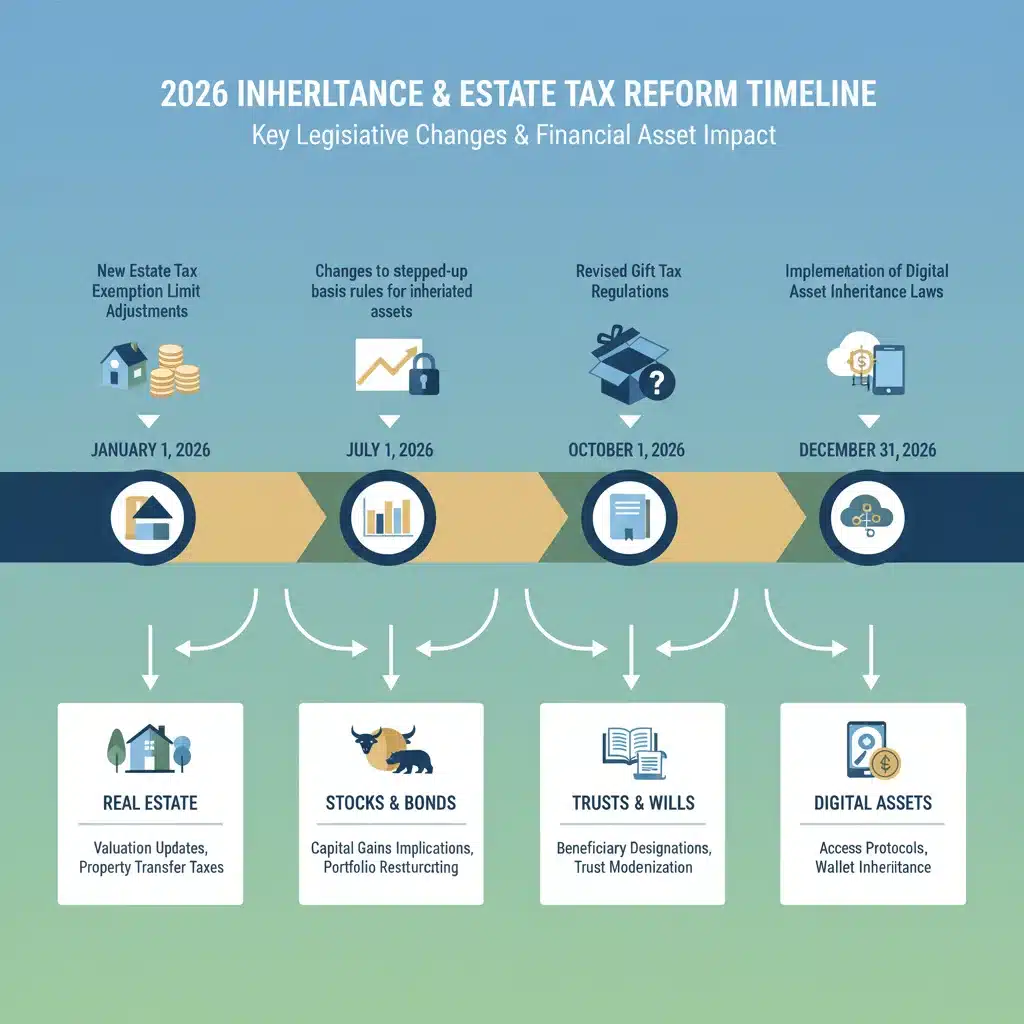
Creating a comprehensive inventory of your digital assets, including usernames, passwords (stored securely and separately), and instructions for accessing and managing them, is a crucial first step. This information should be stored in a secure location and communicated to your executor or a trusted digital fiduciary. Furthermore, your will or trust should explicitly grant your fiduciaries the authority to access, manage, and distribute your digital assets, overriding any conflicting terms of service where legally permissible. As Inheritance Law Updates continue to address the digital frontier, staying informed and integrating these assets into your estate plan will be vital for a complete and future-proof legacy.
The Importance of Professional Guidance
Navigating the intricate world of estate planning, especially with the impending Inheritance Law Updates in 2026, is not a task to undertake alone. The complexities of federal and state tax laws, trust regulations, and asset distribution require the expertise of qualified professionals. An experienced estate planning attorney can help you understand the nuances of the new legislation, review your existing documents, and draft new ones that are legally sound and aligned with your objectives. They can ensure your will, trusts, and other foundational documents are optimized to minimize taxes and avoid probate, while accurately reflecting your wishes.
Beyond legal counsel, a skilled financial advisor plays an equally critical role. They can help you assess the financial impact of the Inheritance Law Updates on your portfolio, recommend investment strategies that complement your estate plan, and identify opportunities for wealth preservation and growth. This includes evaluating lifetime gifting strategies, assessing the role of life insurance, and planning for charitable contributions. The synergy between your attorney and financial advisor is crucial, as they can work collaboratively to create a holistic plan that addresses both the legal and financial aspects of your legacy.
Tax professionals, such as certified public accountants (CPAs), also provide invaluable insights, especially concerning the tax implications of various estate planning strategies. They can help project potential estate and gift tax liabilities under the new rules and advise on tax-efficient asset transfers. Given the potential for significant tax changes with the 2026 Inheritance Law Updates, their expertise in tax minimization and compliance is indispensable. Engaging a team of these professionals ensures that all facets of your estate are considered, providing you with peace of mind that your family’s financial future is secure and your legacy is protected.
Conclusion: Preparing for a New Era in Estate Planning
The year 2026 represents a pivotal moment for estate planning, with significant Inheritance Law Updates on the horizon that demand immediate attention. From potential changes in federal estate and gift tax exemptions to evolving rules around digital assets, the landscape of wealth transfer is undergoing a profound transformation. Ignoring these changes is not an option for those committed to securing their family’s financial future and preserving their legacy. Proactive engagement with these updates can prevent costly mistakes, minimize tax burdens, and ensure your wishes are carried out precisely as intended.
The key to successful adaptation lies in a multi-faceted approach: understanding the specifics of the new laws, thoroughly reviewing and updating your existing wills and trusts, exploring advanced planning strategies, and leveraging the expertise of a trusted team of legal, financial, and tax professionals. By taking these steps, you can transform the challenges presented by the Inheritance Law Updates into opportunities for optimized wealth transfer and enhanced family security. Don’t wait until the last minute; begin these crucial conversations and revisions now to ensure your estate plan is robust, resilient, and ready for the future.
Ultimately, comprehensive estate planning is an ongoing process, not a one-time event. The anticipated 2026 changes serve as a powerful reminder of the need for regular reviews and adjustments to your plan. By staying informed and working with dedicated professionals, you can confidently navigate the evolving legal landscape, protect your assets, and ensure your legacy continues to benefit your loved ones for generations to come. The future of your family’s financial well-being hinges on your preparedness for these critical Inheritance Law Updates.